
Optical mechanical theodolites age on glass circles, vernier scales, and oil-damped compensators, which forces users into a 6-12 month clean-and-collimate cycle; electronic theodolites push the failure mode to battery contacts, encoder seals, and LCD/display modules, but still require an annual calibration pass traceable to a national standard [S1][S2].
Across the published accuracy bands, optical units sit between 20 and 6 arcseconds while electronic units reach 2 arcseconds or better, and that 3-10x precision gap is what drives the maintenance trade-off in practice, not the instrument class itself [S1]. A quality digital theodolite eliminates most reading errors by removing the manual interpretation step entirely, which means less wear on the optical scale but a new dependence on the electronic angle encoders and their environmental sealing [S1].
Where Optical Theodolites Actually Fail
Failure mode 1: glass circle contamination. Optical theodolites read horizontal and vertical angles through a system of glass circles, lenses, and micrometer eyepieces, so any dust, oil mist, or condensation on the circle or its reading prism directly injects angular error before the operator ever touches the vernier [S1]. In coastal and construction sites, surveyors report cleaning intervals as short as 30-45 days for the objective lens and the circle-reading window, with a full strip-and-clean shop service every 12 months.
Failure mode 2: vernier and micrometer wear. The vernier scale is the moving reference against which the main circle is read, and repeated fine-motion use slowly wears the engraved lines, broadening the graduation and degrading the 20-6 arcsecond class accuracy that optical units are rated for [S3]. Replacement is a depot job, not a field job, and most service shops quote 2-4 week turnaround in developing regions.
Failure mode 3: compensator oil damping. Traditional theodolites use a liquid-damped vertical-index compensator to correct residual plate-level error, and over years the oil viscosity drifts, the liquid migrates, or the chamber develops a micro-leak. Once the compensator hysteresis exceeds roughly 1 arcsecond, the instrument falls out of its accuracy class and must be returned to a calibration lab, a failure mode that simply does not exist on electronic theodolites, which use electronic tilt sensors instead.
For surveyors working in remote regions, the odolite vs total station comparison elsewhere on this site notes that optical instruments remain in service partly because the spares chain is forgiving: prisms, bulbs for the reticle illuminator, and tribrach grease are universal, whereas electronic theodolites often need vendor-specific encoder modules and firmware keys that are not stocked in regional repair shops.
Where Electronic Theodolites Actually Fail
Failure mode 1: encoder contamination. Once contaminated, the encoder shows step-wise jumps of 1-3 arcseconds at random circle positions, a signature failure no optical instrument can produce.
Failure mode 2: battery and contact corrosion. Field crews routinely see false low-battery shutdowns at 30-40% indicated charge, traced to oxidized contact springs in the battery compartment rather than the cells themselves. The fix is a 5-minute contact clean, but it requires opening the housing, and most manufacturers void calibration if the seal is broken by a non-authorized technician, so the instrument still goes back to the shop.
Failure mode 3: LCD and keypad membrane. The display and key panel sit on a flexible membrane that ages faster than the glass it covers, with rated field life of roughly 5-7 years in hot-humid climates. Replacement cost is low (about 5-10% of instrument price) but the work still needs a clean bench and an ESD-safe setup, ruling out a true field repair.
Maintenance Schedule Comparison by Component

Optical theodolite scheduled service: clean objective and eyepiece lenses every 30-60 days in dusty conditions, clean the circle-reading prism every 90 days, check and adjust plate levels weekly, perform full collimation and vertical-index check monthly, send for vernier and micrometer inspection annually, and run a full calibration against a collimator baseline every 12 months or after any drop event [S1][S3].
Electronic theodolite scheduled service: wipe housing and clean tribrach every 30 days, inspect and clean battery contacts every 60 days, update firmware on the OEM cycle (typically 12-24 months), check encoder repeatability against a known baseline quarterly, and perform full calibration traceable to a national standard every 12 months, with the calibration certificate and serial-numbered record filed for audit [S1][S2].
On man-hours, an optical unit in active service consumes roughly 8-12 hours of operator-level maintenance per year plus one 2-3 day shop service, while an electronic unit consumes 3-5 hours of operator maintenance per year plus one 1-2 day shop service. The lower operator burden is what makes the electronic format the default on multi-crew sites despite higher purchase price [S1].
Environmental and Power Sensitivity
Optical theodolites are sensitive to lighting conditions, since poor illumination can make optical scale reading difficult or inaccurate, which means dawn, dusk, and tunnel work all force artificial reticle illumination, drawing on the same battery that powers the electronic unit, an irony often missed in field-cost comparisons [S1]. Electronic units instead face a cold-temperature penalty: below roughly -10 degrees C, LCD response slows and encoder signal-to-noise drops, so winter crews carry insulated transit cases or switch to a mechanical-optical backup for the first and last hour of the day.
Humidity affects both classes but through different mechanisms. On optical units, humidity condenses on the internal glass surfaces and creates a haze that does not clear until the instrument warms, an effect that can last 20-40 minutes after moving from a cold truck into a warm site office. On electronic units, humidity instead drives PCB corrosion at the encoder connector, a failure that appears weeks later as erratic angle jumps.
Cost, Spare Parts, and Service Network
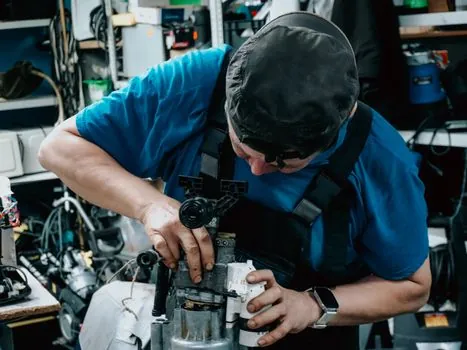
Optical theodolite ownership cost is dominated by labor, not parts: a full set of replacement prisms, reticle bulbs, and tribrach grease typically costs under 200 USD, and the labor is what a trained crew chief already does as part of daily setup. The optical and mechanical components are designed for long-term reliability, and the company's service network is strong in Asia, Africa, and Latin America, which keeps depot turnaround manageable for the Sokkia and Nikon families in particular [S2].
Electronic theodolite ownership cost is dominated by parts and software: a replacement encoder module can run 30-60% of the new-instrument price, firmware updates are sometimes paywalled, and battery packs have a 2-3 year replacement cycle. For international buyers in developing regions or remote project sites, however, the ruggedness of established brands can reduce downtime and maintenance costs over the instrument's life, offsetting the higher spares spend [S2].
For projects that mix office layout and field staking, the comparative case for laser levels over water-level hoses outlines a similar trade between mechanical simplicity and electronic accuracy, and the maintenance arithmetic translates almost line for line from theodolites to leveling instruments.
Decision Matrix: Which Class for Which Job
Pick an optical mechanical theodolite when: the site is more than a day's drive from an authorized service center, ambient temperature regularly drops below -10 degrees C, the crew is small enough that a single trained operator owns the instrument, and the required accuracy is 6-20 arcseconds (typical for rough earthworks, rural cadastral work, and academic training) [S1][S3].
Pick an electronic theodolite when: multiple operators must produce interchangeable results (multi-crew topographic survey, machine control set-out), the job requires sub-5 arcsecond accuracy, power is reliably available for battery charging, and the project is short enough that the higher purchase price amortizes within 12-24 months [S1][S2].
Do not pick an electronic theodolite for: long-term fixed monitoring in unmanned locations where the battery cannot be kept above 20% state of charge, or for training environments where students must learn the geometric principles of angle measurement rather than the menu tree of an OEM firmware [S3].
Do not pick an optical mechanical theodolite for: high-volume data collection where manual reading slows the crew below the schedule, or for projects that require direct digital output to a GIS or CAD workflow, since the optical scale cannot feed data downstream without a separate manual transcription step [S1].
Standards, Calibration, and Audit Trail
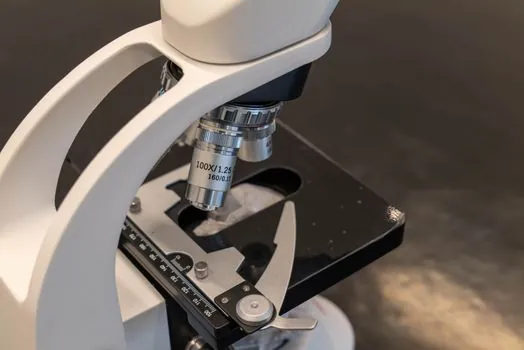
Both instrument classes are governed by the same calibration expectation: documented calibration certificates traceable to national standards, a manufacturer-recommended calibration interval, and a seller capable of post-purchase calibration services [S2]. For Topcon, Sokkia, and Nikon units, the published interval is 12 months for survey-grade work, and a single angular error of a few seconds can shift an entire project by centimeters over a kilometer when the theodolite is used to set ground control for a drone survey [S2].
For the user's own log, the maintenance record should capture: date, operator, environment temperature, baseline reading against a collimator or pillar set, observed deviation, and any parts replaced. This is the audit trail an ISO 9001 or similar quality system will check, and it is identical in structure for optical and electronic units, even though the parts list differs [S2].
Trackable signals for the next review: monitor manufacturer firmware release notes for theodolite encoder diagnostics (currently pushed on a 12-24 month cycle by Sokkia and Topcon), and watch for any third-party encoder-rebuild services entering the Asian and African service networks, since competition here is what would meaningfully cut electronic theodolite ownership cost for remote buyers [S2].
Detailed specification references: theodolite, mechanical seal, and optical comparator.