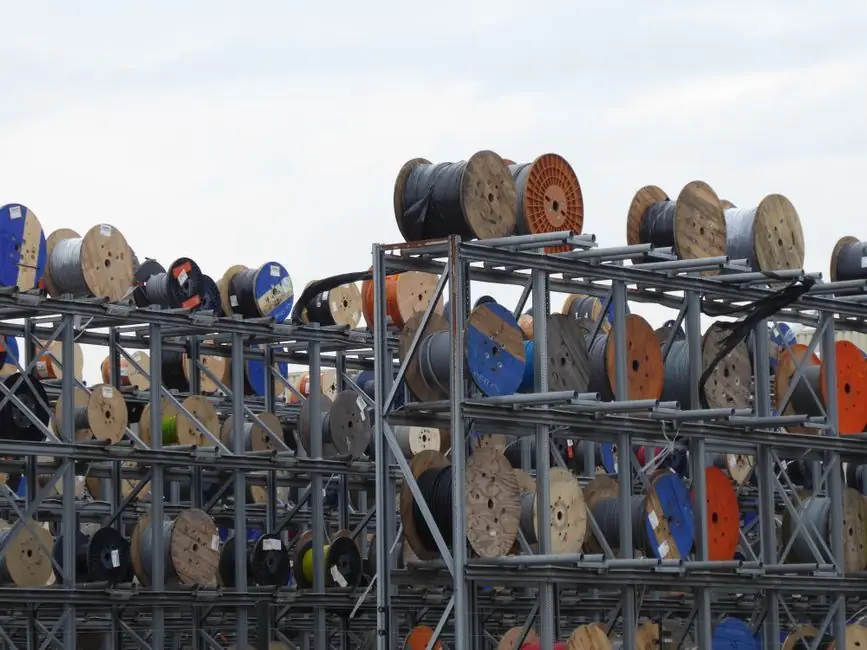
Outdoor telecom enclosures fail for three predictable reasons: internal temperatures cook the electronics, humidity condenses on PCBs overnight, and a determined attacker with a grinder defeats the locking plate [S1]. A cabinet that works for a 5G small cell in Frankfurt will cook in Phoenix and pit through in Manila, which is why site profiling, not datasheet shopping, drives every sound spec [S1].
The current reference set covers material grade selection, NEMA/IP rating trade-offs, thermal management, and hardening for 19/23-inch telecom racks, with both Bud Industries' 19- and 23-inch enclosure catalog (2025-08) and topcabinet's 2026-06 design guide anchoring the public guidance [S1][S2]. Engineers specifying remote nodes, distribution hubs, or street-side small cells should read this as a selection gate, not a marketing overview.
Define the Site Profile Before You Open a Catalog
Engineers who spec a standard enclosure before characterizing the site are the most common source of repeat truck rolls, per topcabinet's 2026-06 design notes [S1]. The five numbers that must be pinned down first are 99th-percentile ambient temperature, solar load, relative humidity and dew point, total internal heat dissipation, and the local threat profile [S1]. A south-facing cabinet in direct sun runs 15-20°C above ambient before any electronics are switched on, and that delta alone collapses a 50°C-rated cabinet into a thermal failure mode [S1].
Humidity data is where most urban and tropical builds go wrong. A site profile showing 14-hour stretches above 90% RH followed by an 8°C overnight drop is a condensation machine, and no IP rating, even IP66, will stop water from nucleating on a cold PCB [S1]. Topcabinet's case study of a Southeast Asian tower-top operator losing BBUs every monsoon traced directly to that RH/ΔT pattern; the fix was a heat exchanger plus hygrostat-controlled internal heaters, not a higher ingress rating [S1].
Material Grade Selection: Aluminum, Stainless, Steel, or GRP
Material choice sets the long-term aging curve more than any other line on the BOM, and the trade-off is not strength versus weight, it is corrosion mechanism versus local environment [S1][S3]. The decision matrix in the reference material lines up four families against marine exposure, vandal resistance, UV aging, and cost.
Aluminum 5052 or 5754 in marine grade is the default for most outdoor telecom sites: roughly one-third the weight of steel, no rust, and it handles UV and salt exposure well when properly passivated, with a 3 mm minimum wall on exposed panels for vandal resistance [S1]. 316 stainless is non-negotiable within 5 km of the coast because 304 shows pitting corrosion in marine air within 18 months; the price delta is real, expect 40-60% higher material cost and heavier shipping [S1]. Powder-coated mild steel is acceptable for sheltered urban sites with a sound paint system, but the moment the coating chips at an installer scratch or a bird strike, underfilm corrosion begins [S1]. Fiberglass (GRP/SMC) is reserved for high-RF or grounding-sensitive sites, with the caveat that UV degradation becomes visible around year 7-8 and vandal resistance is poor unless the laminate is reinforced [S1].
IP and NEMA Ratings: What They Cover and What They Don't
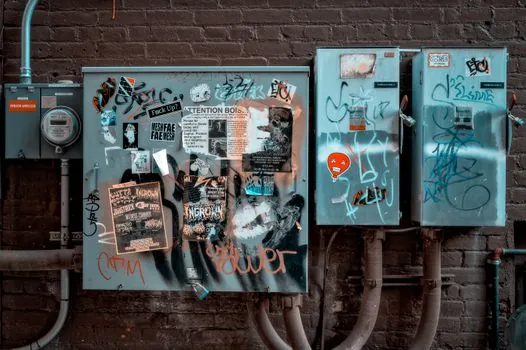
An IP55 rating is a dust and water-jet spec, not a condensation spec, and treating it as a weatherproof seal is a frequent procurement error [S1]. DDB Unlimited's NEMA 3 and NEMA 4/4x outdoor enclosures are positioned for telecommunications, security, solar, oil and gas, traffic, and public-safety sites, where the cabinet is expected to take hose-down, rain, and icing [S4]. NEMA 4/4x adds corrosion resistance on top of the dust and water-jet protection of NEMA 3, and is the right floor for any chemical, coastal, or wastewater-adjacent telecom node [S4].
For indoor-controlled-environment telecom rooms, Bud's 19- and 23-inch rack and cabinet line is the typical reference: open-frame 2-post and 4-post racks for secure rooms, lockable enclosed cabinets for shared or public spaces, and hybrid cabinets with removable side panels plus vented doors when access and security both matter [S2]. EIA-310-D 19-inch rack compatibility is the universal interface, and pre-drilled rails with standard 5/8-5/8-1/2 tapped holes are what every field tech actually wants to see on the back panel [S2].
Thermal Management Without Breaking the Seal
Every outdoor enclosure designer runs into the same tension: the hotter the electronics, the more you want to open the box, and the wetter the environment, the more that costs you [S1]. Passive ventilation alone cannot keep a 95%+ RH site above dew point when the cabinet skin radiates to a clear night sky; the surface will drop below ambient and pull moisture in through any gasketed seam [S1].
The reference architecture pairs a closed-loop heat exchanger (no air exchange with the outside) with internal heater strips controlled by a hygrostat, sized to keep the interior 5-10°C above the worst-case external dew point [S1]. For lower-heat-density nodes, front-to-back ventilation with perforated or mesh doors, fan trays matched to the rack layout, and at least 1U of open rack space between high-power components, gives enough passive cooling to avoid a full HVAC redesign [S2]. The Bud catalog's "fan trays" recommendation, plus the swing-frame access pattern on hybrid cabinets, is the practical pattern for serviceable outdoor units [S2].
Physical Hardening, Cable Management, and Service Access
A padlock is not physical hardening. Urban vandalism, rural copper theft, and curious wildlife each call for different responses, and the threat profile should be a line on the spec, not a footnote [S1]. For copper-heavy sites, internal segregation of power and signal compartments plus concealed cable entry behind lockable panels is the standard mitigation; for urban vandalism, the minimum is 3 mm aluminum or 2 mm stainless on exposed faces with internal hinges and security fasteners [S1][S2].
Cable management is the second most common service-time driver after thermal failure. Pre-routed cable managers, top and bottom brush-grommet entry plates, and labeled PDU outlets cut troubleshooting time, and tool-less removable side panels or swing-frame access are the features that maintenance teams actually ask for by name [S2]. For wall-mount open racks in tight mechanical rooms, the same access logic applies at smaller scale: keep the bend radius for fiber runs inside spec and leave the front panel removable for two-handed work [S2].
Related Selection Logic Outside the Enclosure
The same "spec by site, not by catalog" discipline shows up across industrial buying decisions, and the adjacent process-equipment selection maps are useful reference points. For example, the spec-first map for shop-floor 2D inspection in optical comparator selection follows the same gate logic: pin measurement uncertainty, part envelope, and environment before you choose bench-top versus floor-standing. The sand blasting machine TCO analysis is another parallel case where air cost, media selection, and dust load drive the equipment class far more than the advertised nozzle pressure. For a deeper read on how material selection logic plays out in non-enclosure contexts, the quartz material selection for aerospace piece walks through the same aluminum-versus-stainless-versus-composite trade matrix that an outdoor telecom spec has to resolve on day one. [S1]
Selection Checklist Before Release
Before signing off a purchase order, the spec should carry an explicit line for each of the following: site 99th-percentile ambient and RH/ΔT profile, chosen material grade with wall thickness, NEMA or IP rating with the exact clauses cited, thermal architecture (passive, fan-forced, heat-exchanger, or active HVAC), threat profile and matched hardening, and EIA-310-D mounting interface with confirmed rail spacing [S1][S2][S4]. For further reference on the underlying shot blasting machine and shot sleeve families that often share fabrication supply chains with telecom enclosure shops, both follow identical aluminum-versus-stainless-versus-coating decision logic at the material-spec level.
Two signals to track through the rest of 2026: NEMA's ongoing alignment work with IEC 60529 for ingress-only ratings (separate from corrosion), and any revision of EIA-310-D that touches deeper-than-800 mm cabinet depths for edge-core sites. Watch for OEM datasheets that publish internal ΔT curves alongside IP/NEMA ratings; that is the single best indicator that the supplier actually engineered for the site, not just for the catalog.
Spec-level background on the components involved: pressure transmitter.