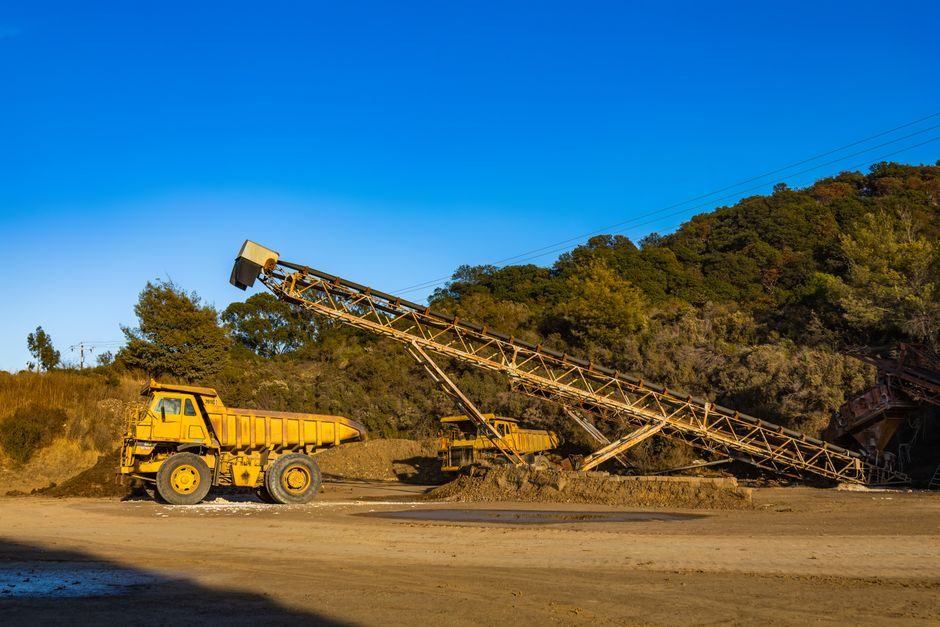
Overhead conveyors in the 2026 industrial catalog landscape split into four rail/drive architectures — monorail, double-rail, power-and-free, and rope-driven — with 41 manufacturers exposing 88 distinct products on the major B2B buying index [S1]. Double-rail overhead units dominate meat, automotive and light-duty assembly listings, with stainless-steel tracks and stainless saddles specified for food-grade lines carrying primal cuts [S4], and aluminium-link twin-rail units quoted for 100 kg (220.462 lb) maximum payload per carrier in light-duty parts handling [S5].
For 2026 procurement, the gating decisions are: load per carrier (under 50 kg vs up to 100 kg light-duty vs multi-ton heavy-duty paintline), environment (food-grade stainless, cleanroom, powder-coat oven, e-coat tank), drive architecture (traction wheel continuous vs power-and-free indexing vs rope), and the available building height plus curve radius at the load transfer points. Each of these maps to a different product family and a different vendor pool [S1][S2][S9].
Rail Architecture: Monorail, Double-Rail, Power-and-Free, Rope-Driven
The four rail classes are not interchangeable. Monorail overhead conveyors use a single I-beam or patented track profile and the simplest carrier geometry, commonly configured with sidetrack switches for sortation — McGinty Conveyors lists Monorail Overhead, Safe Rail, Sidetrack and Tire Retread variants as discrete product lines under one North American product tree [S9]. Double-rail units run a parallel twin track, allowing the carrier to span two rails and lift heavier, longer, or unbalanced loads — JOSE BERNAD's triple-turnout double-rail track network with stainless saddles anchors is built around this geometry for meat handling [S4], and TM-Technimanut's Apollo twin-rail unit is rated at 100 kg maximum load in aluminium-link construction [S5].
Power-and-free (P&F) conveyors run a continuous powered chain in an upper track that dogs trolleys on a lower free track, enabling accumulation, indexing, and synchronous dipping into process tanks — this is the architecture that dominates automotive electrophoretic paint (e-coat) lines, where a body carrier patent describes the conveyor as "particularly suited for use in electrophoresis paint lines" with bodies loaded onto dedicated carriers [S8]. Rope-driven overhead conveyors use a pulling rope rather than a link chain, and the industrial manufacturer index groups them under a parallel "rope-driven overhead conveyor" taxonomy [S1]. Powder-coat and paint lines further classify as Webb, Cardan, Power & Free, and Busbar Transfer types, all overhead, used to ferry painted components over multi-kilometre annual paths [S3].
Load, Speed and Trolley Pitch: The Numerical Gates
Real 2026 catalog figures anchor the selection window. Apollo twin-rail light-duty overhead is published at 100 kg (220.462 lb) maximum load per carrier with electric, automatic drive, suited to parts handling and accumulation [S5]. McGinty's product tree is segmented into Light Duty, Floor, and heavy-duty lines including Twin-Trak Over-Way, and a dedicated "Overhead Conveyor Configurator" tool is exposed for engineering the pitch, speed, and accumulation zones before quotation [S9].
On the Chinese export side, overhead chain conveyor pricing is published in MOQ bands: US$480.00–680.00 per metre at 1 metre MOQ from Mujia Automation Technology (Shanghai) Co. Ltd., and US$3.89–5.38 per metre at 500 metre MOQ for heavy-duty overhead chain conveyor built for beverage production [S7]. The two-tier MOQ spread is typical of how overhead chain vendors gate quotation: short custom runs are 100× the unit price of bulk 500 m industrial orders, so total outlay is dominated by length and trolley count, not by the carrier itself [S7].
Environmental Fit: Food, Paint, Cleanroom, and General Manufacturing
Environment is the second gate. Food-grade overhead conveyors are built in stainless steel with stainless saddles and stainless anchor hardware — JOSE BERNAD's triple turnout for meat lines is described as a stainless-steel double-rail track network with diverters, designed to be integrated into the routing for each installation [S4]. Powder-coating and e-coat paint lines are a different problem: carriers must survive elevated cure-oven temperatures and immersion in chemical pretreatment and electrophoretic tanks, hence the dedicated P&F and Webb/Cardan transfer families [S3][S8].
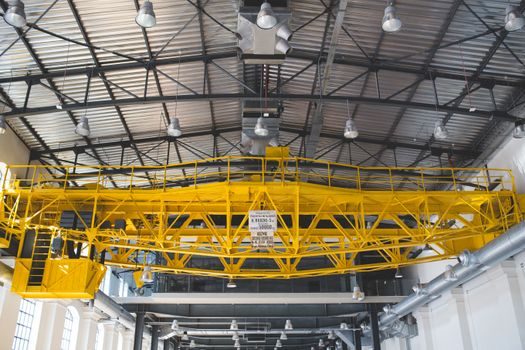
Cleanroom and electronics assembly tend toward aluminium-link light-duty double-rail units at 100 kg class, which keep carrier mass low, allow tighter trolley pitch, and reduce particulate shedding compared with painted mild-steel chains [S5]. General manufacturing — including wire harness, ophthalmic lens, motorcycle and profile handling — falls under the broad "overhead conveyor system" manufacturer index, where 14 vendors expose 24 products tagged across automotive, warehouse, logistics, storage, and assembly applications [S2].
Drive Mechanism, Curves, and Diverter Geometry
Drive mechanism separates continuous-flow from indexing systems. Apollo's published spec lists electric drive with automatic operation, accumulation enabled, in a horizontal closed-loop twin-rail layout [S5]. McGinty extends this with sidetrack switches and inverted zig-zag paths, allowing carriers to leave the main loop, dwell at workstations, and re-enter without stopping the chain — the standard mechanism for paint and assembly buffers [S9].
Curve and turnout geometry drive the floor plan. JOSE BERNAD's triple turnout is a routing block designed to be integrated into the double-track network to build the necessary route for each installation, including saddles with anchor points at the switches [S4]. For heavy components such as automotive body shells, the load transfer at each curve and dip is engineered into the carrier itself — the e-coat body carrier patent describes a body carrier with bearing and dog geometry engineered to traverse the e-coat tank and oven sections of the line [S8]. Buyers who under-specify the turnout and curve radius typically see carrier swing, dogging faults, and chain tension spikes on commissioning.
Vendor Selection and Sourcing Channels (2026)

Three sourcing channels dominate. The European vendor index lists 41 overhead conveyor manufacturers with 88 products, including rope-driven specialists [S1], and a parallel "overhead conveyor system" index lists 14 system-level vendors (Belmeko, CTI Systems, DAIFUKU, DEMATIC and others) tagged for industrial, warehouse, logistics, automotive and storage applications [S2]. DEMATIC and DAIFUKU are the names that surface most often for large warehouse and automotive system integration [S2].
The Chinese export channel is heavy on overhead chain conveyor capacity, with Mujia Automation Technology and other Diamond Members on Made-in-China publishing factory pricing, MOQ bands, and audited-supplier status [S7]. Specialist integration is split: ELECTRON (Taiwan) handles powder-coat conveyor systems with Webb, Cardan, Power & Free and Busbar Transfer architectures [S3]; JOSE BERNAD handles food-grade stainless double-rail [S4]; TM-Technimanut handles light-duty aluminium twin-rail [S5]; McGinty handles the North American monorail, P&F, rotary, and floor lines with a published configurator [S9]; and Asian OEM offerings are aggregated on CENS.com under the X Series Overhead Conveyor family [S10]. For buyers comparing dry-bulk handling alternatives, the trade-offs versus a screw conveyor system are real: overhead is gentler on formed parts and finishes, but cannot move powders, while an overhead bridge crane covers the unit-load lifting job overhead conveyors cannot do. For high-temperature paint and e-coat cells, the conveyor's compatibility with the linear guide and crossed-roller guide carriers used on the workstations downstream of the conveyor matters at integration stage.
Selection Checklist and Common Failure Modes
Use a fixed checklist before issuing the RFQ. (1) Maximum carrier load in kg, with the heaviest part to be hung plus any tooling/fixture mass, not just the part mass. (2) Rail class: monorail for sortation simplicity, double-rail for unbalanced or longer loads, P&F for accumulation and process-tank dipping, rope-driven for long simple loops. (3) Trolley pitch, line speed (m/min), and the number of carriers in the live loop. (4) Environment: stainless food-grade, aluminium cleanroom, painted mild steel for general manufacturing, high-temp carrier and chain for paint/oven [S3][S4][S5][S8]. (5) Drive: electric continuous vs automatic indexed; vendor support for sidetrack and zig-zag [S9]. (6) Total length and curve radius footprint, including the floor area needed for the drive station, take-up, and any triple turnout [S4].
Common failure modes seen at commissioning: under-rated chain for the actual loaded mass on a dip section; stainless hardware skipped on food lines (corrosion within 12 months); carrier dogging geometry not matched to the e-coat tank entry/exit profile [S8]; accumulation zone too short for the line's natural surge; and total length ordered at the 1-metre MOQ unit price instead of the 500-metre MOQ unit price, multiplying the project budget by an order of magnitude [S7]. Total cost of ownership is also worth a comparison alongside other bulk- and unit-handling options, e.g. a mesh belt conveyor for finished parts, or a chain conveyor floor unit where overhead height is constrained.
Applicable Standards and Engineering References
Overhead conveyor design is anchored in mechanical-handling and chain standards rather than Ex/ATEX or process-instrumentation standards, but the surrounding process does pull in adjacent codes. Paint and e-coat lines overlap with surface-treatment and tank-immersion guidance; food-grade lines must satisfy stainless-contact and cleanability rules; automotive body carriers are designed against the e-coat tank and oven thermal/mechanical loads [S8]. Buyers should request the vendor's reference list for the specific environment (food, paint, beverage, electronics) and the carrier material certificate, and should fix the trolley pitch, chain size, and drive motor kW on the PO rather than letting the vendor select by default.
Trackable next signals for the second half of 2026: the 14-vendor system index [S2] and 41-vendor product index [S1] are the two reference catalogues to watch for new entrants; Chinese export pricing bands [S7] will move with steel and aluminium input cost; and configurator-based North American vendors such as McGinty [S9] will publish updated technical sheets and design data the next time their resource library is refreshed.