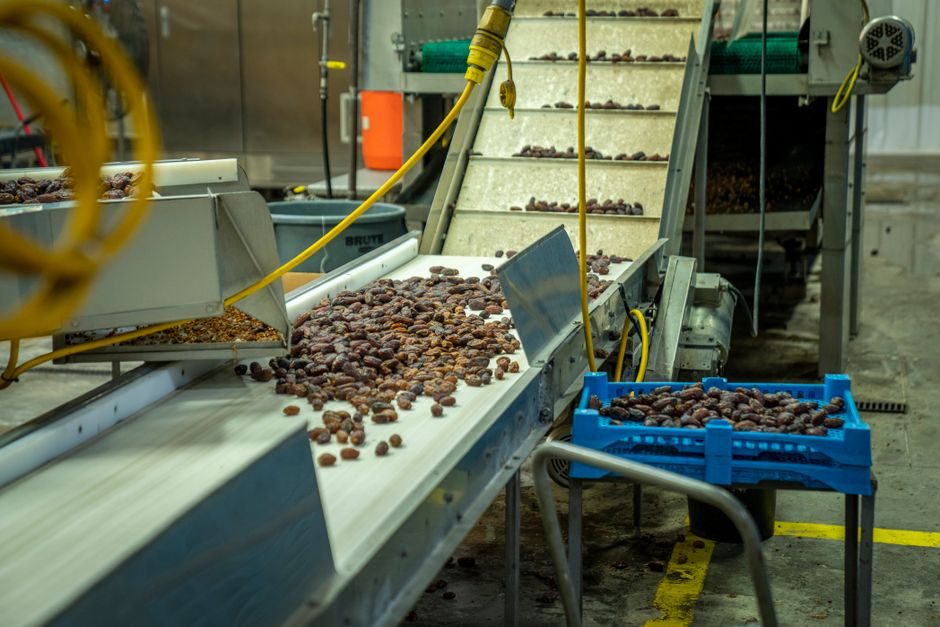
Standard metal wire-mesh belts from Chinese mills cleared at US $65-70 per meter FOB on made-in-china listings dated 2026-06-04, with a 1-meter minimum order covering packing, battery, boating and tunnel-oven duty [S2].
Specialised categories — solar-cell furnace belts, Kevlar/fabric process belts and balanced-weave stainless lines — are not sold by the linear meter: they price per square meter, per belt-join, or as an engineered conveyor package with drive and frame [S1][S3][S7].
What the buyer is actually paying for
A mesh belt conveyor is two purchased items bolted together: the endless belt itself and the conveyor frame, drive, and tracking hardware. Yangzhou Leneng's 2026-06-04 listing prices the woven metal belt at US $65-70 per meter FOB, with no frame, drive, or guards included [S2].
Forbo Siegling's Kevlar/fabric industrial mesh conveyor belt is sold as an OEM catalog item with pricing held behind a quotation request, reflecting that engineered process belts are configured per application rather than per linear meter [S1]. Henan Yiheng's polyester mesh belt line is similarly configured to order, with the supplier advertising wider applicability and longer service life than commodity wire mesh [S3].
Unit-rate ranges by belt family
For woven stainless-steel conveyor mesh, 2020 supplier specifications on made-in-china listed wire diameter 0.8-6.0 mm and width 20-100 mm, with material options spanning stainless steel wire, carbon steel wire, galvanised iron wire and nickel wire [S9]. Wider widths and heavier wire diameters scale the per-square-meter price non-linearly because the loom capacity, not the alloy, sets the throughput limit.
Metal mesh belts from Yangzhou Leneng (2026-06-04) sit at US $65-70 per meter FOB across four duty variants — packing-line, battery/boating, food wire belt and tunnel-oven equipment — all with 1-meter minimum order [S2]. Yiheng's polyester filter-mesh belt line targets chemical and food processing with a longer-life claim versus commodity wire [S3]. For high-temperature furnace duty, meshbelt.cn publishes 12+ catalogue entries for solar-cell furnace belts without per-unit pricing, consistent with engineered quotes per project [S7].
Cost drivers that swing the total
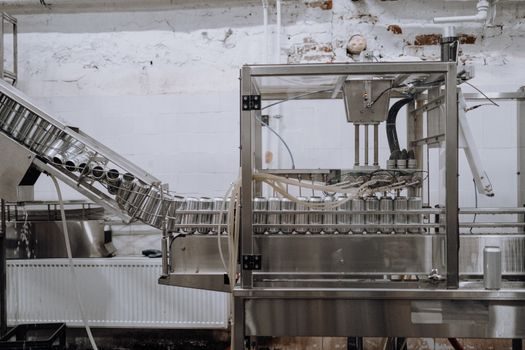
Alloy choice is the dominant material cost lever. The Yiheng polyester family sits in a lower price band than balanced-weave stainless, and balanced-weave stainless sits below Inconel or specialised nickel-chromium weaves for >900°C furnace service [S3][S7]. The 2020 Chinese supplier matrix already shows carbon steel as the low-cost option, stainless as mid-tier, and nickel wire as premium per kilogram of wire consumed [S9].
Width and wire diameter scale the wire mass roughly with the square of the diameter, so a 6.0 mm wire belt uses 9× the raw wire of a 2.0 mm wire belt of equal area [S9]. For a belt conveyor frame package, drive selection — gearmotor kW, drum diameter, take-up travel — typically adds 20-40% above the belt price for light-duty packaging lines, and a higher multiple for furnace conveyors with water-cooled bearings and tensioned catenary drives [S2][S7].
Comparison across the three common options
On a 2026 basis, three belt families dominate buy decisions. Commodity woven metal mesh (Yangzhou Leneng class): US $65-70 per meter FOB, stainless or galvanised wire, suits 200-400°C packaging/battery lines, MOQ 1 meter [S2]. Engineered polyester mesh (Yiheng class): quoted per specification, lighter than metal mesh, chemical and food-grade compatible, longer service-life marketing claim [S3]. High-temperature furnace belt (meshbelt.cn class): engineered per furnace profile, solar-cell and heat-treatment duty, no published unit rate, supplied as a complete belt-join-and-tension package [S7].
For comparison with a friction-driven alternative, the Steel Strand 2026 Price & Cost Guide covers tension-cable selection that overlaps with mesh-belt catenary take-ups, while the Roller Conveyor Buying Guide 2026 covers the gravity/line-shaft alternative when the application does not require an endless woven surface.
Where mesh-belt conveyors do not fit
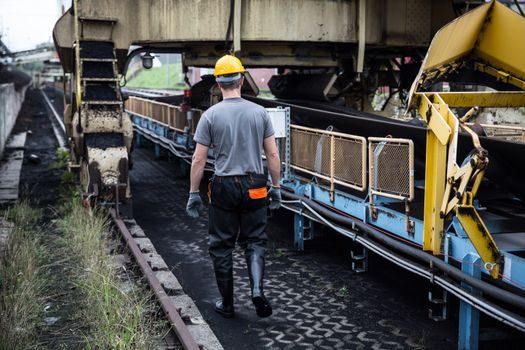
Mesh belts are a poor fit for heavy-impact transfer points (mining, primary crushing) where belt conveyor carcass with EP or NN fabric plies and breaker strips is the established choice, per Galaxy Belt's 2023 catalogue covering Fire Resistant, EP, Rough Top, Crusher Plant and NN conveyor belt classes [S4].
For dry-bulk inclined transport, a screw conveyor or pneumatic line typically beats mesh on enclosed, dust-controlled duty, and the Screw Conveyor vs Pneumatic Conveying selection frame covers the trade-off. For high-tonnage bulk casting, dynatech's ingot-casting conveyor range targets exactly the heavy-roller, high-load niche that mesh cannot serve [S6].
Standards, materials, and verification
Material verification is the first cost-control gate. The 2020 stainless-steel wire-mesh matrix lists stainless, carbon steel, galvanised iron and nickel wires as the four stock wire families, and these must be cross-checked against the application's corrosion and temperature duty [S9]. For higher-temperature solar-cell and heat-treatment furnaces, meshbelt.cn publishes a 12+ image gallery of furnace belts but no alloy datasheet online, so MTC and alloy traceability need to be requested with RFQ [S7].
For wire-mesh structural detail — rod count, pitch, edge finish and steel mesh weave pattern — the supplier's specification sheet is the controlling document, since woven-mesh pricing is sensitive to wire diameter (0.8-6.0 mm range) and finished width (20-100 mm range) per the public Chinese supplier matrix [S9]. Forbo Siegling's industrial process-belt line includes Kevlar and fabric constructions priced per application rather than per meter, and the same RFQ-discipline applies [S1].
Total cost build-up on a typical 2026 RFQ
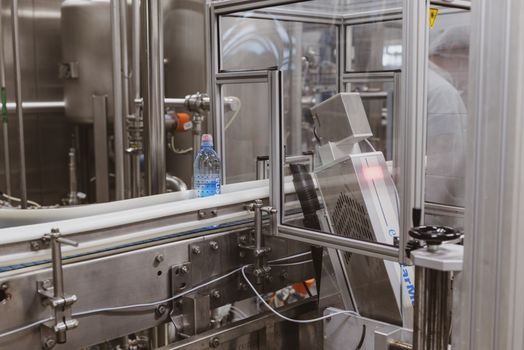
A representative build-up for a 2-meter-wide × 20-meter-long stainless balanced-weave belt at commodity FOB rates: belt material US $65-70 per linear meter × 20 m = US $1,300-1,400 FOB China [S2]. Plus gearmotor, drum, and frame for a belt tensioner take-up adds the next 30-50% of the line item at engineering-buyer pricing. Freight, duty, install, and commissioning are the conventional 15-25% tail above ex-works price.
For the selection gate behind these numbers — weave, alloy, drive and total cost — the related Mesh Belt Conveyor Buying Guide 2026 walks the four upstream decisions that determine which row of the matrix above applies. For stainless grade selection where the mesh belt is a downstream consumer, the Stainless Steel Buying Guide 2026 covers grade/finish/form gates that tie back to wire-alloy choice.
Trackable signals for the next quote cycle: the US $65-70/m FOB rate published on 2026-06-04 by Yangzhou Leneng is the cleanest public data point and the floor reference for Chinese woven metal mesh [S2]. Meshbelt.cn's 12+ solar-cell furnace belt catalogue entries refreshed by 2026-06-19 indicate active quoting on furnace-class belts without public unit rates, so RFQ with MTC remains the only path to a current number [S7].