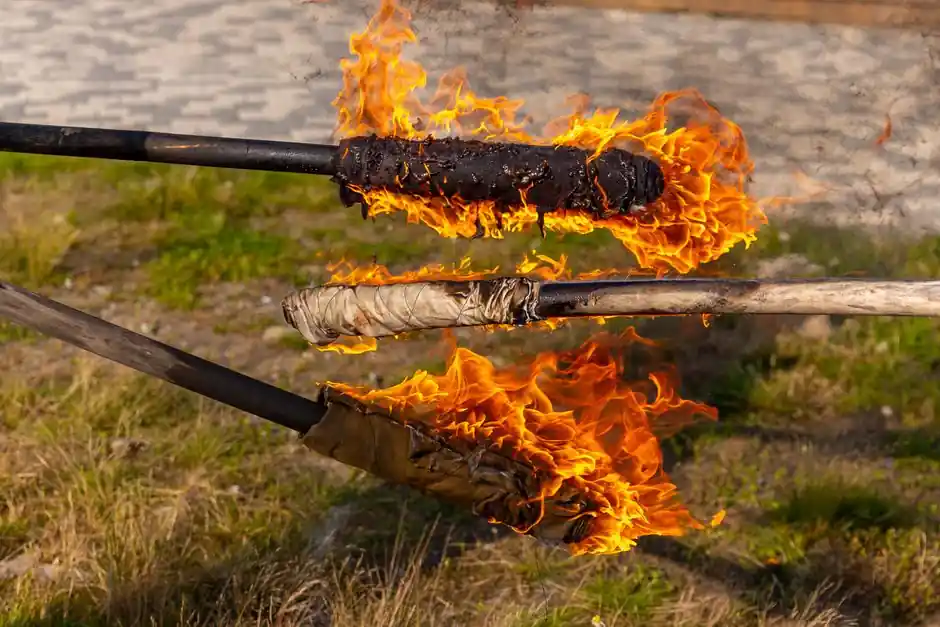
An oxy-fuel cutting torch specified for interior finishing work in 2026 is a dual-cylinder acetylene + oxygen system sized to a 1/8" to 12" (3 to 300 mm) mild-steel thickness band, fitted with reverse-flow check valves or flashback arrestors, and ignited to a sharp inner blue cone at roughly 5,400 to 5,800 F [S1][S2][S3].
The four driver variables are tip seat type, metal thickness, intended application (cut / gouge / heat), and fuel gas, and each maps to a different consumable part number, so a finishing crew working trim, duct supports, and stair stringers needs a kit that covers at least three tip sizes and one multi-flame rosebud heating nozzle [S1][S4].
Tip seat, metal thickness, and the 3 to 300 mm cutting band
Oxy-fuel equipment cuts mild steel cleanly from 3 mm (1/8") up to 300 mm (12"), with the center hole of the cutting tip sized to deliver a specific oxygen flow at a specific pressure for a specific thickness band, and the pre-heat orifice sized to bring that thickness up to ignition temperature before the cutting oxygen jet engages [S1].
Tip seat type is brand-locked: a tip that fits a Victor torch will not seal on a Koike or Harris handle, and forcing the wrong seat can crack the copper or vent flammable gas at the joint, so a finishing foreman who runs a mixed fleet should standardize on one seat family or stock the matching tips for each handle in the shop [S1]. For interior finishing work, plate thickness typically falls in the 1/8" to 1/2" (3 to 12 mm) range, and the matching tip is a one-piece solid copper or two-piece brass-inner / copper-outer style designed for hand cutting over a wide range of surface conditions [S1][S6].
Two practical ranges to lock in: for material over 7" a heavy style 164 cutting tip with four pre-heat flames is the conventional upgrade, and a generic-purpose hand cutting tip is normally good for the 1/8" to roughly 2" interior trim band where most duct brackets, stair pans, and partition frames live [S6].
Acetylene vs propylene vs propane: fuel gas and flame temperature
Acetylene is the hottest common fuel gas, with a flame temperature between 5,600 and 5,800 F at the inner cone, and the shortest pre-heat time of the three widely available options, which is why it remains the default for finishing work that involves frequent starts and stops in tight indoor spaces [S1][S3].
Propylene (and generic propane-ethylene blends) burns hotter than propane but cooler than acetylene, and the trade is lower gas cost against noticeably longer pre-heat times, so on a long interior run of repetitive cuts the operator time lost to pre-heat can erase the gas savings [S1]. Propane is the cheapest of the three but also the coolest, and is therefore mostly a heating-and-bending fuel rather than a primary cutting fuel in a finishing shop [S1][S4].
For a finishing crew that needs one torch kit to do cutting, brazing, and occasional rosebud heating on the same job, a heavy-duty acetylene outfit such as the SÜA / Victor-compatible handle with a 1-101-1 cutting tip, a 1-W welding/brazing tip, and a 4-MFA rosebud heating tip covers all three processes without swapping the torch body [S4].
Neutral flame setup: 1.1:1 ratio and the sharp blue inner cone
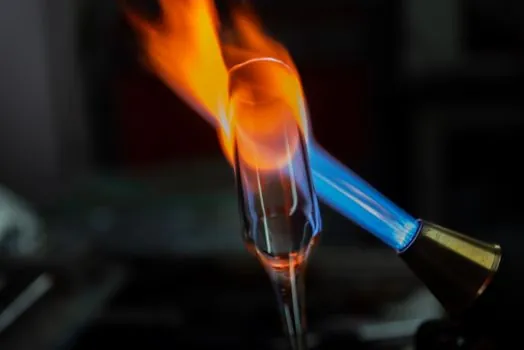
A neutral flame, where the oxygen-to-acetylene ratio is approximately 1.1:1, is the standard setting for brazing and is also the target flame for general-purpose cutting; deviating to a carburizing flame (excess fuel) is reserved for specific hardfacing work, and an oxidizing flame (excess oxygen) is reserved for specific metal combinations [S3].
The visible signature of correct setup is a sharp, pointed inner cone with a bright blue color surrounded by a softer outer envelope; a fuzzy, feathered, or off-color inner cone means the regulator pressures, tip orifice, or tip seat are wrong, and cutting should stop until the flame is corrected [S2].
Set regulators to the manufacturer-published pressure range for the specific tip size and fuel gas, install reverse-flow check valves on both the oxygen and fuel sides at minimum, and add flashback arrestors where the local code or shop rule calls for them; AWS/ANSI Z49.1:2021 is the standard safety reference for this work [S2].
Indoor vs field: why acetylene + check valves win in confined spaces
An oxygen-acetylene system requires two cylinders, two regulators, and two hoses, which is more hardware to drag into a mechanical room than a single-cylinder air-acetylene rig, but the air-acetylene flame tops out near 3,000 F versus roughly 5,400 F for oxygen-acetylene, so an air-acetylene torch cannot sustain a proper cutting pre-heat on steel [S3].
Air-acetylene is therefore a brazing and soldering tool (filler metal melting below the AWS 840 F soldering threshold on older units, and up through copper-to-copper brazing on modern swirl-combustion tips), and for any interior finishing task that involves cutting steel, an oxygen-acetylene rig is the only correct system [S3].
Indoor use adds two extra constraints: the acetylene cylinder must stay upright and chained so that acetone solvent in the porous mass cannot migrate toward the regulator, and the work area needs cross-ventilation because the pre-heat oxygen jet displaces air and a flashback in a closed room is a life-safety event [S2][S5]. For a working comparison of how the same torch family behaves on a totally different substrate, see the concrete-cutting spec map, which documents the limits an oxy-fuel rig runs into when the substrate is not mild steel.
Cutting tip vs welding tip vs heating tip: a three-process kit
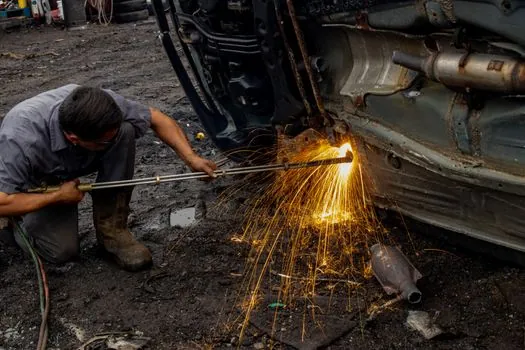
Cutting tips are designed for high-pressure oxygen delivery at the center jet, with pre-heat orifices arranged around that jet; welding and brazing tips are lower-velocity and lower-pressure, optimized for a stable neutral flame envelope; and heating tips (rosebud / multi-flame) spread a wide, soft flame over a large area for bending, straightening, shrink-fit, or preheating a weld zone [S1][S4].
A finishing crew can therefore get a full day's work from one kit if it carries one cutting tip, one welding/brazing tip, and one rosebud heating tip on the same handle, and the most common mistake is trying to braze with a cutting tip (or cut with a welding tip), which produces a lazy, unstable flame and a poor joint or a dragged cut [S1][S4].
For interior finishing specifically, the cutting tip is used for duct access panels, stair stringer trim, and partition framing; the welding/brazing tip is used for joining thin steel trim, copper-to-brass fitting work, and small repair patches; and the rosebud tip is used to shrink-fit bearings, straighten bent kick plates, or preheat a weld zone before stick or MIG work [S1][S4][S5].
Decision matrix: which oxy-fuel kit fits which interior finishing scope
For a solo trim carpenter doing one-off cuts on 1/8" to 1/4" steel, a lightweight acetylene outfit (handle + 1 cutting tip + 1 welding tip + regulators) in the $250 to $350 entry band is the right size, and electricity is not required so the work can be done in any interior space that has cylinder storage [S1][S5].
For a two- to four-person finishing crew running stair pans, duct supports, and structural trim in the 1/4" to 1" range on a weekly basis, a medium-duty rig such as the Victor Medalist 250 or a Victor-compatible equivalent (SÜA heavy-duty class) with a wider tip range and a 4-MFA rosebud is the correct scale, and the 5" cutting capacity is well above the typical interior plate thickness [S4][S5].
For an industrial fabrication shop doing interior build-out of plant rooms, a heavy-duty rig (Harris Ironworker class or equivalent) with style 164 heavy cutting tips for material over 7", dedicated heating rosebuds, and machine-cut tips reserved for any future automated cutting bay, is the spec that survives a decade of mixed interior and exterior work [S1][S5]. A useful cross-reference for sizing a different process on a related scope is the plasma cutter spec map for bridge construction, which lays out the kerf, speed, and thickness trade-offs that push a finishing foreman toward either oxy-fuel or plasma on the same job.
Failure modes and limits an interior finishing foreman must enforce
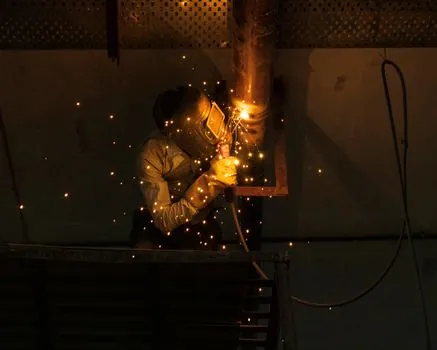
Flashback is the dominant failure mode, defined as the flame traveling backward into the torch, hoses, or regulators, often announced by a high-pitched hiss or whistle, and the only reliable defense is a reverse-flow check valve on each gas plus a flashback arrestor on at least the fuel side [S2].
Other common indoor failure modes are: wrong-seat tip cracking and leaking at the joint, wrong tip size producing a dragged or wandering cut, dirty regulator seats blowing dust into the orifice on first connection (mitigated by cracking the cylinder valve before attaching the regulator), and acetylene cylinder laid flat, which lets liquid acetone migrate into the regulator and produces an unstable delivery pressure [S2][S5].
Oxy-fuel is not a universal cutter: aluminum, stainless steel, and other non-ferrous metals do not form a cuttable oxide with the oxygen jet, so plasma or another process is required for those materials, and on plate 2" thick or less plasma gives a cleaner edge at higher speed even though oxy-fuel is the lower-cost option [S5].
Lock the kit to AWS/ANSI Z49.1:2021 as the standing safety reference, stock at least one cutting tip in the seat family of the handle actually in use, set regulators to the manufacturer-published pressure for the tip and fuel gas, and verify a sharp inner blue cone before every cut; for crew-level training on the field-deployment side of the same process, the road-maintenance field-crew selection guide is a useful parallel reference, and finishing shops that also fabricate sheet-metal ductwork can cross-check the HVAC plasma cutter spec map to decide where plasma replaces oxy-fuel and where the acetylene tip still wins.
Spec-level background on the components involved: oxy fuel cutter, finishing material, and cutting machine.
