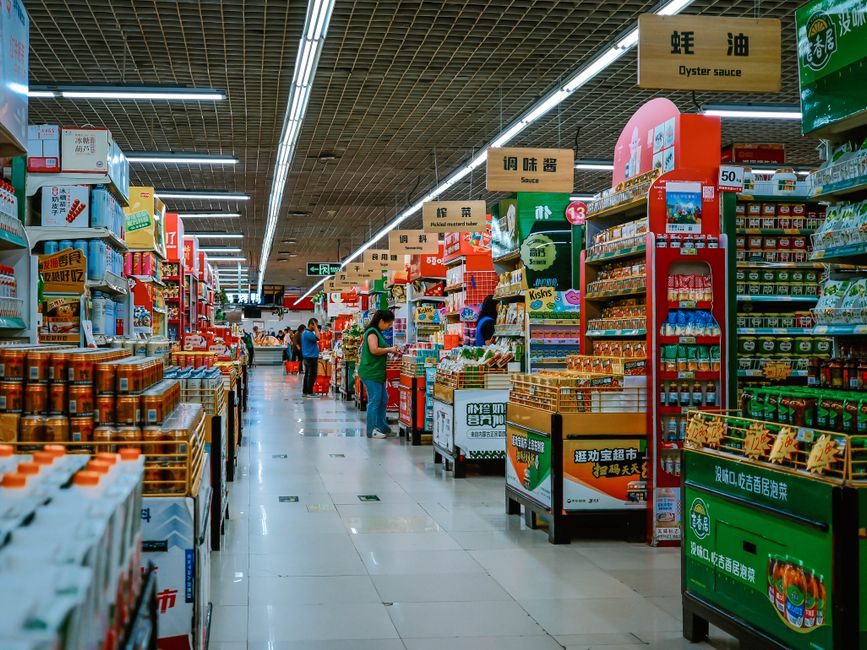
Packaging machinery is the most fragmented capex line on a plant's bill — filling, labeling, form-fill-seal, cartoning, palletizing, and wrapping each carry their own vendor map, lead-time, and CIP-versus-HMI integration cost — and the headline number is USD 46.4 Bn in 2022 climbing to USD 56.7 Bn in 2027 at a 4.1% CAGR, per the MarketsandMarkets reference forecast (2025-08) [S5].
That 4.1% line is the baseline engineers should anchor against; the segments stacked on top of it — sachets, bioplastics, molded pulp, flexible, and printing — dictate what machines get specced and how the controls are wired, which is why the 2026 read on each sub-segment matters more than the global aggregate.
Where the 2026 Volume Sits: Sachets, Bioplastics, and Flexible
The sachet packaging market is valued at USD 10.30 Bn in 2026 and is projected to reach USD 15.29 Bn by 2033 at a 5.8% CAGR (2026–2033) [S1]. Sachet lines are the volume workhorse for FMCG in India, China, and Indonesia because unit price points below the consumer's daily-disposable income threshold; this is a filling-and-sealing machine category with changeover times in the 10–15 minute band for typical 4-lane form-fill-seal configurations, and it is the segment where vacuum packaging machine platforms often get cross-spec'd for oxygen-sensitive pharma SKUs.
Bioplastic packaging is the fastest-growing overlay: USD 11.99 Bn in 2026 reaching USD 27.69 Bn by 2033 at 12.7% CAGR [S2]. That 2.4× expansion forces machinery buyers to validate heat-seal window compatibility — PLA and PHA typically seal 20–40 °C below LDPE — and to confirm that form-fill-seal jaws are not polyethylene-tuned past their tolerance; a wrong window means leakers, not throughput.
Flexible packaging (pouches, bags, rollstock) anchors the volume: USD 307.2 Bn in 2026, forecast to USD 440.9 Bn by 2033 at 5.3% CAGR [S10]. This is where multi-lane horizontal form-fill-seal lines and pre-made pouch fillers compete head-to-head on footprint, changeover, and servo count; downstream, it is the same family of lines that feeds palletizing cells and the industrial valve manifold for CIP rinse loops.
Machine-Type Mix: Filling, FFS, Cartoning, Palletizing, Wrapping
Within the global packaging machinery market the machine-type segmentation breaks out as filling, labeling, form-fill-seal (FFS), cartoning, palletizing, and wrapping [S5]. In throughput terms, FFS lines dominate unit count for food, beverage, and personal care; palletizing dominates capex per line because a single robotic end-of-line palletizer cell with stretch wrapper can run USD 250k–600k installed, and the PLC rack it sits on has to handle 100+ I/O for guarding, conveyor handshake, and pallet-dispense interlocks.
Comparison of the dominant machine types against four selection criteria:
Form-fill-seal (FFS): highest units/min for sachets and stick packs, lowest per-unit capex, but changeover-heavy — best fit for runs of 50,000+ units. Cartoning: medium speed, medium capex, high SKU flexibility — best fit for cosmetics and pharma blister secondary packs. Robotic palletizing: low–medium speed, high capex, lowest labor-per-pallet — best fit for >20 pallets/shift operations. Wrapping (stretch/shrink): low capex, low complexity, often the last cell before dispatch. Engineers should pick on (units/min × labor displacement) / installed capex, not on catalog speed alone.
Material Overlays: Molded Pulp, Bioplastic, and the Plastic-Waste Ceiling
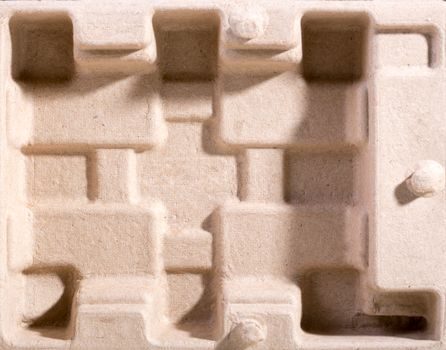
Molded pulp packaging is the most direct sustainability substitute for expanded polystyrene and thermoformed plastics; the molded pulp packaging market is reported at a 2025 base of USD 6.x Bn, with 2026–2033 forecast growth driven by plastic-bag bans and EPR (extended producer responsibility) fee structures [S6]. For packaging-machinery buyers this means dry-press and wet-press tooling investments and a different humidity envelope inside the forming line — molded fiber tools need 40–60% RH control, not the dry-loop conditions of an injection-molded cup line.
The machinery implication: lines that can switch between PE/PET and PLA/PHA without a 4-hour tool swap are the ones earning the early-bird capex.
Adjacent to the machine market, packaging printing sits at USD 452.5 Bn in 2026, growing to USD 690.6 Bn by 2035 at 4.8% CAGR [S7] — and digital-press retrofit onto existing lines is the single largest non-capital-expansion lever for SKU proliferation, especially for the sachet and flexible segments.
Safety, Automation, and the Control Stack Behind the Cell
Machine safety — presence-sensing safety sensors, safety interlock switches, light curtains — is the regulatory envelope around any new packaging cell; the machine safety market is sized at USD 6.5 Bn in 2026, forecast to USD 12.4 Bn by 2036 at 6.7% CAGR, with packaging listed as a primary end-use industry alongside automotive, food & beverage, and pharmaceuticals [S9]. Performance Level d / SIL 2 is the de facto target for guarding on a robotic palletizer, and a safety-rated I/O block on the PLC rack is now a line-item, not an option.
Packaging automation — covering automated packagers, packaging robots, and automated conveyors across labeling, capping, palletizing, wrapping, and form-fill-seal — is the layer that owns the conveyor handshake, the vision system, and the rejection diverter; the Allied Market Research segmentation maps exactly onto the machine types in the global packaging-machinery market [S8]. For a greenfield line, expect 60–70% of the controls budget to live in this layer rather than on the mechanical side.
For inspection and quality data acquisition downstream, plants are increasingly tying checkweighers, metal detectors, and vision systems to the same pressure transmitter and flow meter networks that feed the CIP skid — fewer protocol gateways, one historian, and a smaller attack surface for OT cybersecurity audits.
Who This Capex Is For — and Where It Is Not
Packaging-machinery capex is for: FMCG and food brands scaling past 50 million units/year, pharma and personal-care contract packers running 10+ SKUs per shift, and e-commerce-fulfilment operators that need automated case erectors and label applicators above 500 parcels/hour. The bioplastic and molded-pulp overlay is for brands with EPR or plastic-tax exposure in the EU, UK, Canada, or India; the sachet overlay is for emerging-market distribution where unit price below USD 0.10 is the gating constraint [S1][S2].
It is not for: low-volume specialty producers (under 5 million units/year) where the per-unit depreciation of a servo FFS line will not amortize, nor for processors whose primary bottleneck is upstream mixing or reaction — the bottleneck is rarely the packaging cell. Plants running three or fewer SKUs and minimal seasonal variance should keep a mechanical-only line and skip the robotic palletizer.
Standards and Sourcing Discipline
Buyers should anchor on ISO 13849-1 (safety of machinery) for Performance Level selection, IEC 60204-1 for electrical equipment of machines, and ISO 22000 / FSSC 22000 if food-contact; for CIP loops the pressure sensor range should be sized to 1.5× the highest sanitization-rinse pressure, and the flow meter should be specified to handle the lowest rinse flow rate as well as the production flow rate without losing linearity. The PLC must be selected for the number of safety I/O points, not just the digital I/O count. [S2]
On sourcing, the practical map in 2026 splits into three buckets: European OEMs (synonymous with high capex, long lead times, deep service networks), Chinese OEMs (synonymous with 30–50% lower capex, 8–14 week lead times, improving documentation for ISO 13849 and CE marking), and India-based system integrators (price-competitive, strongest in sachet and FFS). Lead-time discipline, not headline price, is the variable that decides whether a 2026 capex lands in 2026 or slips to 2027.
Adjacent supply chains reinforce this read — the polypropylene resin sourcing map is the upstream bottleneck for flexible packaging, the ABS supply chain is upstream for rigid caps and closures, and the cold-chain equipment map is the parallel capex line for any temperature-controlled SKU shipped through the same palletizer. For a fuller view of resin supply levers, the polypropylene resin sourcing map tracks the same 2026 horizon, while the ABS supply chain spec map covers the rigid-packaging overlay.
Trackable signals for the rest of 2026: how fast bioplastic and molded-pulp sub-segments overtake sachet growth in revenue terms, the spread between European and Chinese OEM lead times, and any tightening of single-use-plastic legislation in additional jurisdictions — each is a leading indicator for whether the 4.1% baseline or the 12.7% bioplastic overlay ends up the better model for the next capex cycle.