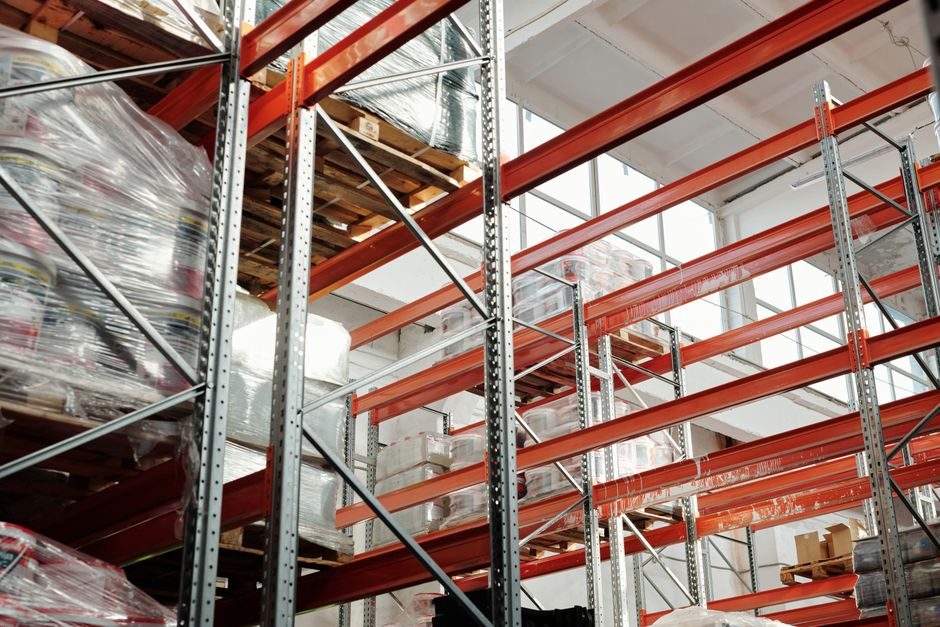
For 2026 small-warehouse fleets, the rule is simple: spec a pallet stacker when the operator is moving full pallets at floor level and stacking to roughly 3–6 m, and spec an order picker when the work is case-level, person-up, and the lift height climbs past 4.5 m.
Current China-market list pricing clusters around US$800–1,800 for entry-level semi-electric/manual pallet stacker units (Shijiazhuang Yishu Intelligence and similar audited suppliers) [S4], and the same source band advertises 1.0/1.5/2.0/5.0 t electric order-picker configurations as a separate category on Made-in-China [S7] — the fact that these SKUs do not overlap is itself the answer to the spec question.
Defining the Two Machines by Working Envelope
A walk-behind or rider-platform pallet stacker carries a single pallet on forks; the mast lifts it vertically and the operator stays at floor level. TCM's SP series sits in this class, listed as electric with rider platform or walk-behind and aimed at dock-to-aisle pallet transport rather than person-up picking [S1]. A typical 1.0–1.5 t walk-behind stacker is sold with a 1.6–3.0 m mast in entry-tier form, and ride-on variants push the lift envelope to roughly 4.5–6 m [S2].
An order picker does the opposite job: the operator rises with the platform or stand-on cage to reach individual cases or totes on higher racking bays. Made-in-China's "Mini Order" category lists 1.0/1.5/2.0/5.0 t order picker platforms with electric forklift truck variants, which is the same product family the global OEM catalogs call low-level and medium-level order pickers [S7]. The two machines look superficially similar (electric, narrow aisle, single operator) but their working envelopes, guarding standards and picking workflows are not interchangeable.
Selection Criteria: Capacity, Lift, Aisle, Operator Position
Four numbers lock the decision: rated capacity (kg/t), lift height (m), minimum aisle width (mm), and whether the operator rides up. For a 1.0 t stacker, current Chinese export offers list US$1,900–4,500 per unit for "fully new mini electric powered" hydraulic hand/manual stackers with remote-control lifting [S3] — that price band corresponds to a 1.0 t / ~2.5–3.0 m walk-behind, not an order picker.
Shanghai Cheuk's Logistics lists its portfolio under "Pallet Truck Stacker Forklift Aerial Work PLA Manufacturer, Power Reach Stacker, Electric Hydraulic Stacker" — the explicit segregation of "aerial work" from "stacker" is the OEM-side confirmation that stacker and order-picker work platforms are classed separately [S5]. Lift height rules them in or out: below 3.5 m and full-pallet, a stacker wins on cost per cycle; above 4.5 m with mixed-SKU case picking, an order picker is the only compliant option because the operator must travel with the load.
Who the Pallet Stacker Is For — and Who It Is Not
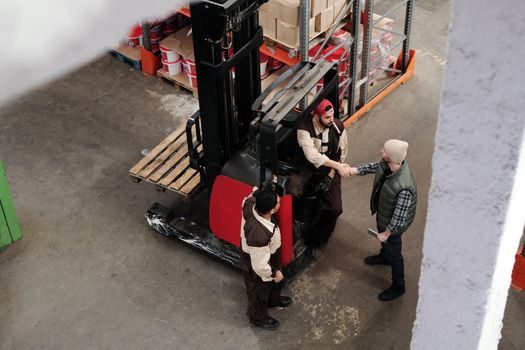
The stacker is for warehouses that move pallets on and off pallet rack bays, load trucks at the dock, and feed production lines from a staging area. A small e-grocery backroom, a parts warehouse with Euro/CHEP/half pallets, and a light-assembly shop fit the profile. The TCM SP-series positioning as a dock-and-aisle pallet truck with rider or walk-behind control matches exactly that use case [S1].
The stacker is NOT for: case picking above the second rack level, mixed-SKU tote retrieval, any workflow that needs the operator's hands at the picking face, and any aisle narrower than the truck's required stacking aisle (typically 2.4–2.8 m for a 1.0 t walk-behind). Using a stacker for person-up picking also creates a guarding/standards exposure that no EU or US safety framework recognizes — the operator platform, fall protection and dead-man controls of an order picker are the engineered answer to that risk.
Who the Order Picker Is For — and the Workloads It Loses
The order picker is for retail DC, pharma, 3PL and e-commerce fulfilment where the unit of work is the case or tote, not the pallet, and where pick faces sit at 4.5 m up to 12 m on VNA or wire-guided aisles. A stand-on or sit-on order picker lets the operator elevate with a guarded platform so hands are free at the pick slot. Made-in-China's listings cover 1.0 t through 5.0 t order picker capacities in this category [S7].
The order picker loses on three workloads: full-pallet dock moves (a stacker is faster and cheaper per cycle), high-bay full-pallet storage above 6 m where a stacker crane becomes the economic choice, and any non-aisle environment such as outdoor yards or block stacking. Pushing an order picker into pallet-only work inflates the per-pallet cost because the machine carries a heavier chassis, wider operator platform, and more complex mast than the duty requires.
Side-by-Side Comparison on the Four Decision Criteria
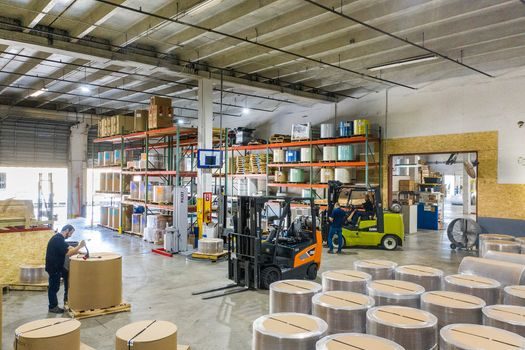
Capacity: stackers cluster at 1.0–2.0 t for walk-behind/rider, occasionally 3.0 t for heavy ride-on; order pickers at 1.0 t are most common for low-level, with 2.0–5.0 t units used in heavy-case and pallet-from-aisle applications [S3][S7].
Lift height: stacker mast tops out at roughly 3.0 m (walk-behind) to 6.0 m (ride-on), while order pickers routinely cover 4.5–12 m to put the operator at the pick face [S2][S7].
Operator position: stacker operator stays on the floor (walk-behind or stand-on rider), order picker operator rises with the load on a guarded platform — this single difference drives guarding, training and aisle-width requirements.
Unit cost (2026, FOB China, indicative): entry semi-electric/manual stacker US$800–1,800 [S4]; 1.0 t powered stacker US$1,900–4,500 [S3]; order picker pricing follows the higher chassis/mast cost band and is quoted separately in Made-in-China's "Mini Order" category [S7].
Adjacent Equipment and Sourcing Signals
Where the stacker ends, an electric pallet truck begins for ground-level pallet moves, and where the order picker tops out, a stacker crane takes over for full-pallet high-bay. The transitional band — 3.5–6 m full-pallet with ride-on — is also where a rider-platform pallet stacker and a low-level order picker can look identical in photos; spec them by working envelope, not by appearance. [S1]
On the consumables side, plastic pallet compatibility matters: a 1200×1000 EUR or 1200×800 FIN pallet dictates fork length and spread, and the PalletMaster Finland dispenser line specifically calls out EUR, FIN, CHEP and 1/2-pallet formats as the working set for automated pallet handling [S6]. For broader fleet sourcing logic on electric units, the Electric Pallet Truck Selection: 6 Gates That Lock Model Code Before RFQ walkthrough applies the same gate-by-gate method to the truck class. For automated storage where the stacker is feeding or being fed by AS/RS, the AS/RS vs Vertical Lift Module: 2026 Spec Frame for Footprint, Throughput and SKU Density comparison covers the upstream decision, while the Tower Crane Buying Guide 2026: Spec, Sourcing, and Total Cost piece is the right neighbour for yard-side steel-handling fleets, not the aisle.
Failure Modes and Sourcing Discipline
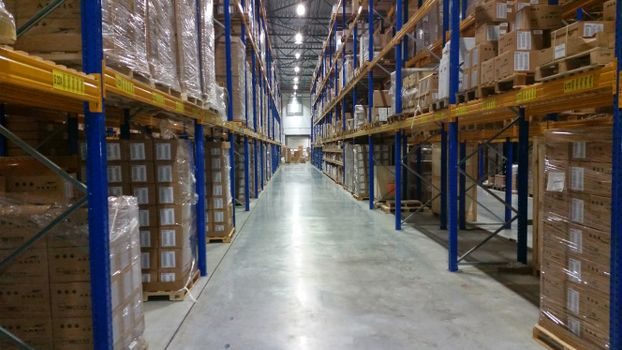
Two failure modes repeat in 2026 small-warehouse bids. First, buyers spec a rider stacker to "6 m" and then ask it to do case picking at 5.5 m — the truck is not guarded for person-up work, the operator has no platform, and the cycle time collapses. Second, buyers spec a low-level order picker to "save money" and use it to shuttle full pallets at floor level — the heavier chassis, wider turning radius and operator platform all penalize the unit cost of every pallet move. [S2]
Sourcing discipline: confirm the duty cycle in picks/hour or pallets/hour, the pick face height in metres, the aisle width in millimetres, and the pallet format (EUR/FIN/CHEP/half) on the RFQ [S6]. Match those four numbers against the stacker or order picker spec sheet, and the choice collapses to one machine class. Watch points to track: 2026-06 TCM SP-series distributor updates for North America/EMEA [S1], any 2026 Q3 platform-lift guarding standard revisions affecting stand-on order pickers, and the next China-side export price index for 1.0 t electric stackers, which has been the most volatile line on Made-in-China through 2026 H1 [S3][S4].