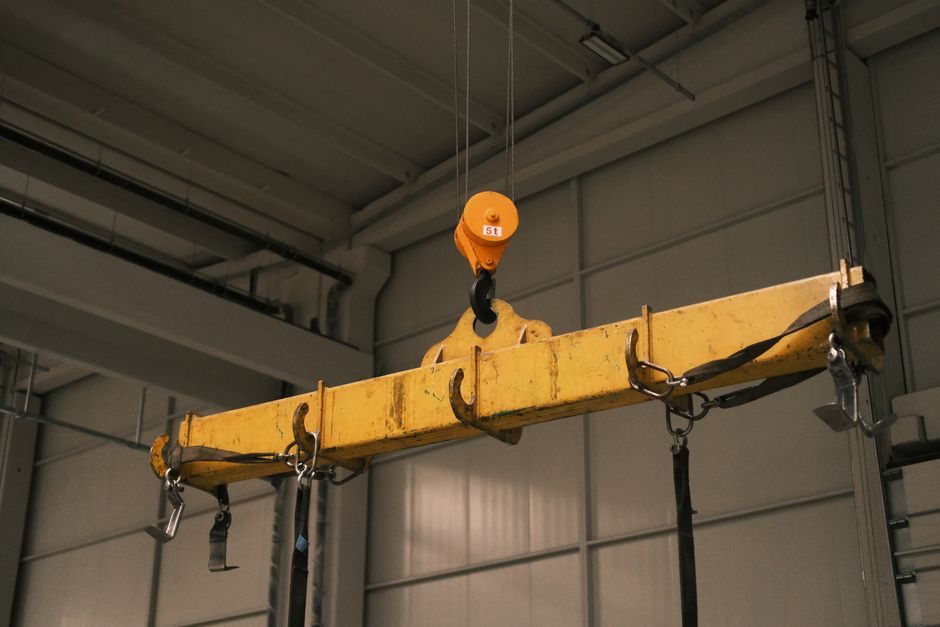
An AS/RS (Automated Storage and Retrieval System) is a crane-and-aisle or mini-load installation built around fixed-width aisles and unit-load or tote media, while a vertical lift module is a single enclosed column of trays served by a vertical extractor with an integrated pick window — two storage archetypes that compete for the same brownfield or greenfield warehouse budget but with very different physics.
The VLM segment alone was sized at US$ 950.19 million in 2024 and is forecast to reach US$ 1,766.08 million by 2031 [S1], signalling that buyers are actively shifting small-parts storage away from horizontal shelving into vertical columns. AS/RS still dominates the unit-load and pallet tier, but the VLM share gain tells a process engineer that footprint and ergonomics — not raw pallet capacity — are now driving the spec conversation.
Footprint, Ceiling and SKU Density: Where the Two Architectures Actually Differ
An AS/RS unit-load crane aisle typically needs 900-1,200 mm of aisle width for the stacker-crane mast and a clear height of 8-24 m to push rack density; a VLM collapses to a single 2.5-4 m wide × 3-12 m tall enclosed column with the lift mechanism on the inside, which is the root cause of the 25-40% floor-area saving that VLM vendors quote [S2].
Per the [S1] market study, the VLM form factor is the fastest-growing slice of small-parts automated storage, growing from US$ 950.19 M to US$ 1,766.08 M between 2024 and 2031 — a compounded trajectory that reflects how aggressively the column design beats a fixed-aisle rack on raw m²-per-SKU. For engineers used to specifying rack-and-aisle, the mental model inverts: a VLM trades aisle floor for ceiling height, so facilities under 6 m clear height are non-starters, while a 12 m clear warehouse can hold what would otherwise need a 250-400 m² shelving zone.
The vertical lift module cell is a closed goods-to-person system: an extractor runs inside the column, fetches the requested tray, and delivers it to an external pick window typically 800-1,000 mm above floor in 8-15 seconds end-to-end, which is the mechanism behind the 2-3x pick-rate multiplier commonly cited in VLM vendor material [S2].
Throughput, Batching and the Order-Picking Math
Real warehouse trials using multiple VLMs in a batching configuration show that order-batching algorithms materially raise pick density per extractor cycle — a peer-reviewed study by Lenoble, Frein and Hammami used real production data to demonstrate measurable throughput gains over random retrieval [S3].
AS/RS throughput is governed by crane S-curve acceleration, single- or double-deep aisle configuration, and the number of cranes per aisle; a typical mini-load AS/RS in a 30 m aisle moves 80-200 totes/hr per crane, while a single VLM column delivers a comparable 60-150 item-lines/hr to the operator [S2], but the VLM achieves it from a footprint an order of magnitude smaller.
Where the AS/RS wins is parallel aisles: a multi-crane AS/RS with 4-6 aisles scales linearly into 800-1,500 totes/hr, which a single VLM cannot match. The honest spec cut is one VLM per order-picking station vs a multi-aisle AS/RS for whole-warehouse slotting, and any selection that ignores the parallel-aisle advantage of AS/RS is selling the buyer on footprint alone.
Selection Criteria: Decision Matrix for the 2026 Buyer
Use footprint-per-SKU as the primary cut: a VLM is the right answer below roughly 1,500 SKUs in a single picking zone, while AS/RS takes over above 3,000-5,000 SKUs where multi-aisle parallelism starts paying for the crane investment [S1][S2].
Use ceiling height as the gate: VLM needs 6 m minimum clear and pays back the column cost between 8-12 m; AS/RS unit-load needs 8-24 m of clear height to justify the rack structure. Buyers in low-bay industrial buildings are forced into horizontal carousels, VLMs or static shelving, not AS/RS — a constraint that is rarely priced correctly in early-stage layouts.
Use throughput-per-operator as the labour cut: a VLM's goods-to-person pick window is a single-station ergonomic position, while AS/RS is typically paired with multiple picking stations fed by conveyors — the VLM wins on the 1-2 operator cell, the AS/RS wins on the 4+ operator cell where the conveyor network amortises.
Use Cases by Industry Segment
Spare-parts warehouses, MRO stores, pharmaceutical and electronics kitting rooms are the natural VLM territory because the SKU count is moderate (200-3,000), the items are small, and the pick frequency is high but spread across many slow-movers [S1]. The Thomson VLM reference design treats material handling with a vertical lift module as a standard application for these profiles [S2].
AS/RS remains the standard for pallet flow in manufacturing, cold-store buffer, and e-commerce reserve storage where each pick involves a full pallet or case; it is the only credible answer when item dimensions exceed roughly 600 × 400 mm or weight exceeds 50 kg per unit, because the VLM tray geometry and extractor lift capacity are designed for tote-scale parts, not unit loads.
For mixed operations — pallet reserve plus small-parts picking — the typical 2026 spec is an AS/RS unit-load aisle for pallets and 2-4 VLM columns as a downstream kitting buffer, with a linear module or roller conveyor linking the two. The two systems are complementary in this topology, not competitors.
Limitations, Failure Modes and Integration Constraints
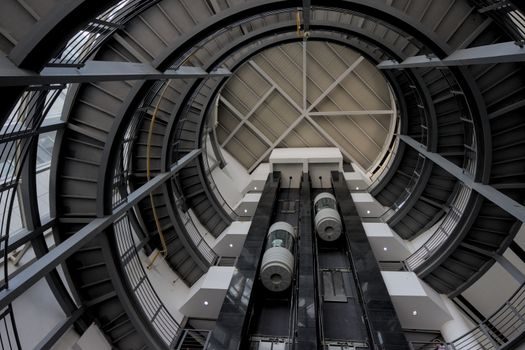
VLM failure modes are dominated by the extractor mechanism: chain wear, belt stretch, lift-motor encoder drift and tray-present sensor fouling are the recurring service items, and a single-column failure stops picking in that zone until the lift is back online — redundancy is built by adding a second column, not by fixing the first [S2].
AS/RS failure modes are dominated by the stacker crane: rail wear, current-collector carbon-strip wear, and S-curve drive faults; the failure is rarer per hour but the recovery involves a crane extraction and a 2-8 hour service intervention, so any AS/RS spec must carry a maintenance contract line item.
Integration-wise, a VLM typically needs 3-phase power, a building floor capable of 800-1,200 kg/m² point load at the column base, and a fire-suppression interface per local code; an AS/RS needs the same plus a separate crane-rail foundation and a network of safety light curtains at every aisle entry per IEC 60204-1 / ISO 13849-1 machinery-safety practice [S2]. For multi-aisle AS/RS the remote IO module count climbs sharply, and the controls cabinet must be sized for hundreds of digital I/O points rather than the 30-60 a VLM cell typically exposes.
Standards, Sourcing and Total-Cost Math
No single ISO or IEC standard governs "AS/RS vs VLM" as a category; the relevant machinery-safety baseline is the ISO 13849 / IEC 60204-1 pair for the lift and crane mechanisms, and EN 15095 for power-operated doors on the VLM pick-window guard, while pallet-rack design falls under EN 15635 / FEM 10.2.14 in EU jurisdictions. The VLM market growth from US$ 950.19 M in 2024 to US$ 1,766.08 M in 2031 [S1] is a commercial signal, not a regulatory one.
For sourcing, the 2026 vendor landscape splits between integrated-material-handling OEMs that offer both AS/RS and VLM lines (Hörmann, Kardex, Hänel, SSI Schäfer, TGW) and specialist lift-makers that supply the linear module inside the VLM column — Thomson's material-handling reference is a good example of the second tier [S2]. The 2026 lean is to specify the integrator on a fixed-price throughput-and-availability SLA, with a separate OEM line for the lift mechanism so warranty terms on the moving parts are not bundled into the controls warranty.
Capex parity: a single VLM column installed commonly lands in the US$ 80,000-180,000 range including the extractor, tray set and pick window, while a single mini-load AS/RS aisle (rack + crane + controls) typically starts near US$ 400,000 and scales into seven figures for unit-load. Payback is driven by labour (operator hours) and floor-cost avoidance, not by the equipment line itself.
Trackable Signals Worth Watching in 2026-2027
Two signals deserve a place on any spec-engineer's watch list. First, the VLM market trajectory — does the 2024-to-2031 projection from US$ 950.19 M to US$ 1,766.08 M [S1] hold when the next two annual updates drop, or does the macro-rate environment compress the small-business end of the buyer base and stall the column? Second, the order-batching literature for multi-VLM cells — the Lenoble et al. Both are watchable, neither is guaranteed.
For related coverage, see Aerial Work Platform vs Crawler Crane: 2026 Selection Frame by Lift, Reach and Site.