
PCB quality in 2026 is a layered system: laminate grade (FR-4 with UL94 V-0 flame rating, or polyimide for flex), fabrication acceptance (IPC-A-600 Class 2 vs Class 3), and in-process inspection (SPI, AOI, X-Ray, ICT) — and every China OEM shop in the survey holds ISO 9001:2015 as the baseline [S1][S3][S4].
FR-4 — a fiberglass-reinforced woven glass + epoxy laminate rated UL94 V-0 (self-extinguishing within 10 s after ignition) — remains the default rigid substrate because of its balance of cost, mechanical strength, and electrical insulation [S1]. For dynamic or space-constrained builds, polyimide flex PCB replaces FR-4 to allow bending, folding, and 3D packaging while keeping the conductive copper traces protected by coverlay or conformal coating [S1][S3].
FR-4 vs polyimide flex vs metal-core: material trade-offs
FR-4 fiberglass-epoxy laminate is the cost baseline and the only substrate that universally carries UL94 V-0 self-extinguishing certification as a material property [S1]. Polyimide flex PCB (FPC) trades stiffness for bend endurance, enabling tighter enclosures and better vibration survival than rigid FR-4 [S1][S3].
For thermal-dense designs, aluminum-backed / metal-core PCBs shift heat away from LED and power components, while Rogers and high-Tg FR-4 variants are picked for high-frequency controlled-impedance runs [S3]. The current OEM catalog from JHYPCB groups builds into rigid FR-4, HDI, flexible, rigid-flex, high-frequency/Rogers, and metal-core — each with its own lamination and inspection profile [S3].
IPC acceptance classes and what Class 2 vs Class 3 actually changes
IPC-A-600 is the visual acceptance standard for bare boards, and IPC-6012 defines the performance/qualification spec for rigid PCBs — together they set the pass/fail criteria a fabricator works to, with Class 2 (dedicated service electronics) and Class 3 (high-reliability / continuous performance) the two production levels most OEMs quote [S3].
Flex and rigid-flex fall under IPC-6013, which adds bend-cycle and coverlay-adhesion requirements on top of the rigid rules [S3]. Sourcing from an ISO 9001:2015-audited shop is the floor — Guangdong-based SNT Electronics and similar Tier-1 OEM suppliers on Made-in-China.com list ISO 9001:2015 plus ISO 14001 on their audit profile, with MOQ as low as 5 pieces at unit pricing around US$ 0.50 for assembly [S4].
SMT stencil and solder-paste deposition: where most field defects start

Stainless-steel laser-cut SMT stencils are the first quality gate after fab: GOJGO specifies 304 HTA stainless-steel foil with aperture tolerances as tight as ±0.003 mm, cut on more than 30 high-precision laser machines, to keep solder-paste deposition repeatable [S1].
Stencil type should match the assembly: laser-cut (general SMT), step stencil (mixed component heights on one board), nano-coating (improved paste release for fine-pitch QFPs), and electroform (highest precision for 01005 and wafer-level work) [S3]. After print, the inspection stack is SPI (paste volume on every deposit), AOI (post-reflow solder joint geometry), and X-Ray (BGA and QFN hidden joints) — GOJGO's advanced lines list SPI, AOI, X-Ray, IC programming, and functional test as standard, with placement accuracy of 0.03 mm on 01005 parts using Siemens and GKG lines [S1].
HDI, multilayer, and heavy-copper: pushing the fabrication envelope
Beyond 4- and 6-layer standard multilayers, HDI builds add microvias and any-layer interconnect, BGA PCBs demand tighter drill-to-copper annular ring, and heavy-copper PCBs (typically 3 oz/ft² and above) are required for high-current power stages — each tier raises the IPC-A-600 acceptance bar [S3].
Quick-turn prototype lines at JHYPCB ship prototype boards in 3-7 days, while GOJGO offers free DFM (Design for Manufacturability) check plus 24-hour engineering support and full-process system monitoring to protect on-time delivery [S1][S3]. For capacity planning on a multilayer mix, see this work-center math for layer count, yield, and line balance breakdown — line balance is usually the gating constraint, not raw lamination press time.
Procurement signals worth tracking: audit status, MOQ, and quoted turn time
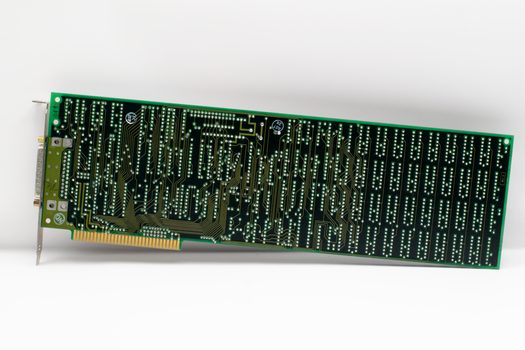
Three verifiable signals separate a Tier-1 China PCB OEM from a trading front: ISO 9001:2015 + ISO 14001 audit badges on the supplier profile, MOQ flexibility down to 5-piece prototype runs, and stated prototype lead time of 3-7 days with 24-hour DFM feedback [S1][S3][S4].
JHYPCB publishes a 20-year track record, a 10,000+ global client base, and 24-hour turnaround as a marketing headline; Fastlink lists 15 years of operation since 2009 with rigid, flex, rigid-flex, hybrid RF/digital, metal-core, and aluminum-backed as its in-house scope [S3][S6]. For a broader view on how 2026 spec maps are structured for industrial buyers, the stainless steel selection 2026 grade map uses the same audit-first, criteria-second template applied to metals.
Failure modes and constraints buyers should price in
FR-4 is not a high-temperature laminate: standard Tg sits around 130-140 °C and high-Tg FR-4 pushes to 150-170 °C, so reflow profiles for lead-free SAC305 paste (peak ~245 °C) must be validated against the laminate Tg margin — exceeding it drives measling and pad lifting [S1].
Flex and rigid-flex are sensitive to bend radius and dynamic vs static use; specifying a static-only flex where the application cycles will void the coverlay faster than the copper trace fails [S1][S3]. HDI and BGA boards need stacked-microvia reliability data (IPC-6012 Class 3 mandates thermal-stress testing) and should not be ordered on a 3-day quick-turn line without an explicit Class 3 declaration in the PO.
For the relevant spec sheets and selection criteria, see additive manufacturing material, air quality monitor, and power quality analyzer.