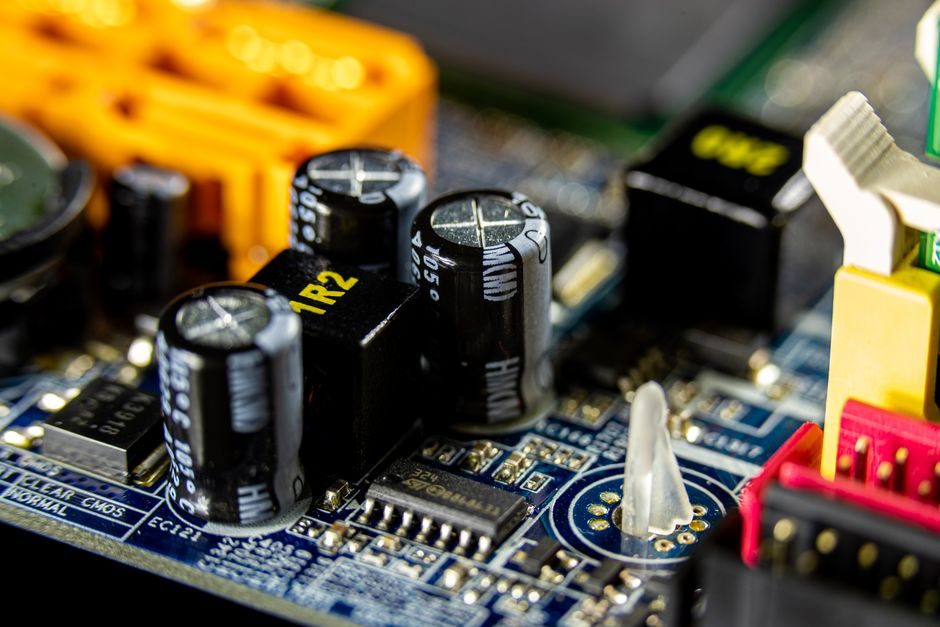
Global PCB demand in mid-2026 is being reshaped by three concrete forces: Taiwan's continued grip on advanced IC-substrate and HDI capacity, the 22 June 2026 GlobalFoundries–Qualinx demonstration of a fully secure European chip supply chain, and a copper feedstock market whose 2026 volatility is being priced into every multilayer board quotation [S5].
For EMS buyers the practical fallout is that lead times on 8–16 layer FR-4 boards with controlled-impedance stack-ups now routinely run 6–10 weeks, and that any sourcing model which treats PCBs as a commodity laminate is mis-pricing the system. The discussion below breaks the chain into the layers a process engineer actually has to qualify — copper feedstock, substrate/laminate sovereignty, fab capacity, EMS assembly risk — and shows the decision gates a 2026 buyer can defend on paper.
Copper feedstock: the upstream cost that drives every board quotation
Copper-clad laminate (CCL) cost is the single largest variable in any multilayer PCB price, and 2026's upstream chain is being squeezed on two flanks: mine output concentration in Latin America and Chinese smelter discipline on cathode premiums. [S1]
For PCB buyers, the operational rule is straightforward: lock CCL price on cathode index for the build window, not on a fixed annual rate, and force the fab to disclose the high-grade vs standard-grade copper share in the stack-up. The copper supply shortage 2026 risk vectors framing is useful here because the same constraints that reshape cable and busbar sourcing also reshape PCB copper-foil supply — 1 oz/ft² and 2 oz/ft² copper weights are the most exposed.
Substrate sovereignty: Taiwan, Korea and the new European loop
Taiwan remains the linchpin of the global semiconductor and IC-substrate chain, with the island's OSAT and substrate-cluster footprint continuing to anchor advanced packaging for AI accelerators, networking ASICs and high-end FPGAs [S5]. EE Times' 19 June 2026 coverage frames Taiwan's role as "small in size but outsized in influence" — a statement that maps cleanly onto ABF substrate capacity, where the top three suppliers are Taiwan- and Korea-headquartered and where 2026 greenfield capacity is still 18–30 months from high-volume output.
Against that backdrop, the 22 June 2026 GlobalFoundries–Qualinx announcement of "Europe's first fully secure chip supply chain" is a small-volume but symbolically important milestone: it bundles European-source wafers, European test and European secure tracking, and is explicitly designed to qualify inside industrial and defence programmes that cannot route through Asia [S5]. For PCB buyers, the read-across is that European OEMs with EU/sovereign-content rules will start demanding PCB traceability that mirrors the silicon chain — panel-level lot genealogy, Tg and Td certificate on every shipment, and a T260/T288/T300 data trio on the specific base laminate used.
Fab capacity allocation: where 2026 lead times are actually moving
PCB fab capacity in 2026 is no longer a single "is the line busy?" question. The market has split into three tiers: high-mix quickturn prototype shops running 5–10 day turns on 2–6 layer boards; volume FR-4 multilayer fabs in mainland China and Southeast Asia at 4–6 week lead times on 8–16 layer controlled-impedance work; and HDI / substrate-like fabs in Taiwan, Korea and Japan at 8–14 weeks for any-stack-up above 4+N+4 with microvia aspect ratios tighter than 0.75:1. Best-in-class 2026 supply-chain planning suites — surveyed for the China market on 21 June 2026 — now treat fab lead time as a multi-attribute field (layer count, impedance tolerance, surface finish, UL flammability rating) rather than a single date [S1].
The practical gate for a 2026 PCB RFQ is therefore a structured data exchange: layer count, finished copper weight (oz/ft²), dielectric Tg, Td and Dk/Df at the operating frequency, impedance tolerance (±10% or ±5%), surface finish (ENIG, ENEPIG, OSP, immersion tin, hard gold), via structure (stacked, staggered, staggered-with-staggered-fill), and UL94V-0 rating. Buyers that send this as a single spreadsheet get quotes that are within 5–8% of each other across qualified vendors; buyers that send a paragraph description get quotes that swing 25–40% on identical drawings.
EMS and assembly risk: the layer a PCB buyer still has to qualify
The PCB itself is only one node in the EMS chain. In 2026 the bottleneck has shifted onto component availability — particularly power magnetics, MCUs and any part on a single-source wafer — and onto the certification chain (UL, CE, IECEE CB, FCC, automotive IATF 16949 / AEC-Q) that the EMS partner holds. According to Coursera's 2026 guide on becoming a supply chain analyst, the median annual salary for supply chain analysts is $80,880, with a 17 percent job outlook for the decade spanning 2024 to 2034.
For 2026 PCB programmes the engineer-level rule is to qualify at least two EMS shops, of which one must hold IATF 16949 for automotive work, and to maintain a controlled-build buffer of finished PCBs equal to 30 days of downstream SMT consumption. The top battery energy storage companies 2026 reference is instructive here because the same dual-source, buffer-stock, and certificate-traceability discipline that the BESS industry is adopting is exactly what stabilises a 2026 PCB programme against fab allocation shocks.
Decision matrix: which PCB sourcing model fits which buyer
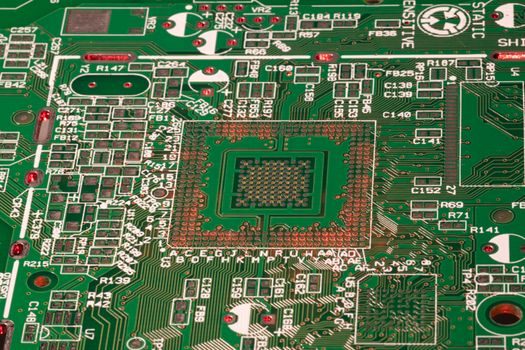
Four buyer archetypes show up in 2026 PCB sourcing data. Prototype / R&D labs need 5–10 day turn, accept higher per-panel cost, and should qualify 2–3 quickturn shops; industrial OEM mid-volume (1k–50k panels/yr) needs 4–6 week turn, controlled-impedance capability, and a dual-source policy across at least one China-based and one Southeast-Asia-based fab; high-reliability / medical / aerospace needs ITAR or AS9100D, full lamination-traceability, and a single-vendor relationship enforced by audit rather than by RFQ; consumer / IoT high-volume can chase the lowest panel cost but must lock CCL index pricing 90 days forward and carry 30–45 days of finished-panel inventory. [S2]
The matrix compresses to a single rule: the more failure-mode cost dominates the buyer's P&L, the more the sourcing model should be local, audited and dual-sourced; the more unit-cost dominates, the more the model should be global, index-priced and inventory-buffered. The EV-charging and battery storage markets are already living through this trade-off — see the EV charger market 2026 spec-lever analysis for the same architecture decision under a different hardware shell.
Limitations and failure modes a 2026 PCB buyer must price in
Three failure modes are responsible for the majority of 2026 PCB programme overruns. First, dielectric drift: stack-ups specified with Dk tolerance at 1 GHz but qualified at 10 GHz produce field returns when the OEM finally runs the product at 5G / Wi-Fi 6E frequencies. Second, ENIG black-pad: ENIG remains the default surface finish for fine-pitch parts, but immersion gold thickness below 0.05 µm combined with nickel-phosphorus over 7% wt is a documented field-failure precursor, and the fab's ENIG bath chemistry must be on the incoming-inspection checklist. Third, via-in-pad voiding: stacked microvias on heavy copper (>2 oz) inner layers without filled-and-capped via-in-pad produce BGA-head-in-pillow defects that only show at reflow; the fix is a process-control spec, not a fab change. [S3]
A 2026 PCB sourcing decision that does not put Tg, Td, ENIG Au/Ni thickness, microvia aspect ratio, and impedance tolerance on the same datasheet is a decision that will pay a rework bill later. The same datasheet discipline is the basis of the 2026 order picker 2026 price and cost guide — a different industry, the same spec-gate logic.
Trackable signals for the rest of 2026
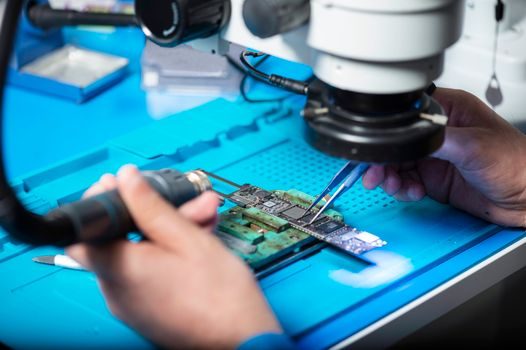
Three signals are worth watching over the next two quarters. LME copper cathode and CCL premium moves on a 30-day rolling window — a sustained move above 5% will print through to PCB panel quotes within 45 days. European PCB and substrate content announcements under the EU Chips Act follow-on funding, which would change the cost basis of any programme with a European-content clause. And the second wave of GlobalFoundries–Qualinx-style secure-chain partners, which will set the de-facto standard for chain-of-custody documentation that industrial and defence buyers will start demanding from their PCB vendors in 2027. [S4]
For component-level specifications, see dc power supply, switching power supply, and chain conveyor.