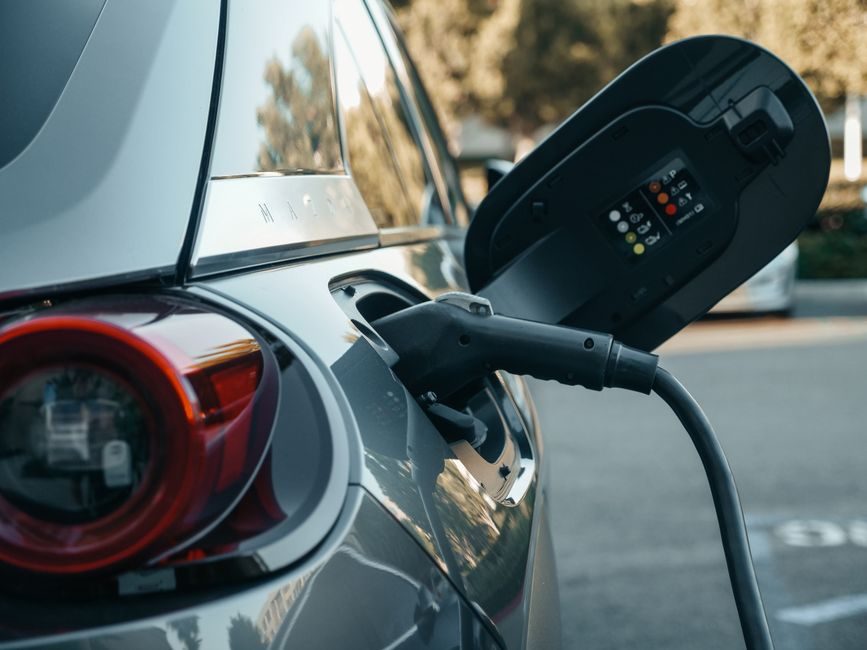
Global EV charger deployment in 2026 is dominated by AC Level 2 hardware on a unit basis, while DC fast charging captures the majority of new capital expenditure because of its 60–350 kW power range and 15–30 minute session targets [S3].
Asia-Pacific retains the largest installed-base share, with China accounting for the bulk of public DC fast-charger output and the rest of the region following on CCS2 hardware for new passenger-car programs [S1].
Charger Classes and Power Bands That Define 2026 Procurement
Three classes dominate the 2026 buy-spec. AC Level 1 runs 1.4–1.9 kW from a standard 120 V outlet, is essentially residential trickle use, and is rarely procured at fleet scale. AC Level 2 spans 3.3–19.2 kW at 208–240 V single-phase and is the volume leader for workplace, multi-unit dwelling, and depot overnight charging [S3]. DC fast charging covers 20–350 kW at 200–1000 V DC and is the segment where connector selection, cooling, and grid interconnect cost drive the actual spec battle.
Inside the DC band, sub-segments now matter to procurement. DC "fast" at 50–150 kW targets urban top-up sites with 20–40 minute dwell time. High-power charging (HPC) at 150–350 kW targets corridor sites with liquid-cooled cables and 800 V battery architectures. A 350 kW dispenser typically pulls 400–500 A from a 800–1000 V stack, which forces liquid-cooled cable assemblies and oversize DC busbars inside the cabinet [S3].
Connector, Cable and Coupler Specification Levers
Three coupler families are specified in 2026. CCS2 (IEC 62196-3, Type 2 with two DC pins) is the European and most Asia-Pacific passenger-car default. NACS — the SAE J3400-derived Tesla connector — is now adopted by Ford, GM, Rivian and a long list of OEMs and is being deployed across North American public sites through 2025–2026 [S1]. CHAdeMO remains a residual Japanese standard, mostly service for older Nissan Leaf fleets and a few commercial truck pilots.
For a DC dispenser, buyers should lock the spec to: CCS2 + NACS dual-cable (or dual-port) configuration, 1000 V DC max output, liquid-cooled cable assemblies rated 400–500 A continuous, IP54 enclosure minimum, IK10 impact rating for outdoor cabinet skins, and a Type 4 rated cable per IEC 62196-3 for outdoor public access [S1]. The enclosure rating matters because chargers sit in unconditioned, often coastal, sometimes high-dust environments, and a charger that fails on the enclosure costs the operator a truck roll before it ever fails on the power module.
Power Module Architecture and Grid-Side Interconnect
The dominant 2026 power topology is a 30–50 kW silicon-carbide (SiC) AC/DC module stacked to 150–350 kW. SiC switching typically runs 50–100 kHz vs 10–20 kHz for legacy IGBT stacks, which is what lets vendors shrink the inductor and cold-plate stack inside a 350 kW cabinet to roughly the same footprint as a 150 kW IGBT unit shipped in 2021 [S3].
Grid-side, the cabinet needs 480 V three-phase or 600–800 V three-phase utility service at 200–600 A, depending on power class. That feed typically lands on a breaker, a step-down transformer where utility service is medium voltage, and a harmonic filter to keep THDi inside IEEE 519 limits at the point of common coupling. Buyers also need a meter socket and CT cabinet that meet local utility interconnect rules; this is where pressure sensor monitoring of coolant loop pressure and the flow meter on the chilled-water skid get bolted to the same back-office system as the industrial valve actuators on the cooling loop, so a single SCADA can see both the energy and thermal envelope of each dispenser.
Back-Office Protocol: OCPP 1.6 vs 2.0.1 and ISO 15118
OCPP 1.6 remains the de facto 2026 protocol because it is what most network operators already speak, but OCPP 2.0.1 is now mandatory on most EU public-tender RFPs because it adds device-management, improved security profiles, and ISO 15118 plug-and-charge support [S3]. ISO 15118-20, the newer revision set, enables bidirectional power transfer (V2X) and is being piloted on a small share of 2026 builds, mostly fleet depot sites where the bus or truck battery can be used as a grid asset.
For the buyer, the rule of thumb is: lock OCPP 2.0.1 for any new public DC fast charger, accept OCPP 1.6 only as a fallback for low-cost AC Level 2 hardware in multi-unit dwellings, and require ISO 15118-2 conformance for the plug-and-charge and smart-charging features that the OEM marketing material will inevitably list. Without that conformance line in the spec, vendors will quietly ship the legacy profile and the operator will discover the gap during commissioning.
Comparison: AC Level 2 vs DC Fast vs High-Power Charging (HPC)
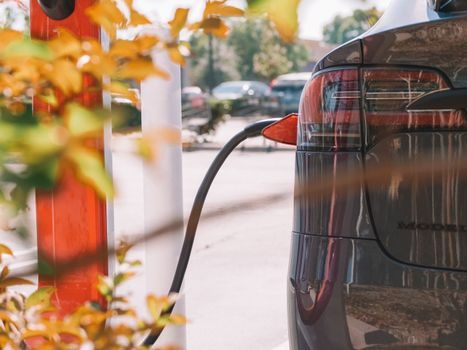
Across four procurement criteria, the three classes line up as follows. Power output: AC Level 2 = 3.3–19.2 kW, DC fast = 50–150 kW, HPC = 150–350 kW. Use case fit: AC Level 2 wins on depot overnight and workplace dwell (4–10 hours), DC fast wins on retail top-up and urban corridor (20–40 minutes), HPC wins on highway corridor and commercial truck (10–25 minutes). Unit price band (2026): AC Level 2 USD 500–1,500, DC fast USD 25,000–60,000 per dispenser, HPC USD 70,000–150,000 per dispenser including cabinet, cable, and dispenser [S3]. Grid interconnect cost follows the same multiplier: AC Level 2 needs a 40–60 A branch circuit, DC fast needs a 150–400 A three-phase service upgrade, and HPC needs medium-voltage utility interconnect in most jurisdictions.
The takeaway for a hardware buyer: AC Level 2 is the volume play, DC fast is the capex play, and HPC is a corridor-site-only play where dwell time, grid service, and 800 V vehicle architectures all line up. Picking the wrong class for the site is the single most common mistake in 2025–2026 charger rollouts.
Sourcing Reality: Lead Times, Cost Levers and the 2026 Bottleneck
Three bottlenecks shape 2026 sourcing. First, SiC wafer supply: 150 mm and 200 mm SiC substrates are still tight, which keeps module pricing firm; second, copper — see the copper supply constraint analysis for the wider conductor and busbar impact; third, large-format power transformers at 1–10 MVA, which are the long-lead items on any HPC site that needs medium-voltage service [S3].
Typical 2026 lead times run 12–20 weeks for AC Level 2 hardware from order, 18–30 weeks for DC fast charger cabinets, and 30–52 weeks for HPC dispenser + substation packages because of the transformer. Power module cost is roughly 25–35% of cabinet cost, the dispenser head and cable another 15–25%, and the cabinet, cooling, and wiring harness the remaining 40–55%. That split is why wiring harness suppliers with automotive-grade automation are now a top-three cost lever, and why buyers with framework agreements on 30–50 kW SiC modules are pulling 6–8 weeks off lead time versus spot buyers.
Failure Modes, Certification and Standards Buyers Must Lock
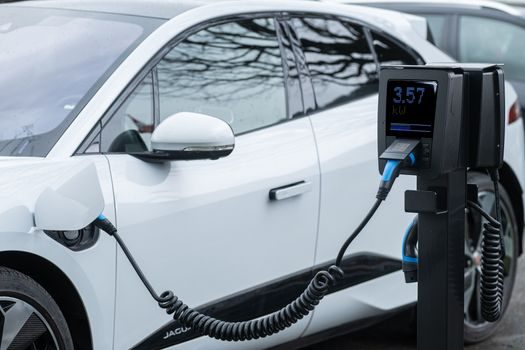
Five failure modes drive the warranty bill. Connector pin wear from high-amperage DC cycling. Liquid-cooling hose failure on HPC cables. Power module thermals when the dust filter clogs in a coastal or desert site. OCPP back-office firmware drift that breaks network authentication. Enclosure corrosion at the cable gland after 24–36 months in service. [S1]
Buyers should require: UL 2202 / IEC 61851-1 conformance on the AC and DC stack, IEC 62196-2 / IEC 62196-3 on the coupler, IEC 60529 IP54 minimum on the cabinet (IP65 on the cable head for HPC), IK10 impact rating per IEC 62262 on outdoor cabinet skins, and CE / UKCA / FCC / Energy Star listings as appropriate to market. The SAE J3400 NACS standard is the third coupler that procurement should now treat as a mandatory line item for North American sites, alongside CCS1 (the North American variant of CCS) [S1].
Signals to Track Through 2026
Three signals are worth watching. The share of public DC fast sites shipping with NACS + CCS dual-cable heads versus CCS-only, because dual-cable is now the 2026 RFP default. The price trajectory of 30–50 kW SiC modules, which sets the dispenser cost curve for 2027. The volume of OCPP 2.0.1 certified firmware releases, which sets how fast ISO 15118-20 V2X pilots graduate to commercial rollouts. [S2]
Buyers with framework agreements on SiC modules and dual-cable dispenser heads will pull 6–10 weeks off 2026 lead time, and that delta is the single most actionable lever in the current market.