
Selecting a shrink wrapping machine for pharmaceutical distribution hinges on three numbers first, brand second: film temperature window, packs-per-minute output, and audit-trail compliance under FDA 21 CFR Part 11 [S3][S5][S8].
For most secondary-pack pharma lines (carton overwrap, tamper-evident bottle trays, blister bundle wraps), the workable envelope is a 20-50 packs/min conveyor system with 1,200 m/min web tension stability and ±3°C closed-loop tunnel control, paired with a stainless-steel frame and full data logging [S5][S10]. For small-batch repackagers under 5,000 units/day, a semi-automatic L-bar unit cutting labor 30-50% versus manual remains the cost-balanced default [S3].
Chamber vs L-Bar vs Automatic Sleeve: A Side-by-Side
Chamber machines deliver ±2°C heat control at 5-15 cycles/min, suiting heat-labile blister cards and small-batch pharmacy repacks, while conveyor systems with infrared tunnels run 20-50+ packs/min at ±5°C control for higher-volume cartoning [S3]. L-bar sealers run 30+ packs/min with 15% less film waste than I-bar designs and seal three times more reliably in humid conditions, which matters for cold-chain pharma stores that enter the line at 8-15°C with condensation risk [S3].
Automatic sleeve wrappers with collators (single-line or four-line bottle configurations) are the workhorse for tamper-evident bottle-tray bundling and handle 6-bottle or 12-bottle clusters in the hundreds of bundles per hour range [S2][S9]. For full-line integration where the wrapper feeds a cartoner or case packer upstream, the shrink wrapping machine taxonomy should be cross-referenced against the wrapping machine family to avoid mis-specifying a sleeve unit where a flow-wrap is needed.
Film Temperature Window: POF, PVC, PETG, PE
Polyolefin (POF) shrinks at 120-150°C, PVC at 140-180°C (above 180°C the film turns brittle and fails seal integrity), PETG at 135-145°C, and PE at 160-220°C (the PE window is too hot for direct contact with most primary pharma packs and is reserved for pallet collation) [S3][S7]. Standard 3-layer POF hits shrink onset at 105-115°C while the seal integrity threshold sits 10-15°C below the seal melt point, so the practical operating band is narrow and demands PID control with thermocouple feedback rather than timer-based tunnels [S5].
For sensitive blister cards, POF at 19-25 µm is the default because it seals cleanly at 180-220°C hot-wire or impulse temperatures without outgassing chlorinated byproducts the way PVC can; PE is normally confined to outer pallet wrap at the warehouse end of the line, not individual pharma packs [S5][S9].
Throughput Tiers and the 5,000 / 10,000 Unit Crossover

Semi-automatic wrappers fit operations up to 8,000 units per day at 5-20 packs/min and cut staffing 30-50% versus hand wrapping; fully automatic lines above 60 packs/min drop direct labor below 5% of the packaging headcount and recover the higher capital outlay once daily volume exceeds 10,000 units [S3]. A standard unit such as the APST-200 class machine is rated for medium-scale output up to 1,200 packs/day with multi-SKU flexibility, which fits contract pharma packagers running 8-15 stock-keeping units on a single line [S4].
For high-throughput distribution centers, a 20 packs-per-minute (PPM) automatic shrink wrapper is the typical anchor, scaling into 120-240 BPM upstream cartoning layouts, and drawing 28-40 kW at 7-8 bar compressed air on stainless-steel frames with full safety compliance options [S10]. Material-handling engineers mapping conveyor and case-packer buffers around the wrapper can borrow framing from the case packing machine selection for port logistics: throughput, board, and buffer gates spec map, since both lines share the same OEE pressure at the shrink-to-case handoff.
Pharma Compliance: 21 CFR Part 11, GMP, and Audit Trails
Pharma equipment must satisfy FDA and GMP requirements without exception, and the audit trail per FDA 21 CFR Part 11 for pharmaceutical applications is now treated as a default spec line on fully automatic machines, not an option [S5][S8]. Closed-loop servo tension control with dynamic ±3°C response time and load-cell feedback holding ±1.5% web tension is the minimum that meets current data-integrity expectations for validation documentation [S5].
Stainless-steel contact and non-contact frames are commonly required for zones that touch primary packs or operate in the same room as open dosage forms; the upgrade is a line-item most OEMs quote separately from the base machine [S10]. Films must be compatible with matte, metallized, and printed variants up to 150 g/m² GSM without delamination at shrink onset, a constraint that rules out thinner economy films on regulated lines [S5].
What It Is For, and What It Is Not For
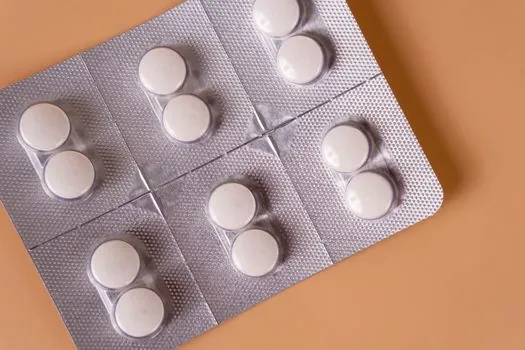
A pharma-grade shrink wrapper is for tamper-evident secondary bundling, multi-pack collation, and overwrap of cartoned product where the line already runs cGMP-compliant upstream. It is not for primary pack sealing of sterile vials or syringes, which require form-fill-seal isolator technology, and it is not a substitute for stretch wrap at the pallet unitisation step, which remains the dominant end-of-line pallet solution [S8][S9].
Under 1,200 packs/day on a single SKU, a manual L-sealer with shrink tunnel will out-perform a full-automatic line on energy and capital recovery, even though it consumes more labor per pack; spec'ing a 60+ packs/min automatic unit into that volume band raises energy use roughly 30% for no throughput gain [S3][S4]. Over-spec is the most common failure mode cited by integrators reviewing underperforming pharma lines, alongside film-machine mismatch causing 40% efficiency loss and 25% scrap rate when the wrong tunnel is paired with a film it was not tuned for [S3].
Selection Checklist: Tunable Variables and Trial Protocol
The two variables that most affect wrap quality are tunnel temperature and belt speed: a too-fast belt gives incomplete shrink, while a too-low belt burns the film, so every film-product combination requires a short dial-in trial before committing to production settings [S2]. For POF on pharma cartons, start the trial at 130°C with a 30-second dwell and adjust in 5°C steps; for PVC, anchor at 160°C and never cross 180°C to avoid embrittlement [S3].
Film thickness should match product weight, with heavier bundles specified on thicker gauge and the storage environment factored in for cold-chain humidity ingress, since POF seal reliability drops sharply above 70% RH at the seal bar unless the L-bar geometry is used in place of an I-bar [S3][S7]. Procurement teams that anchor their spec on the shrink wrapping machine reference page and then validate film windows against vendor cut-sheet data cut integration time measurably versus free-form RFPs.
Track these signals through Q4 2026: FDA guidance updates on tamper-evident overwrap equivalence for unit-dose cartons, and any movement on EU GMP Annex 1 secondary-pack segregation clauses that would push more lines toward isolator-integrated wrappers. On the supply side, monitor servo-tension controller lead times, which stretched through 2025-2026 on the back of industrial automation demand, and PE film price volatility tied to petrochemical feedstock swings.
The underlying component specifications are covered under distribution cabinet.