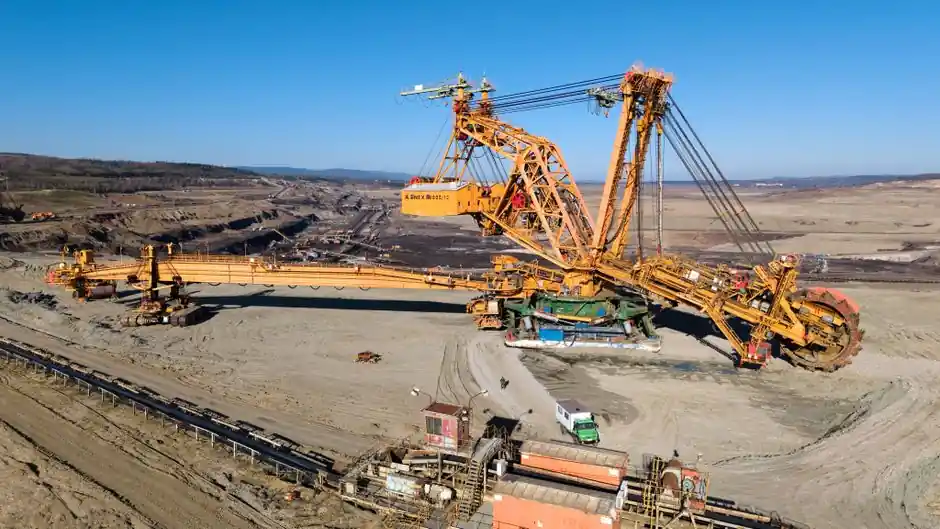
Pile drivers used in mining foundation work, retaining walls, and bulkhead construction demand a maintenance discipline that mirrors broader mining-asset practice: pre-op checks, scheduled preventive service, condition monitoring, and tight spare-parts control [S2][S3]. A 2026 mining-maintenance guide from Limble confirms that drills, excavators, crushers, and haul trucks all rely on routine servicing and proactive repair to manage safety risk and avoid six-figure hourly losses on critical equipment [S4].
On a 400-ton haul truck, a single tire can run $50,000 or more, with TKH (Tonne-Kilometre per Hour) rating, 185°F surface temperature limits, and a 5 PSI inter-tire pressure spread defining safe operation; the same logic of measurable thresholds applies to pile driver hydraulic circuits and hammer assemblies [S3]. The overlap is not accidental, because the pile driver head, leads, and drop-hammer mechanism share the same contamination, wear, and operator-handling failure modes that drive hydraulic-shovel downtime.
Pre-Op Isolation and Lockout: the Non-Negotiable First Step
Complete power isolation and verified machine positioning are required before any hands-on inspection or repair on pile driver equipment, per current operator-safety guidance [S1]. O*NET 47-2072.00 lists "conduct pre-operational checks on equipment to ensure proper functioning" alongside hammer activation via levers and valves as core task inventory for pile driver operators [S2].
Lockout-tagout, engine-off confirmation, and chocking of the crawler treads or barge platform are the three minimum controls; skipping any one of them is the most common root cause of struck-by and crush incidents cited in field guidance [S1]. For mining-deployed units, the same rule extends to hydraulic accumulator bleed-down, since residual pressure in hammer lift cylinders can exceed 3,000 PSI on mid-sized rigs.
Scheduled Preventive Maintenance: Hours, Not Calendar
Preventive maintenance (PM) is a proactive approach involving regularly scheduled checks, inspections, cleaning, lubrication, and part replacements, with custom PM intervals driven by workload and dust load [S5]. One 2025 industry estimate places unplanned-downtime reduction from disciplined PM at roughly a third to half across supporting mining equipment [S3].
For pile driver service intervals, the practical mining benchmark is 250-hour oil sampling on hydraulic and hammer systems, matching the haul-truck crankcase sampling cadence used to catch fuel dilution and coolant ingress [S3]. A second anchor is daily undercarriage cleaning on tracked carriers: a 2026 maintenance guide treats undercarriage work as roughly half the maintenance budget on tracked machines, and the same track-tension discipline applies to crawler-mounted pile drivers operating on blast rock and tailings [S3].
Hydraulic and Hammer-System Contamination Control
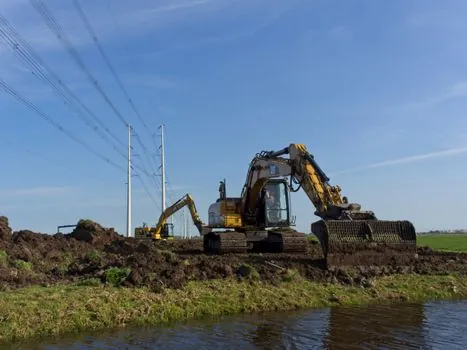
Modern mining hydraulics run at pressures up to 5,200 PSI with tight tolerances, and even small contamination loads damage pumps and valves from the inside, which is why ISO 4406 fluid-cleanliness targets and periodic particle counting are the standard defense [S3]. A whining hydraulic pump is the textbook cavitation signature: air bubble collapse inside the fluid that can destroy a pump in minutes, with low reservoir level and clogged suction strainers as the usual culprits [S3].
Fluid temperature above 180°F breaks down seals and thins the oil, producing internal leaks and lost hammer impact energy, so reservoir and hammer-circuit thermocouples are the cheapest condition-monitoring upgrade available [S3]. On the drop-hammer side, the same logic applies to lubricant in the guide rails and lead-hoist wire rope, where daily greasing at grease-point quantity per OEM spec outranks any predictive analytics investment on a small fleet.
Predictive Maintenance and Real-Time Monitoring
Predictive maintenance (PdM) uses real-time data and condition-monitoring sensors, including temperature, vibration, and pressure channels, to flag early wear and pair scheduled service with actual asset condition [S5]. The same strategy translates directly to pile driver hammer bearings, where vibration trending catches spalling weeks before a seized bearing takes a lead out of service.
On mining haul trucks, real-time tire pressure and temperature monitoring is the established baseline, with a 5 PSI inter-tire delta and 185°F surface cap as the standard trip thresholds [S3]. The same sensor stack, scaled to hammer hoist and crowd cylinders, gives a maintenance planner enough lead time to stage spares before a planned stop. For broader asset visibility, a CMMS layer that consolidates these signals across drills, crushers, and support equipment is the architecture Limble and AMAC both prescribe in 2026 [S4][S6].
Spare Parts and Inspection Cadence
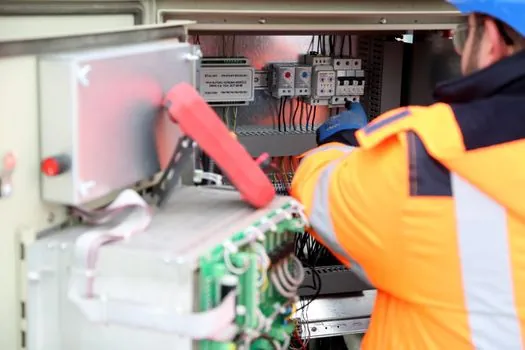
A comprehensive spare parts management system with inventory tracking, automated reorder alerts, and supplier collaboration cuts mean-time-to-repair on critical components, with high-priority lists per equipment class as the practical starting point [S5]. For pile drivers, the high-priority bin should include hammer rope, lead sheaves, cushion blocks, drive caps, and helix hoses, since each one stops the rig cold if it fails mid-shift.
Daily visual inspection of leads, hammer guides, and hoist sheaves, paired with a written checklist, is the field baseline; digital inspection tools, including mobile checklists and photo capture, tighten the loop and feed the CMMS record [S5]. When structural cracks appear in welds at the lead-to-base connection, the correct response is escalation and section replacement, not field repair, because cyclic hammer loads propagate cracks faster than any patch can stop.
Failure Modes and When to Replace, Not Repair
The dominant pile driver failure modes trace back to three root causes: hydraulic contamination (ISO 4406 excursions), undercarriage wear (tension and mud packing), and operator skipped steps during rushed overnight repairs [S3]. Each has a measurable trigger: particle count above target cleanliness class, track sag outside OEM tolerance, or pre-op checklist sign-off missing on the shift handover log.
Replacement, not repair, is the right call when cracks appear in the lead mast, when hammer-cylinder bore scoring exceeds OEM limits, or when accumulator pre-charge drift exceeds 10%, since these failure modes are not safely reversible in the field [S1]. For related heavy-equipment operator practice, see this Pile Driver Safety: OSHA Rules, PPE and Pre-Op Checklist reference, and for adjacent mining-asset support, the Die Casting Machine Spare Parts and Consumables: A Process Engineer's Sourcing Map walkthrough covers comparable consumable staging logic. Two trackable signals to watch in the next quarter: wider adoption of ISO 4406 inline particle counters on smaller mining rigs, and OEM-published PM intervals moving from calendar-based to hours-based for pile driver hammer systems.
For component-level specifications, see mining dump truck, and pressure transmitter.