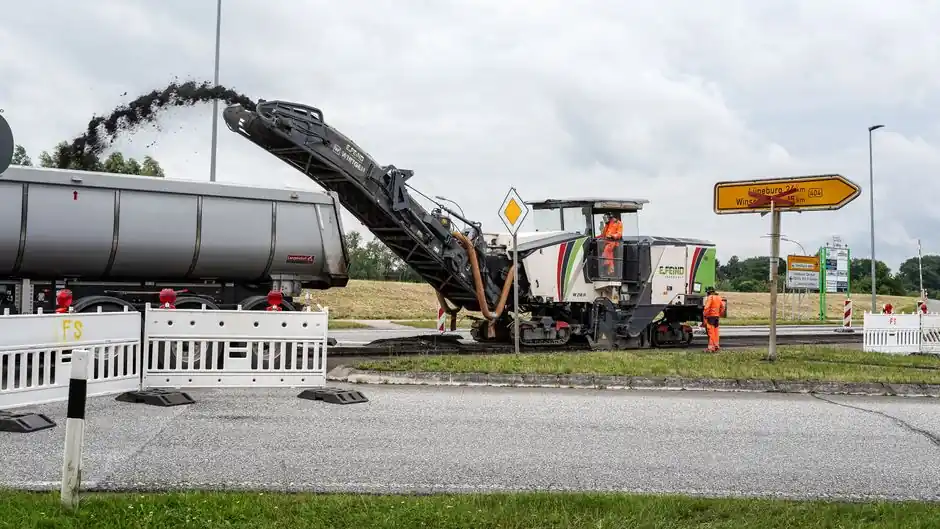
The four consumables that drive the bulk of asphalt paver maintenance spend are spiral auger blades, hopper and tunnel liners, scraper blades, and screed wear plates, all of which are routinely replaced on tracked pavers running 1,500-3,000 tons of hot-mix asphalt (HMA) per shift [S2][S3].
Aftermarket coverage in the U.S. is broad: Prime Source stocks paver parts for belted, steel-track, and rubber-tie machines across 144 brands, with a 2-year warranty and 2-3 day ship times from regional warehouses [S1]. Material choice, dimensional match to OEM patterns, and application severity (virgin HMA vs. recycled asphalt pavement, RAP) are the three filters that decide what to order.
Where Wear Happens on a Modern Tracked Paver
A self-propelled asphalt paver is functionally two systems in one frame: the tractor unit (engine, hydraulics, tracks or tires, receiving hopper, slat conveyors, distribution augers) and the towed screed unit (leveling arms, tamper, vibrators, burners, moldboard) [S3][S4]. Wear concentrates in the material-handling path between those two systems, where hot aggregate travels at 135-160 °C against steel.
The most punishing zones are the auger flight edges, the hopper floor and tunnel walls, the conveyor slat joints, and the screed bottom plates. The screed is the final compaction stage, so any wear there directly degrades mat density, smoothness (measured by the International Roughness Index), and ride quality, and that is why screed plate condition is checked every shift on a hot-paving job [S3].
The Four Consumables That Define Maintenance Cost
Spiral auger blades, made from high-chromium cast iron at HRC 58-62, are the single fastest-wearing part, because the full machine throughput passes the flight edges as coarse aggregate slides laterally to the screed extensions [S2]. These blades are commonly customized to OEM specs for ASTEC, NIKKO, Shantui, and other tracked paver models, with a drop-in fit and no field modification.
Liners protect the hopper floor, tunnel, and receiving channel walls; they are bolt-on plates in high-chromium alloy or alloy cast steel, designed for hot-swap replacement without cutting or welding the structural housing [S2]. Scrapers run next to the auger and liner system to keep material flowing; their wear rate roughly doubles when feeding RAP, which carries harder, more angular aggregate than virgin HMA [S2].
Screed plates and screed wear plates are the bottom-edge consumables that actually contact the mat; they are typically made from wear-resistant alloy steel and replaced based on measured thickness, not hours, because mat quality is the deciding factor [S3][S6]. Conveyor chains, floor plates, and auger flights round out the standard wear-parts list carried by most parts dealers [S6].
Material Grades Compared for Blade and Liner Selection
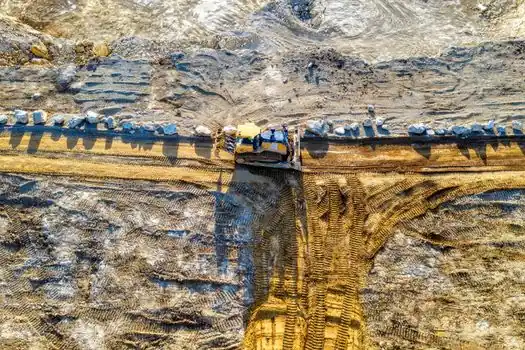
Material selection is a tradeoff between hardness and toughness; a harder part resists abrasive wear but chips under impact from large aggregate. High-chromium cast iron (24-27% Cr, HRC 58-62) is the workhorse for spiral blades and liners, alloy cast steel (Cr-Ni-Mo, HRC 46-52) is the balanced option for scrapers and conveyor parts, and hardened manganese or overlay-welded plate is reserved for high-impact zones [S2].
A practical field rule: specify high-chromium cast iron for spiral blades, liners, and primary scrapers on tracked pavers running virgin HMA, switch to overlay-welded or composite-tipped blades when RAP content exceeds 30% in the mix, and use alloy cast steel for conveyor slats where impact loading dominates over pure abrasion [S2][S6].
Track vs. Wheeled Pavers: How Consumables Differ
Tracked pavers (steel track, rubber tie) carry heavier screeds and run at lower ground speeds, which keeps auger throughput per hour steady and makes blade life predictable in tons-of-mix rather than machine hours; wheel pavers are more mobile but more sensitive to subgrade variation, which translates into more screed leveling corrections and more screed plate wear [S1][S3].
Parts coverage splits along the same line: aftermarket catalogs (Prime Source, Caterpillar Parts, Wagner Cat) are organized by undercarriage type (belted, steel track, rubber tie), and the consumable SKUs for the tractor unit differ from the screed unit consumables even when the wear mechanism is similar [S1][S4].
Who This Guide Is For, and Where It Stops
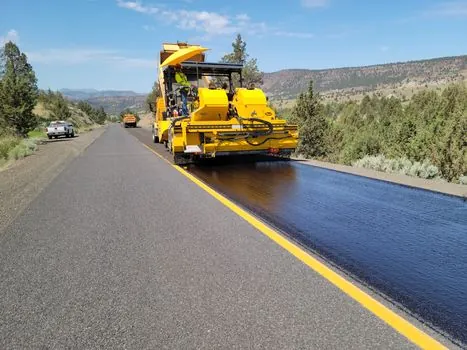
This is written for paving fleet maintenance leads, plant-supply buyers, and OEM service writers specifying wear parts for highway-class tracked pavers; it is not a screed-heater or grade-control calibration guide, and it does not address milling machine bits or compaction roller drums, which sit upstream and downstream of the paver in the paving train [S3][S6].
The limits of an OEM-equivalent aftermarket blade also matter: a 144-brand catalog covers dimensional fit, but it does not certify metallurgical equivalence to the OEM foundry, and it does not extend engine or transmission life, which are governed by fluids, filters, and hydraulic-oil sampling that the same suppliers carry separately [S1].
Sourcing Standards, Lead Times, and Field Signals to Track
For procurement, three signals are worth tracking on every reorder: actual HRC measured on a sample blade (HRC 58-62 for high-chromium cast iron), wear rate in tons of HMA per blade replacement, and dimensional fit checked against the OEM pattern for the specific paver model [S2]. Most U.S. aftermarket suppliers ship within 2-3 days and back parts with a 2-year warranty, which is a useful baseline when comparing vendors [S1].
Buyers specifying consumables for tracked pavers should reference the asphalt paver consumables map and the broader construction machinery and equipment wear-parts taxonomy before locking a vendor. For field procedures covering the first-shift commissioning checks that catch under-spec consumables, the asphalt paver testing and commissioning field procedure is a directly adjacent reference. Finally, when wear-parts inventory is being rationalized against adjacent wear-steel SKUs, the induction furnace maintenance in pump and valve foundries guide offers a comparable alloy and hardness framework for high-chromium castings.
Spec-level background on the components involved: linear guide.