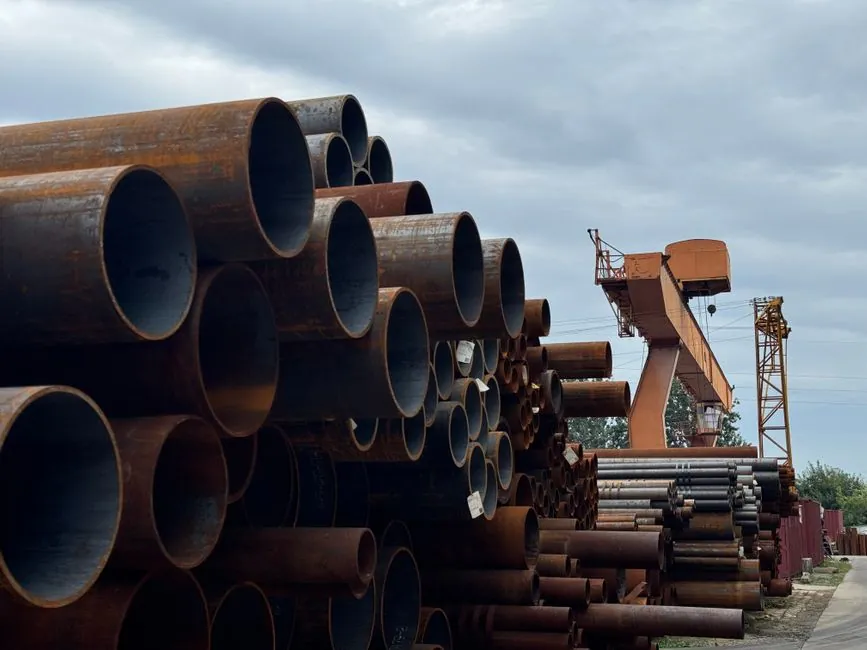
Pile driver selection for road and bridge substructure work depends on the soil profile, the pile material (such as steel H-piles, steel pipe piles, precast/prestressed concrete piles, timber piles, or sheet piles), and the energy the impact hammer can deliver to the pile head, since during driving the kinetic energy of the falling ram is transferred to the pile to cause penetration, per FHWA documentation on the CA/T project [S1].
Road projects most often deploy Delmag-class single- and double-acting diesel hammers (58.0 to 153.5 kN-m rated) and HPSI single-acting hydraulic units (67.8 to 108.5 kN-m) to drive 32 to 41 cm PPC or pipe piles, the same equipment family documented on the Central Artery/Tunnel contracts [S1]. For urban arterials with noise ordinances, hydraulic and vibratory hammers replace open-air diesel units, and for tight worksites where a full rig will not fit, excavator-mounted attachments are now standard [S2][S6].
Three Hammer Families and Where Each Wins
Diesel impact hammers are the traditional workhorse: a heavy piston is raised, then dropped or driven down by diesel combustion, transferring kinetic energy to the pile head through a helmet and pile cushion [S1][S4]. Single-acting Delmag units in the 58 to 153.5 kN-m range cover most road-bridge pipe and PPC piles, while double-acting Delmag D 46-32 and ICE 1070 (98.5 to 153.5 kN-m) are sized for larger 41 cm prestressed-precast-concrete sections and pipe combinations [S1].
Hydraulic impact hammers offer a wider controllable energy band, 15,000 to 200,000 ft-lbs per stroke, with lower noise and finer control over each blow, making them the preferred pick inside city limits and on night-shift bridge widening work [S2]. Vibratory hammers do not "hammer" at all: they oscillate the pile at high frequency to temporarily reduce soil friction, and they are fastest in sandy, loose, or silt fills where they can drive sheet pile and H-pile at several metres per minute [S3][S4].
For tight-corridor road jobs, excavator-mounted vibratory drivers and side-grip compact units now replace crane-led setups, with two-person crews sufficient for many operations, and rentals of these attachments have grown alongside bridge-abutment and retaining-wall work [S3][S6][S8].
Soil Profile Drives the Hammer Choice
Cohesive soils (clay, dense till) defeat most vibratory drivers because the soil bonds to the pile wall and does not fluidise, so impact hammers, single- or double-acting diesel or hydraulic, are the correct tool there [S3][S5]. FHWA's CA/T documentation records the failure mode: pile heave at the Logan Airport arrivals tunnel required redriving, and preaugering to 26 m depth was added to the installation sequence where soil heave moved an adjacent building [S1]. That is a textbook example of why hammer selection alone is not enough; the soil-pile-hammer system must be analysed together.
Non-cohesive soils (sand, silt, loose granular fill) are the vibratory driver's home turf, with rapid installation, low noise, and low ground-shake if amplitude is sized correctly [S2][S3]. A practical sizing rule from the field: if computed operating amplitude falls below 1/4 inch (about 6.4 mm) using the eccentric moment from the spec sheet divided by the vibrating mass (hammer dynamic weight plus pile), the unit is undersized and a larger hammer is required [S3].
For road projects that hit rock or dense obstructions, the answer is not a bigger hammer but a different machine class: a drilling rig with down-the-hole or cluster hammer, supported by high-capacity air compressors, calyx baskets, and water or injection systems [S3]. Trying to blast through rock with a diesel hammer just destroys the pile cushion and the pile head.
Rated Energy, Transfer Efficiency, and the Wave Equation
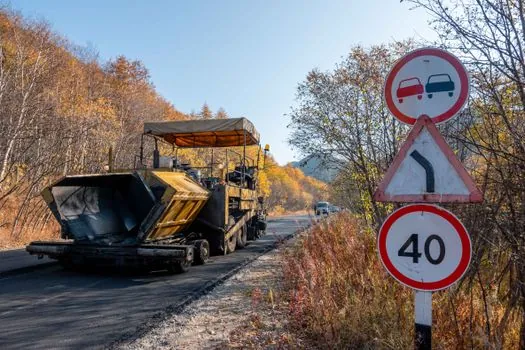
Rated hammer energy is the product of ram weight and maximum stroke, expressed in kN-m or ft-lbs, but the energy that actually reaches the pile is a fraction of that number [S1]. On the CA/T project, transfer efficiency averaged 25% for a diesel hammer on a concrete pile and 50% for an air hammer on a steel pile, which is why the same rated energy spec produces very different driving results on different pile materials [S1].
Hammer energy selection should not be done from a chart alone; the wave-equation analysis (GRLWEAP-class) models the hammer, the cushion, and the pile-soil system to predict driving stresses and blow counts [S2]. Underhammering stalls the pile; overhammering spalls the concrete or buckles a steel H, and either failure mode costs more in pile replacement than the saving from picking a smaller rig. On road-bridge contracts the spec writer should run the wave equation at the design stage and again at the test-pile stage, then fix the hammer energy band on the drawings, not leave it to the contractor's discretion.
A short excerpt from the FHWA reference frames the engineering point: "The size of the hammer is characterized by its maximum potential energy... However, the actual energy transferred to the pile is much less a result of energy losses within the driving system and pile" [S1]. That distinction is the reason two 100 kN-m hammers can produce different set per blow on the same pile in the same soil.
Decision Map: Matching Hammer to Road-Project Conditions
Use the four-criteria matrix below to shortlist a hammer family before pulling a price list. The dominant criterion is the soil profile; the others modulate the choice within that family. [S2]
Criteria: soil type, pile material, noise/site limit, daily production target. For sandy non-cohesive fill with sheet or H-pile and a city noise limit, a hydraulic vibratory excavator-mounted driver is the first pick, with production in the multi-metre-per-minute range and a two-person crew [S2][S3]. For clay or mixed cohesive profile with 32 to 41 cm PPC or pipe piles, a single-acting hydraulic or diesel impact hammer in the 60 to 110 kN-m rated band (Delmag D 30-32 at 99.9 kN-m, HPSI 1000 at 67.8 kN-m) is the centre of the field, with hydraulic preferred where noise is regulated [S1][S2]. For marine or bridge-over-water work where the diesel hammer's percussive cycle handles splash zone driving well, a double-acting diesel such as the Delmag D 46-32 (153.5 kN-m) or ICE 1070 (98.5 kN-m) covers 41 cm PPC and pipe combinations [S1][S4]. For rock or dense obstruction, drop the hammer conversation entirely and switch to a drilling rig with down-the-hole hammer, accepting the slower cycle in exchange for a pile that actually reaches bearing [S3].
Operational Constraints Often Overlooked at Selection
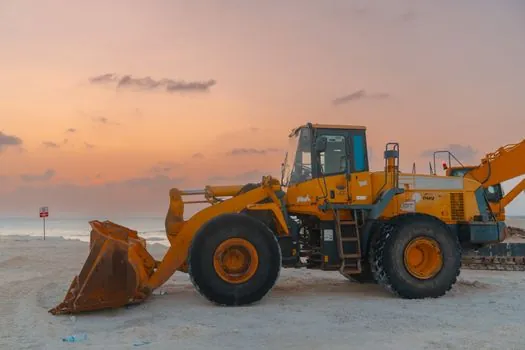
Noise and vibration limits can rule out a diesel hammer long before soil does: most urban arterials have municipal ordinances that effectively require a hydraulic impact or vibratory unit to avoid fines and night-shift stoppages [S3][S5]. Crew licensing is another hard gate; in the US, pile driving rig operators must hold the licenses required by OSHA and state codes, which is one reason smaller vibratory setups with two-person crews are growing on road jobs [S3][S8].
Maintenance and consumables change the ownership math. Hydraulic hammers need clean hydraulic fluid, regular accumulator checks, and controlled energy calibration; diesel hammers need fuel-injection service and combustion-chamber inspection; vibratory hammers need eccentric-bearing service and bolt-up checks on the clamp assembly [S4][S5]. On long road corridor projects the daily fuel and service cost difference between a diesel and a hydraulic unit is often what tips the rental-versus-purchase decision, not the headline day rate. The fleet decision also bleeds into adjacent equipment choices: a road project that already runs vibratory road rollers for subgrade compaction will find the hydraulic and vibratory pile driver ecosystem easier to support than a diesel-hammer fleet.
Site access is the third silent constraint. Crane-led impact hammers need a level pad, a clear overhead swing, and counterweight clearance; an excavator-mounted vibratory driver needs only the host machine's swing radius and a stable outrigger footprint, which is why tight-corridor jobs default to the latter [S6][S8]. When the only access is a narrow service road parallel to an existing carriageway, a full-sized crawler-crane hammer simply does not fit, and the choice is forced to a compact attachment.
Selection Checklist a Road Engineer Can Sign Against
Confirm the soil profile from the geotech report and mark cohesive versus non-cohesive layers with depth, including any rock head elevation, because that single drawing dictates the hammer family [S2][S3]. Match the pile material (steel H, steel pipe, PPC, sheet) to the transfer efficiency band; diesel on concrete sits near 25% transferred energy, air or hydraulic on steel sits closer to 50%, so do not size the hammer from rated energy alone [S1]. Run a wave-equation driveability study for the candidate hammers and pile combinations, then specify the energy band on the drawing rather than letting the contractor pick [S1][S2]. Check the noise limit at the boundary; if the ordinance cuts diesel, the hydraulic or vibratory option is not a preference, it is a constraint [S3][S5]. Confirm crew licensing and site access, including overhead clearance for a crane-led hammer or outrigger footprint for an excavator-mounted unit, because either one can force a re-spec late in the project [S3][S6][S8]. Finally, decide rental versus purchase on the basis of the corridor length and the daily production target, not the day rate; on a 5 to 10 km road job a rented hydraulic hammer with a service contract is usually cheaper than mobilising a contractor-owned diesel fleet [S2][S8].
For routine bridge and retaining-wall substructure work, a 60 to 110 kN-m single-acting hydraulic hammer (HPSI 1000/2000 class) on 41 cm PPC is the safe centre-of-field pick, with a vibratory excavator attachment held as the sheet-pile and temporary-works backup. The next signal worth tracking is the wave-equation software update cycle: if vendors push cloud-based driveability analysis into the pre-bid workflow by the end of 2026, expect spec writers to lock hammer energy bands more tightly on the drawings, and contractors to standardise on fewer hammer models per fleet.
Detailed specification references: pile driver, and construction tools.
See also our earlier report, Floor Grinder Selection for Concrete: Width, Head Type, and Diamond Bond Map.