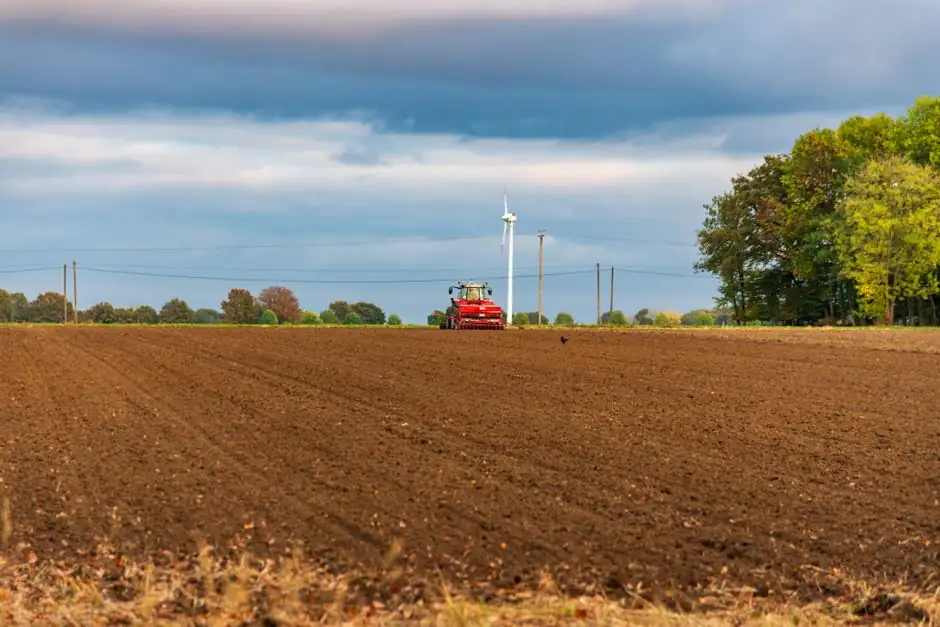
A rotary drilling rig for agricultural wells is sized by three numbers: target bore depth, hole diameter, and the local soil or rock profile, with cash-crop plantations commonly needing 200–300 m holes across dozens of wells per site [S4].
Agricultural demand differs sharply from a one-off municipal well. Plantations cover tens to hundreds of acres, often sit at high altitude with seasonal water shortages, and need multiple boreholes drilled and re-drilled as water tables shift [S4]. Buying the rig, rather than contracting drilling out, pays back over multiple wells on the same property.
What an Agricultural Bore Profile Actually Looks Like
Cash-crop water wells run deeper than domestic bores, with the majority of completed agricultural orders landing at 200 m or deeper and inland regions in Central Asia (Pakistan, Afghanistan) pushing past 300 m, while Southeast Asian and South American sites cluster around 200 m and African vehicle-mounted programs typically require 250 m or deeper [S4]. The rotating drill rod delivers both downward thrust and torque, normally in the 50–120 rpm band, with the rig's own mass providing the crowd force [S3].
For shallow field-edge stock tanks or surface-water harvesting, small trailer rigs around 9 t and 13 m max depth (for example the YG13 class with 1000 mm hole capacity, 50 kN·m torque, and full 360° rotation) are enough; for irrigation mains, growers move up to 16–20 m, 1500–1600 mm diameter units in the 11–17.8 t range with 36–46 kN·m torque [S1]. Crops do not need 3000 m oil-field depth; the 203–445 mm bore band that suits most commercial rotary rigs is overkill for shallow farm work, so the spec window for an agriculture-only machine is narrower [S3].
Selection Criteria for a Farm or Plantation Rig
Four numbers decide the build, and they should be locked in the same order: target depth, hole diameter, ground condition, and the rig's daily relocation pattern across the property [S1][S2]. Soft alluvial soils and overburden clays let a lighter, faster rig perform; fractured rock, caliche, or cobble layers demand more torque and more mass, even at the cost of mobility [S1].
Rotary angle, the arc the head can swing, matters because plantations are rarely level, with full 360° rotation needed on hillside plots and 180° rotation acceptable only on flat, open ground [S1]. A mud pump (around $4,500 as an option) is worth specifying for clay and silt profiles where air-lift cuttings will not clear the hole, while compressed-air flushing is the cheaper path in stable, dry formations [S1][S3]. Rotary rigs split into air-rotary and direct-mud-rotary camps, and agricultural buyers can run either depending on the geology, not on rig brand [S3].
Comparison of Rotary Rig Classes Suited to Agriculture
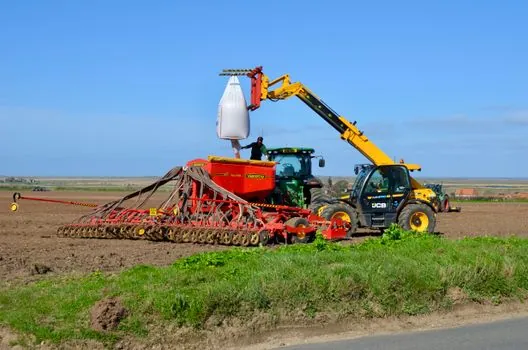
The table below lines the four common agricultural classes up against the criteria that actually drive a buy decision: hole depth, hole diameter, rig weight, and rotary torque. [S1]
Top-head-drive crawler units in the 15–20 t band cover most plantation needs (100–150 m depth, 150–300 mm diameter, balanced torque and mobility) [S2]. Truck-mounted rigs (around 25 t) push to 200 m and 300–500 mm diameter but cost transport permits and are poor on soft field tracks [S2]. Helical-drill light units (about 10 t, 50 m, 80–150 mm) handle orchard drainage and shallow stock-water points only [S2]. Heavy rotary-table drives (30 t class) are mining-spec and waste fuel on a farm, so they belong on the rejected list for agriculture even if the price per meter looks competitive [S2].
When a Rotary Rig is the Wrong Tool for the Farm
Percussion or down-the-hole hammer rigs outperform rotary units in competent hard rock with no overburden, and a small trailer-mounted auger beats a 17.8 t tracked rig for a single 10 m post-hole job [S1][S7]. Rotary becomes uneconomic below about 50 m of depth in soft soil, where a helical or simple auger setup will finish the hole for a fraction of the fuel and wear cost [S2].
Direct-mud rotary needs a mud pump, a settling pit, and water on site; where none of those are available, air-rotary is the only sensible rotary path, and even then only if the bore stays stable without casing [S3]. Operators without drilling experience should not be put on a top-drive rig, because these units run at higher rpm and punish mistakes faster than a basic crawler [S2].
Standards, Sourcing, and What to Verify Before Purchase

Manufacturer pricing for agricultural water-well rigs is largely standardized by depth class, so the rig cost can be estimated from a published price table before the quotation stage, with depth tier driving engine power, torque, and hoist capacity together [S4]. A bare rig is not a working rig: buyers also need to budget drill pipe, bits matched to local geology, casing pipe where collapse is a risk, and either an air compressor for air-rotary or a mud pump for direct-mud-rotary [S4].
Used small-frame rotary rigs (around $45,000 for a 9 t unit, 6-month warranty) versus new 17.8 t units at roughly $180,000 with 12-month warranty and hydraulic sealed lines tested for 2 hours before shipping is the realistic price band seen in 2026 OEM catalogs [S1]. Drill bits should be selected for three target formations as a default: soft clay, hardpan, and rock, with a three-bit set typically adding around $3,200 to a build [S1]. Independent benchmarking of rotary drilling rig capability by depth class and torque band remains the most reliable filter before any on-site trial.
For deeper irrigation or geothermal work on a farm, cross-check the rotary drilling rig selection for mining torque and depth bands; for road-edge boreholes on adjacent farmland, the rotary drilling rig selection for road construction spec map is the closer match. A reference entry on rotary encoder and rotary hammer tools is useful where the agricultural job is actually a small foundation or fence-post scope rather than a water bore. Confirm the rotary head's stated torque and rpm against the OEM test sheet, not brochure copy, before signing the PO.