
Urban infrastructure projects in 2026 are specified around the geotechnical report, not the brochure, with rig torque, crowd force, pile depth, and pile diameter evaluated together against a defined pile table [S3].
Compact and self-erecting rotary rigs are reshaping the small-footprint segment for metro pillars, overpasses, underground pipe galleries, and municipal square foundations where height, width, and ground-pressure limits dominate the choice [S2][S6].
Match Torque and Crowd Force to the Geology Before Anything Else
Rotary torque should be read with crowd force, tool type, and rotary speed, because dense sand, gravel, cobbles, and hard rock shift the limiting factor from rotary speed to continuous-load torque and tool cooling [S3]. Maximum torque on a nameplate does not predict metres per shift; a balanced power head, bucket, and core barrel routinely out-drill an oversized head with the wrong tool [S3]. Buyers in 2026 are asking for continuous-duty curves and matched tool packages instead of headline kN·m numbers, which keeps the rotary drilling rig decision grounded in productive drilling time per shift rather than peak spec [S3].
Depth and Diameter Must Be Specified Together, Not Separately
Maximum depth and maximum diameter are usually listed as independent values, but a project rarely asks for one without the other, so the practical limit is the intersection of the two [S3]. A rig that reaches 80 m with a 1000 mm tool will not necessarily deliver the same depth with a 2500 mm bucket, because Kelly-bar type, mast capacity, main-winch pull, and tool weight all act on that intersection [S3]. The supplier pile table should carry diameter, depth, ground layers, casing length, concrete method, and maximum tool weight before any rig is shortlisted [S3].
Site Access and Transport Weight Drive the Size Decision

Rig size controls transport cost, crane support, assembly time, turning radius, and access planning, and a well-sized machine usually starts sooner and moves faster between drilling points than a larger one that impresses on paper [S3]. For residential foundations, utility work, small bridges, and tight industrial sites, the small and compact rotary segment typically covers the duty with lower mobilization cost [S3]. The SINOVO TR60 self-erecting model, launched as a compact unit, ships with telescopic friction and interlocking square drill rods and is positioned to shorten setup on space-constrained urban jobs [S6].
Comparison of Main Rig Options for Urban Piling
Three rig families compete for the urban-infrastructure envelope: small/compact rotary, full-size rotary, and electric or extended-range rotary. The decision criteria that actually separate them on a city job are: pile depth and diameter envelope, site footprint and transport weight, continuous torque under load, and emissions/power-source class [S1][S3][S4]. Compact rotary rigs (TR-class size) handle residential foundations, utility work, and small bridges with lower transport weight and smaller working radius, trading peak torque for mobility [S1][S3]. Full-size rotary rigs deliver the deep-foundation torque and large-diameter bucket work needed for metro pillars and overpass piers, but need crane support and wider access lanes [S1][S3]. Electric and extended-range rotary rigs, such as the Sunward extended-range electric line introduced in April 2026, target emissions and noise constraints on inner-city sites where diesel hours are restricted [S4].
Who This Rig Class Is For, and Where It Stops Being the Right Tool
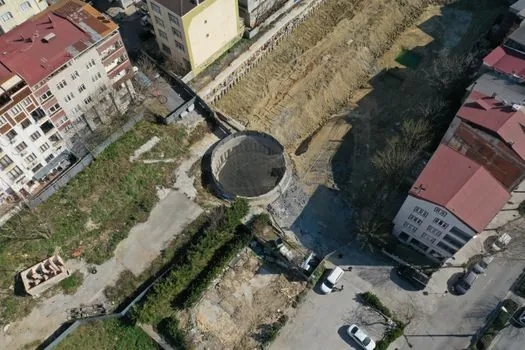
Rotary drilling rigs are the right tool when the pile schedule calls for bored piles or drilled shafts in hard rock, mixed soil, or dense urban fill, and where the structural load has to be transferred to deeper competent strata [S1][S2]. They are the wrong tool for very soft clay or contaminated urban fill where low-vibration auger methods keep surrounding ground and neighbouring structures stable, and where a hammering approach would breach noise ordinances near hospitals or residences [S1]. For shallow utility trenching and small-diameter pole foundations, a compact auger or a small rotary hammer class tool can do the work at a fraction of the mobilization cost.
Standards, Sourcing, and What to Confirm Before Mobilization
Buyers should ground their specification in the geotechnical report, the pile schedule, and the relevant piling codes before they talk to a dealer, because rig selection that ignores soil and groundwater data tends to fail at the casing stage, not at the torque stage [S3]. The geotechnical brief and the pile table together drive Kelly-bar selection, casing length, and main-winch pull, and they also decide whether an extended-range electric platform is operationally viable on a given site [S3][S4]. For projects that run close to existing utilities or load-bearing structures, flow meter and pressure transmitter monitoring on the hydraulic and grout circuits is increasingly specified as part of the rig instrumentation package to log real drilling parameters for the as-built pile record.
What to Track Next
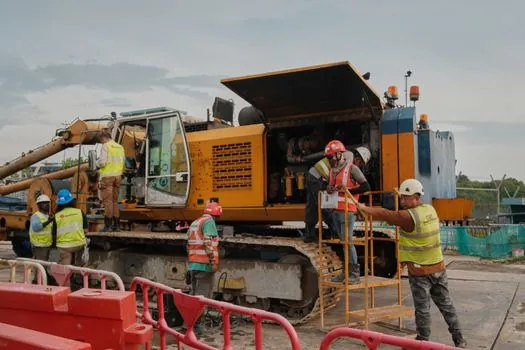
Watch whether 2026 urban tenders in tier-1 cities start writing emissions class and idle-hour limits directly into the rig specification, which would push the compact-electric segment harder than diesel even on small-footprint jobs [S3][S4]. Track delivery lead times on extended-range electric rotary platforms versus equivalent diesel units, because that gap is currently the main commercial reason diesel still wins short-cycle urban tenders [S4].
Related analysis: Static Pressure Molding Machine Selection for Hardware Foundries.