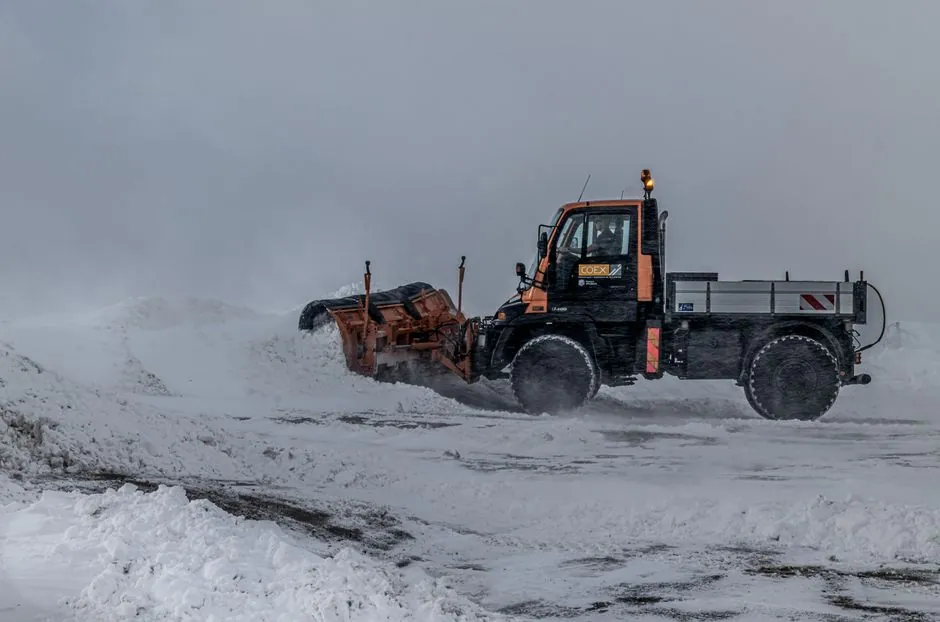
A rotary drilling rig uses a rotating bit, drill string, and circulating fluid or air to cut soil and rock and lift cuttings to surface [S1]. Snow is a fundamentally different medium: low-density crystalline water with no cohesion once disturbed, sitting on ground that may be frozen solid or saturated and soft.
Selecting a rotary drill for a winter site is therefore a question of ground preparation and access, not of snow throwing. Crews working on frozen-mud pads or shallow winter well sites routinely match 4-inch cable-tool or 4-inch to 5-inch rotary wells to those conditions [S2]. For actual snow removal, OEM winter attachment programs for compact utility chassis run the spec-correct range: rotary brooms for light dry snow, front blades for 2-inch to 12-inch cuts, and snow blowers for deeper drifts and wet material [S3].
Why a Rotary Drill Is the Wrong Primary Tool for Snow
Rotary drilling rigs deliver rotary head torque in bands that match formation resistance, with smaller water-well units such as the Geoprobe DM250 sized for shallow water-well work [S4] and core rigs scaled for granite, shale, and unconsolidated overburden at depths tied to BQ, NQ, HQ, and PQ hole sizes [S5]. Snow has compressive strength measured in kilopascals, not megapascals, and reacts to a moving blade or auger, not a downhole bit on a drill string.
Running a drill rig to clear a yard or a road wastes fuel, risks the rotary head seals on a medium they were not designed for, and offers zero productivity gain over a 60-inch to 84-inch front blade or a 60-inch-class two-stage snow blower. The honest split is: rotary drill handles the frozen subgrade or anchor work, and a purpose-built snow attachment handles the white stuff on top.
Spec Bands That Matter If a Drill Rig Touches a Snow Site
Mobility is the dominant decision variable in winter drilling because frozen mud, soft shoulders, and snow-locked access roads defeat rubber-tire undercarriages. Track-mounted direct-push and rotary platforms in the Geoprobe 6712DT and 7822DT class are engineered for low ground pressure and remain mobile on sites that strand truck-mounted rigs [S4].
For the drilling envelope itself, four specs govern whether a rig handles a winter ground-prep job: rotary head torque for frozen overburden, pullback for casing recovery in soft saturated ground below frost, hydraulic flow for powering a hydraulic auger or frost-bit, and rated ambient operating temperature for cold-start reliability. Core-rig selection guidance places torque, pullback, power source, and mobility as the four shortlist criteria for any deployment [S5], and those same four carry over to winter ground work. Rotary mining rigs clear cuttings with compressed air through the bit [S6], and on a frozen site the same airflow path doubles as a cold-air purge for the hydraulic tank.
Drill Rig vs Snow Attachment: A Decision Comparison
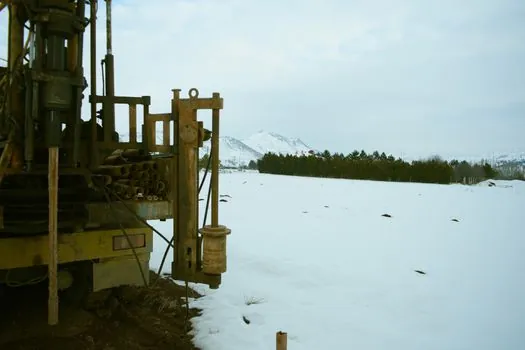
For procurement teams facing a winter workscope, the spec split below is the cleanest way to keep the decision honest. A 4-inch to 5-inch rotary well drill on a track mount is spec-correct for shallow winter wells and frozen-mud access work [S2][S4]. A rotary broom on a compact utility tractor is spec-correct for light dry snow on pavement and turf [S3]. A front blade in the 48-inch to 84-inch range is spec-correct for 2-inch to 12-inch packed snow on lanes and yards [S3]. A two-stage snow blower is spec-correct for wet, deep drifts above the 12-inch band where a blade will ride up.
The criteria that flip the call are ground-bearing capacity, medium density, and production rate. Frozen ground at 200 kPa to 1 MPa unconfined compressive strength is a drill-rig problem. Snow at 50 kg/m³ to 500 kg/m³ density is an attachment problem. Conflating the two costs the project both capex and runtime hours, and it is the most common spec error on small municipal winter workscopes.
Selection Criteria for the Rotary Drill Half of the Job
If the workscope includes frozen-ground anchor holes, shallow well installs, or geotechnical sampling through frost, the rig selection logic follows the same framework used for core drilling. Match torque and RPM to the hardest layer the bit will see, match pullback to the deepest casing string plus 20 percent margin, and match the undercarriage to the softest season the rig will work in [S5].
Mud rotary platforms from the DM250 class through the DM450 and DM650 cover shallow water-well to mid-depth geothermal and cathodic-protection work, with truck-mounted, track-mounted, and trailer-mounted configurations available across the catalog [S4]. For deeper or harder work, the 8250LS and 8150LS sonic rigs and the 3135GT geotechnical rotary platform address the high-torque end [S4]. Operators should plan for hydraulic oil rated for the expected ambient low, cold-start battery capacity sized for sub-zero cranking, and frost-rated augers in the 2.25-inch to 6.25-inch HSA range where overburden is frozen [S4].
Selection Criteria for the Snow Attachment Half of the Job

For the snow side, the three OEM attachment categories align cleanly to snow type and depth. Front blades push 2-inch to 12-inch accumulations and are the most fuel-efficient option per lane-mile. Snow blowers ingest and throw wet, deep, or compacted snow that a blade cannot displace [S3].
Chassis selection is the second-order decision. Lawn and compact utility tractors in the 20 hp to 50 hp class carry the lighter attachments and suit sidewalks, driveways, and small lots. Skid steers and compact track loaders carry the heavier 72-inch to 84-inch blades and the larger two-stage blowers, and their low ground pressure matches the same soft winter conditions a track-mounted drill needs. Mixing the two undercarriage philosophies across the same worksite is standard practice and keeps both halves of the job productive.
Limitations, Failure Modes, and Safety Boundaries
Drill-rig cold-weather failure modes are well known: hydraulic oil viscosity spikes that stall rotary heads at first start, condensation in air lines that freezes at the control valve, and frost heave that binds casing strings the rig cannot recover without exceeding rated pullback. Operators mitigate these with cold-rated fluids, in-line air dryers, and a pre-job pull test on any casing left over from a prior winter. [S2]
Attachment failure modes are different and mostly mechanical: broom bristles glazing over from road salt and ice, blade trip edges packing with slush and losing breakaway action, and blower auger shear pins failing on hidden curbs. A 10-minute walk-around before each shift catches most of these, and the wear-part cost per lane-mile is the right unit to track, not the attachment purchase price.
Standards, Sourcing, and Cross-References
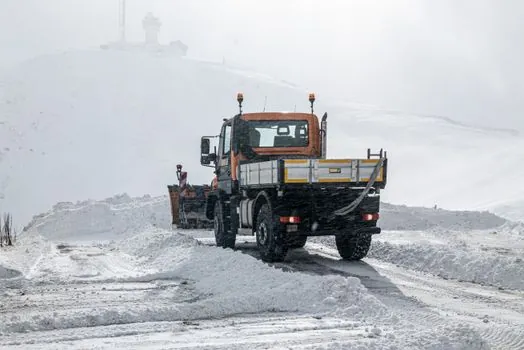
There is no single standard that governs a rotary drill rig pressed into winter ground work, but the four shortlist criteria of torque, pullback, power source, and mobility are the same ones published in current core-rig selection guidance [S5], and the four categories of winter attachment (broom, blade, blower, and the drill itself) are the working taxonomy used by OEM winter-setup programs [S3]. The Geoprobe product catalog is one reasonable cross-reference for the rotary half because it lists mud rotary, direct-push rotary, sonic, and truck- and track-mounted platforms side by side with their intended geological envelopes [S4].
For procurement teams that need a single document for the spec split, the linked rotary drilling rig selection for pipeline crossings piece covers torque and pullback in more detail, while the encyclopedia entry on the rotary drilling rig itself is a useful baseline reference for the platform category. Operators planning the snow side can cross-check attachment selection against the rotary hammer entry to confirm why a percussive tool is the wrong choice for snow and the right one only for frozen concrete or rock.
Trackable signals to watch over the next quarter: OEM announcements of cold-rated hydraulic packages for compact rotary platforms, municipal RFPs that bundle rotary drilling with winter site prep as a single line item, and the first widely reported cold-start torque derate curves for the DM250-class and 6712DT-class machines.
The underlying component specifications are covered under rotary encoder.