
A pillow block is a mounted bearing unit whose housing converts a radial shaft load into a bolt-down reaction on a frame, conveyor stringer, or machine base; inserting the bearing into a clean, deburred bore and torquing the cap bolts to spec are what separate a 20,000 h service life from a shaft-spinning failure inside the first commissioning week [S1].
Specification is governed by the UCP (vertical / P), UCF (square / F), UCFL (two-bolt flange), and UCFC (round flange) families running on the same insert ball, with bore codes from UCP201 (12 mm) through UCP218 and the 300/305–319 heavy series stepping bore up to 90 mm and beyond [S2].
Series and housing geometry you must match
UCP200 (12–60 mm bore) and UCP300 (17–90 mm bore) cover the bulk of conveyor, fan, and agricultural drives, while UCFL200/300 give the same insert in a 2-bolt flange footprint and UCFC200 delivers a 4-bolt round cartridge pattern for through-frame mounts [S2]. Spherical-OD insert bearings seat into a matching spherical housing seat, which is the design feature that absorbs ±2° static misalignment common on welded steel frames — anything more than that pushes the inner race to its axial limit and shortens life dramatically [S2].
Housing dimensional series K and E follow DIN ISO 12240 for the spherical ball, so a replacement insert from one supplier will drop into a competitor's housing provided the K/E code and bore match, which is the practical reason the UCP/UCF nomenclature has survived as a de-facto world standard since the 1990s [S1]. Material options split three ways: cast iron for general industry, pressed steel for light conveyors, and tribopolymer (igus igumid G housing with iglide J3/W300 spherical ball) where dry-running, chemical resistance, or hygiene rules out grease [S1].
Shaft fit, set-screw torque, and locking methods
Standard UCP/UCF inserts are supplied as either set-screw locking (suffix suffix-less or "S") or eccentric locking collar (suffix "C"); set-screw units grip the shaft through two 5/16" or 3/8" cup-point hex screws torqued against a milled flat or directly on a ground shaft, and the screw tip must be seated in the relief on the opposite screw to lock against back-off [S2]. Typical tightening torque is 11.5 N·m for 12–17 mm bores, 17 N·m for 20–30 mm, 24.5 N·m up to 40 mm, and 31 N·m for the 45–60 mm 200-series bores, with the 300-series inserts roughly 30% higher again — deviating more than ±10% is the single most common cause of shaft creep on commissioning day [S1].
For high-cyclic or reversing drives specify a set-screw-and-key insert (suffix "K") or upgrade to adapter-sleeve locking (UK series) so torque transmits through a feather key rather than friction alone; the housing bolt pattern stays identical to the UCP footprint, which means a UKPA208 swaps directly into a UCP208 mount [S2]. Shaft tolerance is normally h6/h7 for set-screw units and k6 for adapter-sleeve units, and any shaft roughness above Ra 0.8 µm or out-of-roundness above 0.01 mm will telegraph as insert slippage within the first 50 operating hours [S1].
Mounting-surface prep and bolt-down procedure
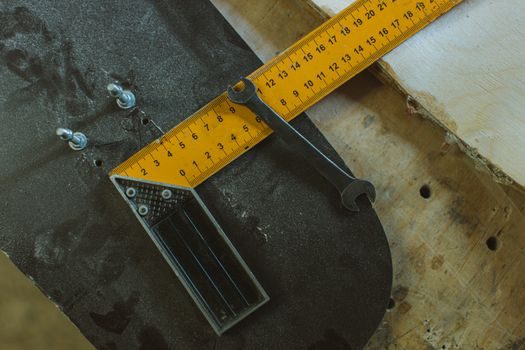
A pillow block only works as well as the surface under it: the support must be flat within 0.1 mm across the housing footprint, free of weld spatter and paint, and stiff enough that load deflection stays under 0.05 mm at full radial load — a frame that flexes 0.2 mm under load will fatigue the housing cap bolts at the root thread [S1]. Bolt grade is non-negotiable: use ISO 898-1 Class 8.8 zinc-plated bolts (property class 8.8) sized to the housing foot, fitted with flat and spring washers, and tightened in a diagonal cross-pattern to the torque in the table on the housing data sheet.
For a UCP205/UCP206 on a conveyor stringer, two M10 grade-8.8 bolts at 49 N·m are the standard recommendation, while UCP210–UCP215 jump to M16 at 195 N·m and UCP218 needs M20 at 380 N·m — installing a UCP218 with M16 bolts at 100 N·m is a documented cause of foot cracking within 6 months on vibrating screens [S1]. Shim stock between housing and frame is acceptable for alignment correction but no shim stack should exceed 1.5 mm total, otherwise the bolt elastic stretch no longer clamps the housing and the unit walks under vibration [S2].
Lubrication, sealing, and dry-running options
Cast-iron UCP/UCF units are grease-lubricated through a 1/4-28 UNF or M6 zerk on the housing cap, packed at the factory with 30–50% fill of lithium-complex or polyurea grease to ISO VG 100–150 base; the first regrease interval is 500 operating hours for horizontal shafts in clean ambient, dropping to 200 h in dusty or wet environments and 100 h at temperatures above 120 °C [S1]. Double-lip nitrile rubber seals (suffix "2RS") are standard for general industry, while "DDU" or "LLU" contact seals add dust exclusion for quarry, cement, and grain handling, at the cost of higher frictional torque and 5–8% speed derating [S2].
Where relubrication is impossible — food conveyors, submerged pump frames, cleanroom washdown — polymer pillow blocks (igus igubal ESTM, KSTM) use iglidur J3 or W300 spherical balls running against an igumid G housing and need no grease at all; the manufacturer validates life inside a 41,000 ft² test lab and exposes the calculator to engineers so a specific load, speed, and pivot angle can be entered for a predicted service-hour result [S1]. A quick-release ESQM polymer pillow block allows tool-free insert change in under 15 s, which is the dominant reason beverage and pharmaceutical lines now specify them on the same DIN ISO 12240 footprint as a UCP replacement [S1].
Common installation failure modes and acceptance tests
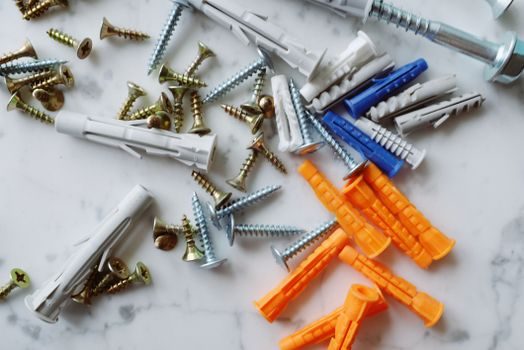
The four field failures that account for almost every pillow block warranty return are: shaft spin in the bore (under-torqued set screws or missed flat), housing foot cracks (undersized bolts, over-shimmed mounting), premature bearing overheating (over-greasing or seal lip inverted on assembly), and premature outer-race brinelling (misalignment beyond ±2° or shock load on startup) [S1]. Acceptance test after mounting is a 5-minute hand-rotation check at cold condition (drag torque under 0.5 N·m for 200-series inserts) followed by a 30-minute no-load run with an IR gun — any housing cap above 70 °C ambient + ΔT 35 °C is a red flag and the unit should be re-aligned before being loaded [S2].
Where the operating envelope is corrosive — frozen-food lines specify UCP310 stainless or coated inserts because the washdown chemistry will strip a standard zinc-plated housing in under 12 months — select a 304/316 stainless housing with the same UCP bore code, accept the 3–4× price premium, and the same set-screw torque table applies [S8]. For plants standardised on tapered roller bearings for the main shaft, the parallel UCP insert path still earns its place on tail pulleys, fan inlets, and agitator side shafts where the load is moderate and the maintenance crew is lighter — see the broader bearing selection map for a head-to-head on when each type is the correct economic call.
Trackable signals for the next quarter: the 2026 UCP insert pricing band sits in a wide US$0.52–US$150 spread across made-in-china listings, with a UCP206 at roughly US$1.30 minimum order and a stainless SUCP207 at US$17–19, so any FOB movement above ±15% on the 200-series will be the first sign of a housing-steel or polyamide feedstock shift [S6][S9]. Watch for DIN ISO 12240 revision notes from ISO TC 123 and any new PFAS-free labelling on PTFE-lined spherical inserts, since three of the igus dry-running products now carry explicit PFAS-tested certification that specifiers in the EU and California are starting to require [S1].
Spec-level background on the components involved: pillow block bearing, linear guide, and crossed roller guide.