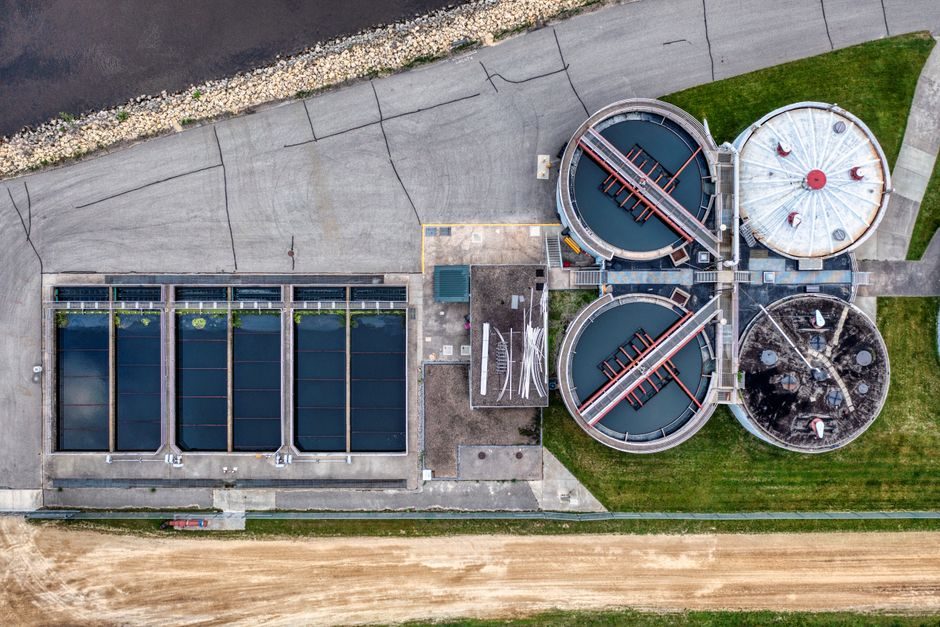
A plug valve selected for water-treatment service is most often a soft-seated, fully-lined quarter-turn unit in PN10/PN16 flanged or wafer pattern, sized DN50–DN600 and built around a ductile-iron or ASTM A216 WCB body with a PTFE or FKM liner covering the wetted flow path [S1][S3].
The same family is used across raw-water intake, clarifier sludge, chemical dosing, and backwash lines at municipal and industrial plants in 2026; cost-driven specification is the default, with lined non-lubricated plugs dominating low-pressure corrosive duty and metal-seated API 6D variants reserved for pumped raw-water mains and treated-water export headers [S1][S2].
Body and Pressure Rating Envelope
ANSI Class 150 / PN16 is the de facto water-treatment ceiling, with PN10 covers most gravity-driven clarifier and filter-effluent headers [S1].
Ductile-iron (ASTM A536 65-45-12) and carbon steel (ASTM A216 WCB) are the two most-specified body materials in the duty range, both routinely faced and drilled to ASME B16.5 / EN 1092-1 for direct tie-in to the rest of the plant train [S1]. Service temperature stays inside -20 °C to +180 °C for soft-seated versions, bounded by the elastomer rather than the metal shell, and falls inside the corrosion window of municipal and industrial feed, permeate, and reject streams without external alloying [S1][S3].
Lining and Seat Material Matrix
PTFE liners are standard for sodium-hypochlorite, ferric chloride, and hydrochloric-acid dosing lines because they combine a near-universal chemical envelope with a low coefficient of friction on the plug valve seating surface [S3]. FKM is the upgrade path where temperatures push above the PTFE limit or where chlorinated hydrocarbons are present in the stream [S1][S3].
EPDM is the default elastomer for raw water, clarified effluent, and backwash at ambient temperatures because it carries potable-water certifications on most supplier data sheets and tolerates a higher pH band than FKM [S2]. For more demanding brackish or chlorinated streams, peroxide-cured EPDM or FKM seat inserts are common; the soft seat is what makes a quarter-turn plug competitive with a ball valve on bubble-tight shutoff without a high actuator torque budget [S1][S2].
Comparison: Soft-Seated Plug vs Ball vs Butterfly on Four Decision Criteria
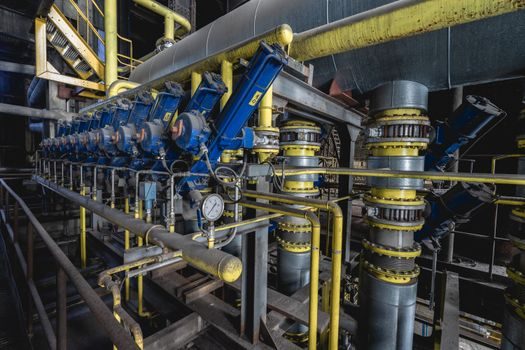
On a lined 100 mm PN16 water-treatment line, the typical design trade-off between the three quarter-turn families is given below; values are typical engineering envelopes for the soft-seated, fully-lined versions of each type rather than a single supplier's data [S1][S2][S3].
Soft-seated plug — low torque, fully-lined, low cost, slurry-tolerant to roughly 3–5% solids by mass, with a throttling characteristic that is more linear than equal-percentage [S1][S3].
Ball valve — tighter shutoff, higher cycle life, but heavier and more expensive for a given DN, with a higher minimum Cv that throttles poorly below roughly 20% opening [S1].
Butterfly valve — lightest and cheapest, wafer pattern, but its disc always intersects the flow path, so it is not the right pick on heavy-silt or fibrous sludge where a plug's straight-bore body is cleaner [S1].
Material options on the three are equivalent in the WCB / ductile-iron band; the differentiator is torque, mass, and solids handling rather than metallurgy [S1][S2].
Where a Plug Valve Beats the Alternatives
On lime, polymer, and ferric-chloride dosing the plug's straight-through, full-port body with a PTFE liner handles the most aggressive service without exotic alloys, while the elastomer seat keeps leakage class to API 598 soft-seated values on shutoff [S1][S3].
For sludge and backwash lines carrying grit, FOG, or BOD, the plug's geometry tolerates solids to roughly 3–5% by mass in the discharge stream — the same window the Gener-Ox™ G-DAF micro-bubble flotation cell on the water-treatment train is designed to remove, making a plug a clean fit on the upstream slurry side [S1]. On odor-control and H₂S-bearing sewer lines tied to the headworks, the fully-lined body also accepts the same chlorinated/oxidising service that a butterfly valve would need a higher-grade elastomer to handle [S1].
Where a Plug Valve Is the Wrong Pick
High-pressure treated-water export headers rated above PN25, long-distance pumped mains, and clean-stream service with high cycle counts are not a plug's home — the seating surface has a shorter cycle life than a ball valve seat, and metal-seated plugs need an injection system to keep the seating faces clean, which complicates maintenance [S1].
Steam, superheated water above 180 °C, and any service where the elastomer cannot be qualified (e.g. pure hydrocarbon condensate) is outside the soft-seated plug's envelope; for those duties a metal-seated or alloy trim is the only way to keep the leak rate inside API 6D [S1][S3]. Vacuum service, cavitating pump-discharge lines, and the suction side of a centrifugal pump are also poor matches because the geometry of the plug is not designed to absorb a column of liquid collapsing on the seat [S1].
Actuation, End Connections, and Sourcing Patterns
Manual gear operators dominate the low-cycle duty; electric actuators with 24 VDC or 110 VAC supply are typical for PLC-integrated filter-battery control valves, sized on a safety factor of 1.25–1.5× the maximum breakaway torque of the soft-seated plug [S1][S3].
Flanged ends to ASME B16.5 Class 150 are the most common in North American municipal plants; EN 1092-1 PN16 wafer or lug faces dominate European and Chinese-built plants, and both are visible in the supplier catalogues aggregated on industrial sourcing directories in 2026 [S3]. Buyers in 2026 are sourcing heavily from Chinese vendors (e.g. Weifang Haiyangci Water Treatment Equipment Co., Ltd. in Shandong, registered 2015) for skidded systems and replacement parts, with North American and European suppliers filling the higher-spec or NSF/ANSI 61 potable-water line [S3]. Sourcing note: most municipal bids are line-itemed, so the plug is one line among many on a water-treatment skidded system, and the lead time on a standard PTFE-lined DN150 PN16 plug is typically 4–6 weeks from the major Asian factories in 2026 [S3].
Failure Modes and Field Lessons
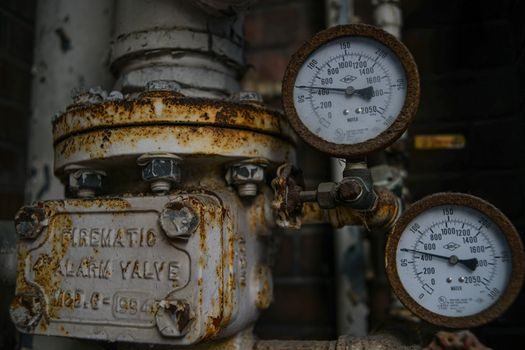
The three failure modes that show up in water-treatment plug service are seat blowout from a thermal spike, liner collapse from vacuum on a draining line, and seat erosion from grit carryover in a backwash header — all three are addressable at the spec stage rather than retrofitted in the field [S1].
Specifying a vacuum-relief or backpressure seat retainer on the plug eliminates the liner-collapse path; sticking to PTFE rather than PFA keeps the liner stable on steam-cleaning cycles below roughly 150 °C; and keeping backwash flow below 3 m/s on the plug body caps the erosion rate on the seat to a service life inside the plant's maintenance interval [S1][S3].
Specification Checklist Before You Buy
Confirm fluid, temperature, and solids content first; pick body material (ductile iron for cost, WCB for higher pressure) and lining (PTFE as default, FKM for higher temperature); set the pressure class (PN10/PN16 for gravity and most pumped service); specify flange drilling (ASME B16.5 or EN 1092-1); specify seat test (API 598 soft-seated leakage rate); and finally size the actuator with a 1.25–1.5× safety margin on the supplier's breakaway torque curve [S1][S2][S3].
For a municipal clarifier or filter-battery in 2026 the resulting shortlist is a PTFE-lined, soft-seated, ductile-iron or WCB plug in DN50–DN300 with PN16 flanged ends, manual or 24 VDC electric actuation, and a standard API 598 seat test — a configuration widely supplied through the channels catalogued on the Made-in-China platform and a handful of regional OEM brands [S3]. Comparable valves in this same class appear on broader sourcing guides; see the Best Balancing Valve for Pulp and Paper: Spec, Material, and Sourcing Map for the parallel material and PN-class logic used in pulp-and-paper stock lines, and the Gear Motor Selection: A Spec-Driven Buyer's Map for 2026 reference for the actuator-torque sizing step that drives most electric-actuator choice on these valves.