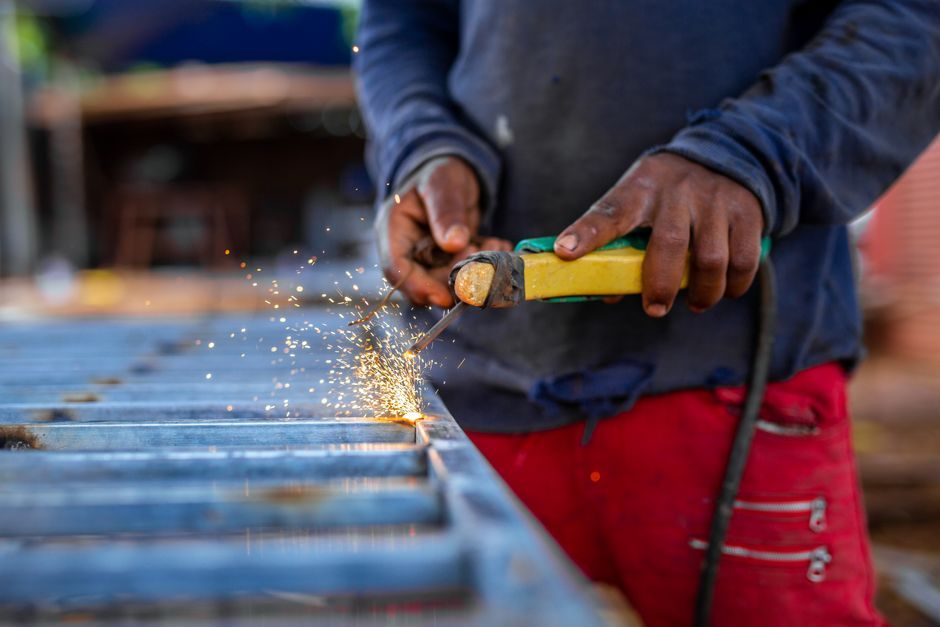
Industrial plasma cutter transaction prices in 2026 cluster into four bands: US$260-460 for portable inverter air-plasma units (Cut-80 and Cut-120 classes, MOQ 5 pieces) [S4]; US$3,000-4,500 for benchtop CNC air-plasma tables [S6]; US$8,800-10,000 for 5-axis gantry precision bevel cutters [S9]; and US$16,071-18,000 for heavy gantry flame/plasma dual-process machines with 6 m-12 m pipe handling [S3][S5].
Cutting thickness tracks price logarithmically: a 38 mm steel severing limit on a CNC plasma-gas table with 2000 x 3000 mm bed is achievable in the sub-US$20k class [S1], while a 100 mm flame-burner spec on the same platform lifts capital cost into the upper gantry tier [S1][S3]. Consumables—torch tips, nozzles, electrodes, stand-off guides—are a recurring line item: a 26-piece Lotos LTP5000D tip set retails around CNY188-207 (US$26-29) [S8], and a single roller guide wheel for AG60 / CUT50 pilots runs CNY91-134 (US$13-19) [S2].
Price Bands and What Each Band Buys
Entry-level portable inverter air-plasma units, typified by Zhejiang Lingba's Cut-80 and Cut-120 ranges priced US$260-460 per piece at MOQ 5 [S4], cover 12-25 mm clean cuts on mild steel using shop compressed air as the plasma gas. The 200-300 A industrial air module is the volumetric workhorse for site welding shops and light fabrication.
Mid-band CNC benchtop machines, advertised at US$3,000-4,500 per piece from Anhui Viken on Made-in-China [S6], add an integrated cutting table, stepper/servo drive, and CNC controller suitable for thin-gauge sheet and signage work. These are the volume choice for small job shops.
Upper-mid precision gantry machines priced US$8,800-10,000 per piece, such as the 5-axis bevel head units from Jinan Allwin [S9], introduce bevel-angle cutting for weld-prep edges and typically run on Panasonic servo platforms [S5]. Heavy industrial gantry flame/plasma dual-process tables with pipe-length options of 6 m and 12 m and pipe diameters from 3 in upward sit at the US$16,071-18,000 ceiling, supplied by ZMDE Co. (Shandong) with CE certification [S3][S5].
Spec Levers That Drive the Quote
Four levers move the number on a plasma cutter RFQ: severing thickness on mild steel, automation class, cutting-bed size, and dual-process capability (plasma + oxy-fuel). The Pomel Sp. z o.o. CNC table datasheet lists 38 mm plasma severing and 100 mm oxy-fuel cutting on a 2000 x 3000 mm bed, certified to ISO 9001 and ISO 14001 [S1]—a useful reference point for what a sub-US$20k gantry should deliver.
Cutting thickness is the single largest cost driver. Inverter air-plasma at 80-120 A severs up to 25 mm; stepping to 200 A class machines lifts severing to 35-40 mm. Gantry CNC tables with high-frequency start and 400 A-plus sources cover 50 mm production cuts and pierce up to 38 mm [S1]. Above that, oxy-fuel supplementation on dual-process gantries takes capacity to 100 mm without burning through the plasma consumables budget [S1][S3].
Automation class controls both capex and labour. Handheld systems eliminate table cost but cap productivity around 1-2 m/min on thin stock and tie up an operator full-time. Gantry CNC systems run 4-6 m/min on 10 mm steel and 1-2 m/min on 25 mm with full lights-out operation after nesting, but require compressed air at 6-8 bar and a dedicated operator for setup and loading [S6][S9].
Bed size and pipe-handling accessories also swing the quote. A standard 2000 x 3000 mm bed fits a single 6 m sheet; pipe-cutting gantries with 6 m and 12 m length options and chuck-style 3 in-and-up diameter handling add 15-25% to gantry pricing versus a flat-bed-only configuration [S3][S5].
Consumables and Total Cost of Ownership
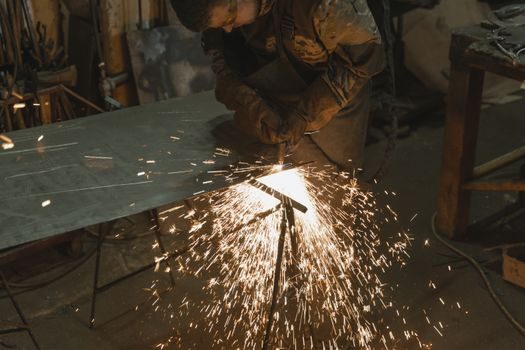
Consumables are where plasma cuts you after the sale. Hypertherm's 2024 handheld guide lists the operating-cost advantages: plasma systems avoid constant gas-cylinder refills and transport that oxy-fuel incurs, but they consume nozzles, electrodes, swirl rings, and shield caps at a rate that scales with arc-on time, pierce count, and material thickness [S7]. A typical 80-100 A pilot-arc torch nozzle set retails around CNY188-207 (US$26-29) for 26 pieces, a 30-50 hour lifespan on production cutting [S8].
Roller guide wheels and stand-off guides are mid-life replaceables. AG60 / CUT50 pilot-arc roller guide wheels list at CNY91-134 (US$13-19) per wheel, and dual-wheel kits for Simadre P-80 torches retail around CNY134 with free delivery [S2]. Stand-off guides for Lotos LTP5000D-class cutters sell in 2-packs, typically under CNY100 [S8].
Compared with oxy-fuel, plasma's operating cost is lower for steel under 25 mm because plasma uses compressed air instead of acetylene and oxygen, eliminating the recurring cylinder rental and refill logistics [S7]. Above 50 mm, oxy-fuel on heavy plate is often more cost-effective per metre of cut, which is why dual-process gantries pair plasma (thin and medium) with oxy-fuel (thick) on a single bed [S1][S3].
Selection Criteria and Comparison Matrix
For a process engineer, the cut-off is: choose handheld inverter (US$260-460) for site work, light gauge, and under 25 mm severing; benchtop CNC (US$3,000-4,500) for signage and small-batch sheet; 5-axis gantry precision (US$8,800-10,000) for weld-prep bevel work on plate; heavy gantry dual-process (US$16,071-18,000) for structural fab shops cutting pipe and heavy plate above 25 mm. Compare options on four axes: capital cost, severing thickness, automation level, and consumable accessibility. Inverter handheld wins on cost and portability, loses on automation. Heavy gantry wins on thickness and dual-process, loses on footprint and power draw. [S1]
For buyers cross-shopping cutting processes, the TIG Welder Selection: Process, Duty Cycle, Material Gates piece covers the joining side of the same fab shop, while Arc Welding Machine 2026 Price & Cost Guide: Amperage, Process and Duty Levers breaks down stick/MIG capex on a parallel cost axis.
Standards, Certifications, and Sourcing Realities

Quality-system citations on supplier datasheets should be read carefully. Pomel Sp. z o.o. carries ISO 9001 and ISO 14001 on its CNC plasma cutting datasheet [S1]. ZMDE's heavy gantry units ship with CE certification, though Made-in-China flags the certification status as "contact issuer for current status" rather than active listing [S3][S5]. The Hypertherm handheld guide, while a 2024 publication, remains the most-cited OEM reference for handheld plasma operating economics and consumable cost framing [S7] (2024-08).
MOQ discipline is real on Chinese export channels. Inverter units typically quote at MOQ 5 pieces [S4]; gantry machines quote at MOQ 1 piece but with FOB pricing that does not include installation, commissioning, or operator training—budget 8-12% on top of the machine price for Western deployment. Diamond Member / Audited Supplier badges on Made-in-China listings (ZMDE, Jinan Allwin) indicate the supplier has passed on-site verification, which materially reduces sourcing risk for first-time buyers [S3][S5][S9].
Limitations, Failure Modes, and When Plasma Is the Wrong Tool
Plasma's kerf is wider than laser and the heat-affected zone is larger than fibre-laser, but plasma beats laser on capital cost per kW by 5-10x and beats oxy-fuel on cut speed below 25 mm steel thickness [S7]. Plasma is the wrong tool for: stainless and aluminium above 15 mm where dross-free edges matter (use fibre laser); reflective thin gauge where HF-start pilot arc instability is a problem (use laser or waterjet); and any application requiring HAZ-free cuts (use waterjet).
Common failure modes: pilot-arc nozzle wear causing erratic arc starting, swirl-ring carbon build-up at high duty cycles, and moisture in compressed air causing rapid electrode erosion. A refrigerant or desiccant air dryer upstream of the plasma source is not optional in humid climates; budget US$300-800 for a unit sized to the compressor CFM rating.
Buying Signals and Trackable Indicators
Two signals to watch in the next procurement cycle: currency-driven shifts in the CNY-denominated consumable market (nozzle and electrode sets priced on Made-in-China and eBay channels) [S2][S8], and CE/IECEx certification updates on the upper gantry tier, where compliance documentation lags machine availability by 2-4 quarters. For a parallel welding-process benchmark, the Arc Welder vs TIG Welder: 2026 Spec Cut for Fabricators and Buyers comparison is a useful cross-reference on process selection logic. Plasma cutter selection ultimately comes down to thickness band, automation class, and consumable supply chain—pin those three, and the price band follows.
For component-level specifications, see plasma cutter, linear guide, and crossed roller guide.