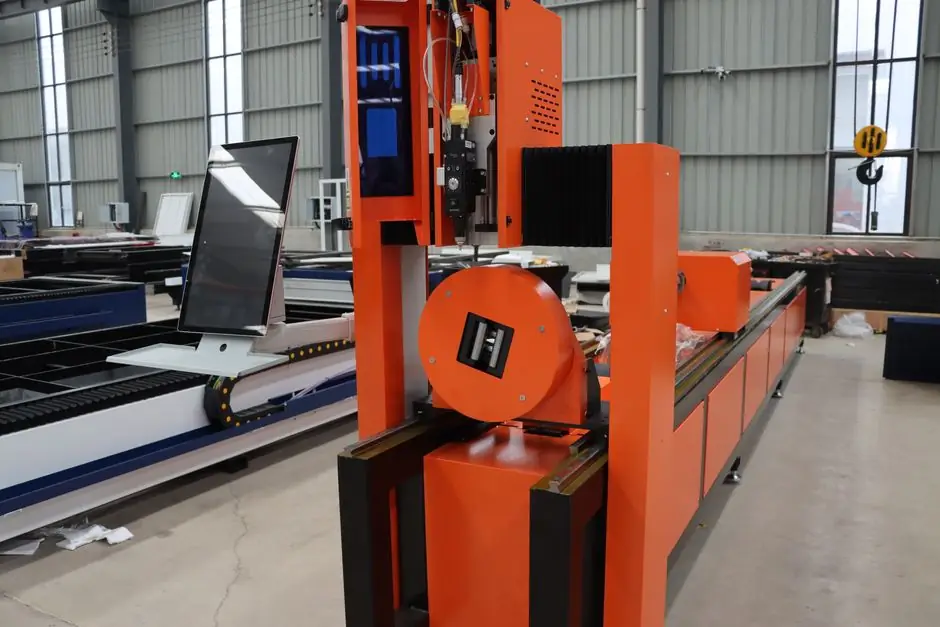
Cut-off machines split into two primary classes: abrasive-wheel power cutters that grind through hard materials with a thin reinforced disc, and toothed-blade machines (cold saw, milling, flying rotary-linear) that shear the kerf with a metallic or carbide-tipped blade [S1][S4].
The abrasive class covers chop saws, miter saws, swing-frame grinders, pendulum cutters, and wet cut-off stations used on metal bar stock, concrete, masonry, and castings. The toothed-blade class covers cold saws, flying cut-offs, and milling-type flying cut-off machines used in tube and pipe mills handling OD 2 inch to 26 inch carbon, alloy, high-tensile, and stainless steel [S3].
Class 1, Abrasive-Wheel Power Cutters: Chop, Miter, Swing, and Pendulum
Abrasive cut-off saws use a thin reinforced abrasive or diamond wheel and a pivoting arm to grind through workpiece cross-sections; typical duties cover metal, concrete, stone, and refractory castings [S1][S4]. The chop-saw / miter-saw split is the dominant portable sub-class, where chop saws deliver straight 90 degree cuts and miter saws add an angle range for bevel work [S4].
For heavier stationary work on castings, swing-frame and pendulum designs dominate. Reichmann lists six abrasive configurations: TS (dry cut-off with single or load/unload table), NTS (wet cut-off for bar stock with polished surfaces), TME 80 (freehand small series), PTS (pendulum for sprues and risers), PTS/ST (stationary pendulum with laterally movable work table), and PTC (pendulum cut-and-grind center combining both functions in one unit) [S5]. The wet NTS configuration is specified wherever a polished bar surface must not be heat-discoloured, because the coolant prevents the blue-grinding burn-in typical of dry abrasive cutting [S5].
For metals the abrasive class competes with cold saws in the small-OD bar range; the trade-off is cut speed and capital cost versus heat-affected zone and dust. For concrete and masonry, abrasive diamond wheels are the only practical option, and the choice between hand-held power cutters and walk-behind saws is set by cut depth and jobsite mobility [S1].
Class 2, Toothed-Blade Cutters: Cold Saw, Flying Rotary-Linear, and Milling
Toothed-blade cut-off machines use a circular metal or carbide-tipped saw blade and produce a cleaner, burr-reduced kerf with less heat than abrasive wheels. In tube and pipe mills, the dominant architectures are rotary-linear flying cut-off, cold-saw flying cut-off, and flying/stationary milling cut-off [S3].
Nakata's RLC series covers the bulk of structural pipe production: a 2-saw flying rotary-linear head handles 4 to 20 inch OD pipe, while a 4-saw head scales the same mechanism to 16 to 26 inch OD, both qualified for round and shaped pipe in carbon, alloy, high-tensile, and stainless steel [S3]. The latest iCUT milling flying cut-off, by contrast, is a 2-saw mechanism sized to OD 2 to 10 inch round pipe in normal and alloy steel, and its selling point is the elimination of off-line edge-burr trimming through a clean, low-offset cut face [S3]. The 1-saw cold-saw flying cut-off fills the small end, below 5 inch OD round and square pipe, with AC servomotor control for cut-length accuracy [S3].
For metallographic and lab sectioning, the toothed-blade concept reappears as precision tabletop and floor-standing abrasive-disc cutters with controlled feed; Struers lists six such platforms, with cut-off wheel sizes from 250 mm (Labotom, 62 x 250 mm capacity) up to 400 mm (Axitom, 125 x 290 mm capacity), the Magnutom-5000 being a four-axis, 1000 mm wide chamber machine for heavy samples [S2]. These are precision sectioning tools, not production mills, and they exist to deliver deformation-free cuts on metallographic specimens, which a production cold saw is not designed to do [S2].
Selection Criteria: Workpiece Material, OD, Surface, and Line Integration
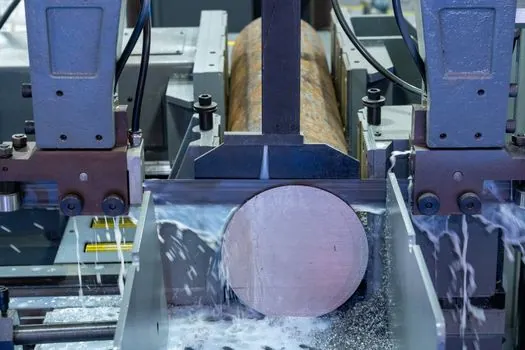
Material is the first gate: abrasive wheels win on concrete, masonry, and refractory castings, while toothed blades win on steel, stainless, and high-tensile pipe where the heat-affected zone and burring of abrasive cuts become a quality problem [S1][S3][S5].
OD range is the second gate. Below 5 inch OD round and square pipe, a 1-saw cold-saw flying cut-off is the standard production solution [S3]. Between 2 and 10 inch OD, the iCUT 2-saw milling flying cut-off is competitive when clean-cut face and minimal off-line burring are required [S3]. Between 4 and 20 inch OD the 2-saw RLC takes over, and 16 to 26 inch OD requires the 4-saw RLC [S3]. For castings, abrasive swing-frame and pendulum machines replace saws entirely, because the workpiece is irregular and saw blades cannot track a variable contour [S5].
Surface and heat control are the third gate. Wet abrasive (NTS) is the rule for polished bar stock where blue-grinding discoloration is rejected, while dry abrasive (TS) is acceptable for rough castings where the cut face will be re-machined anyway [S5]. Flying cut-off machines claim "no need for off-line reprocessing and edge-burr trimming" on steel pipe, which is the productivity argument over stationary sawing [S3].
Line integration is the fourth gate. Flying cut-offs are synchronized to the mill line and cut on the fly, while stationary saws and pendulum machines are off-line batch tools fed by operator or robot [S3][S5]. For a tube mill producing 16 inch OD structural pipe at high throughput, the 4-saw RLC is the only architecture that combines the right OD envelope, the right cuts-per-minute, and the right cut face in one machine [S3].
Criteria-Based Comparison of the Main Cut-Off Classes
The four classes below are the most common across metal-fabrication, foundry, and construction sites; the table summarises where each one wins and where it fails [S1][S3][S4][S5].
Abrasive chop / miter saws (hand-held, 12 to 16 inch wheel) score high on jobsite portability and low on cut face quality and dust control; they suit small-diameter metal bar, rebar, and concrete pipe on a construction site [S4]. Abrasive swing-frame / pendulum (TS, PTS, PTS/ST, PTC) score high on irregular casting geometry and sprue/risers and low on thin-wall tube, where the lateral force distorts the cut [S5]. Cold-saw flying cut-off (1-saw, below 5 inch OD) scores high on cut face and accuracy and low on large-OD structural pipe, where the single saw cannot generate enough metal-removal rate [S3]. Rotary-linear / milling flying cut-off (RLC 2-saw, 4-saw; iCUT 2-saw) scores high on throughput and large-OD pipe up to 26 inch and low on small-batch and off-line work, where the flying synchronization adds cost and complexity without payoff [S3].
For a process engineer writing a cut-off spec, the decision order is: material class, then OD envelope, then surface/HAZ requirement, then throughput/line-integration. That sequence collapses most of the field to one or two candidates before brand and price come into play.
Use Cases, Limitations, and Failure Modes
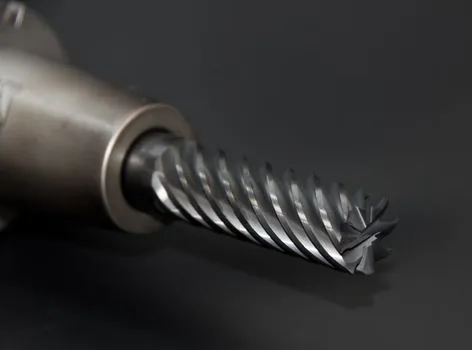
Construction and demolition crews run hand-held abrasive power cutters on concrete, masonry, rebar, and steel plate; the dominant safety concern is the unguarded high-speed wheel, and the Missouri Department of Labor guidance cited by Contractors Direct flags the cut-off saw as "extremely dangerous" because of the unguarded blade at high rpm [S4].
Foundries run pendulum and swing-frame abrasive machines on cast iron, cast steel, and superalloy castings; the limit is workpiece size, since the swing-frame design assumes the operator can present the casting to the wheel by hand or by simple fixture [S5]. Tube and pipe mills run flying cut-offs synchronized to the mill line; the limit is OD envelope and steel grade, because the blade feed rate, chip evacuation, and cut face quality all degrade outside the qualified range [S3]. Metallographic labs run precision abrasive and fine-blade cutters on small specimens; the limit is specimen size and the need for deformation-free cuts, which is why machines like Labotom (62 x 250 mm) and Axitom (125 x 290 mm) define their market by chamber capacity rather than throughput [S2].
Common failure modes across all classes: wheel or blade wear causing kerf deviation, coolant failure on wet abrasive machines causing thermal damage, chip accumulation on flying cut-offs causing blade binding, and misalignment of the pivot arm on chop saws causing angled cuts. A practical mitigation on production lines is the modular quick-clamp and quick-blade-change design seen on the iCUT, which Nakata lists as a specific productivity feature [S3]. On abrasive machines, automatic cleaning and intelligent feed control (Struers' AxioWash and OptiFeed on the Discotom line) target the same downtime drivers [S2].
Standards, Sourcing, and Related Equipment
Cut-off machines are governed more by application standards (ASTM/EN material specs, ISO 2768 for general tolerances, and customer-specific pipe-end squareness requirements) than by a single machine standard; blade safety on abrasive wheels is typically governed by regional machinery-safety directives applicable to the installation site [S1][S5].
For Chinese-made cut-off and pipe-fabrication equipment, sourcing specs and supplier maps are documented in the galvanized steel sheet sourcing 2026 map, and bridge-plate cutting choices run alongside the oxy-fuel cutting torch selection for bridge construction reference, since oxy-fuel and abrasive cut-off saws sit in different application niches. For a broader view of how cutting interfaces with adjacent processes, the hydraulic power unit types reference covers the drive packages commonly fitted to swing-frame and pendulum cut-off stands.
The encyclopedia entry on cutting machine classifications lays out the wider family that includes sawing, shearing, and abrasive cutting, while core machine and construction machinery cover the adjacent drilling and jobsite-power-tool classes that share motor, gearbox, and abrasive-wheel consumables with the cut-off family.
Trackable signals for the next planning cycle: Nakata's iCUT milling flying cut-off has set a new benchmark for 2 to 10 inch OD clean-cut pipe at low cost, and Struers' Magnutom-5000 has expanded the floor-standing precision sectioning class to 1000 mm chamber width with four automated axes [S2][S3]. Watch for the next round of foundry abrasive machines adding inline cut-face measurement, since pendulum and swing-frame stations still rely on operator visual inspection for cut quality [S5].