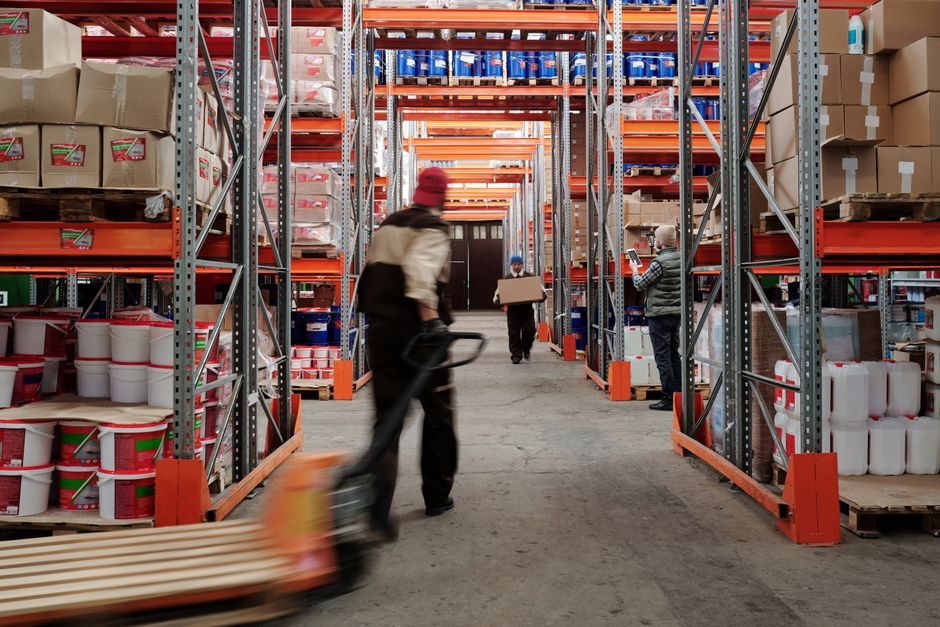
Plastic pallets are injection-molded HDPE or PP deck structures with reported service lives 5 to 10 times longer than wooden pallets in closed-loop grocery and pharma pools [S1][S6]. Empty weights cluster in the 15-30 lb (7-14 kg) range, and the closed-cell polymer deck absorbs essentially zero moisture, which is why food and pharmaceutical lines have steadily displaced wooden pallets on wash-down and export lines [S6].
The trade is unit cost and environmental footprint: a new plastic pallet typically runs 2-3x the price of a comparable stringer wood pallet, and end-of-life recycling is constrained by resin grade, steel-belt contamination, and downstream HDPE bale pricing [S1][S2].
Where Plastic Beats Wood: Hygiene, Weight, Loop Life
Plastic pallets are non-porous, so they do not harbor insects, do not require ISPM-15 heat treatment for export, and survive wash-down at 180 °F (82 °C) without delamination — a key reason the food and pharmaceutical industries standardized on them [S6]. The closed-loop pool systems used by the largest grocery and big-box retailers report pallet lifespans of roughly 50-250 trips before scrapping, an order of magnitude over typical wood pallet rotations [S1].
Weight is the second lever. A standard 48x40 GMA plastic pallet weighs 15-30 lb versus 30-50 lb for hardwood, cutting truck payload by 200-700 lb per loaded pallet position and reducing diesel burn on round trips [S1][S6]. Four-way entry, integrated RFID pockets, and molded-in logos also eliminate the nail failures and splinter injuries that drive OSHA recordables in wood-pallet yards.
Where Plastic Loses: Static Load, Cost, and End-of-Life
Static-load rating is the soft spot. Standard HDPE pallets typically rate 3,000-6,000 lb (1,360-2,720 kg) static and 1,000-3,000 lb dynamic, but a sustained load above roughly 2,500 lb in a 100 °F (38 °C) warehouse can creep the deck and rack arms will deflect over weeks [S1]. A reinforced steel-belted or structural-foam pallet pushes static to 10,000-30,000 lb but doubles the unit cost and weight [S6].
Price and recyclability remain the headline disadvantages. A virgin HDPE GMA pallet runs USD 25-60 versus USD 10-18 for wood, and although HDPE and PP are technically recyclable, in practice painted or mixed-resin pallets are landfilled — and burning or landfilling plastic releases phthalates and other additives whose toxicology remains under review [S1][S2]. Spent pallets shed microplastic fibers under abrasion, a known concern in food-contact loops.
Resin Comparison: HDPE vs PP vs PLA
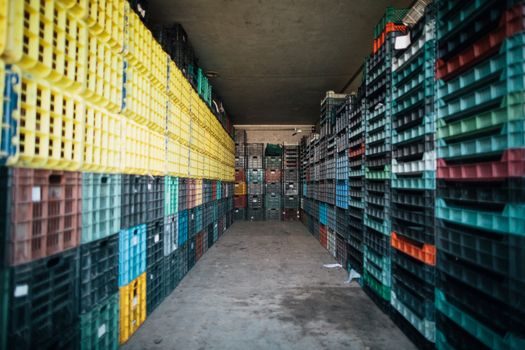
HDPE (high-density polyethylene) is the default resin for food, beverage, and chemical pallets: it absorbs negligible water, resists most acids and bases, and survives impact down to roughly -40 °F (-40 °C) [S1]. PP (polypropylene) is the second most common grade and wins wherever a pallet sits in a hotter loop — PP's heat-deflection temperature of about 212 °F (100 °C) is well above HDPE's 170 °F (77 °C), making PP the choice for autoclaves and high-temp wash-down [S1].
PLA (polylactic acid) is a different animal: a bio-based polyester from corn or sugarcane that composts under industrial composting, but its heat-deflection temperature is only 131-140 °F (55-60 °C) and its impact strength is below PP or HDPE, so it is generally confined to single-trip or display applications [S3]. For rackable warehouse work, HDPE is the baseline; PP is the upgrade for hot loops; PLA is the single-use or marketing-claim choice.
Selection Criteria: Load, Loop, Environment, Compliance
Four numbers drive pallet spec: dynamic load (lift-truck handling, typically 1,000-3,000 lb), static load (warehouse floor, 3,000-6,000 lb stock, 10,000+ lb reinforced), rack load (selective or push-back rack, often 2,500-5,000 lb), and trip count (single-trip export vs 50-250-trip pool) [S6]. A useful rule: dynamic load is roughly 1/3 of static load, and rack load is roughly 1/2 of static, because the rack arm applies long-duration creep that HDPE tolerates less than wood [S1].
For the spec sheet itself, plastic pallet selection lives or dies on three compatibility checks: rack-arm geometry (must seat on 2-3 molded stringers, not a flat deck), pallet-jack fork height (typically 7-inch fork clearance for a 5.5-inch deck), and pallet rack beam face dimension. A standard GMA 48x40 has 40-inch stringers and requires a 40-inch clear beam span; any mismatch and the deck sags, cracks, and sheds HDPE into the rack.
Who Plastic Pallet Is For (and Who It Is Not)

Plastic pallets fit closed-loop grocery, pharma, and chemical fleets where wash-down, ISPM-15 export compliance, and 50+ trips per pallet justify the 2-3x price premium; they also fit automated block warehouses with pallet stacker cells where dimensional consistency drives singulation success. Engineers in these loops buy on trip cost, not sticker price, and a USD 40 pallet amortized over 100 trips beats a USD 12 pallet amortized over 8 trips on a clean per-trip basis [S1][S6].
Plastic is the wrong call for one-way export shipping to non-compliant countries, for heavy racking above 3,000 lb without steel reinforcement, and for any line where the pallet will see sustained temperatures above 170 °F (77 °C) for HDPE or 212 °F (100 °C) for PP — at those points the deck creeps or sags. A small batch of 3D-printed or short-run pallets may also be machined from engineering plastic stock, but the cost-per-pallet math rarely beats injection-molded HDPE at any volume above a few hundred units.
Failure Modes and Limitations
Three failure modes dominate plastic-pallet returns: (1) rack-arm creep after sustained static load in a hot warehouse, (2) fork-truck impact at the bottom stringer, which shears the molded rib, and (3) UV embrittlement of HDPE after 2-3 years of outdoor exposure, which drops impact strength by 30-50% [S1][S2]. In all three cases the failure is non-repairable: a cracked stringer means scrap, not re-nail. Wood pallets can be re-nailed five or more times; a plastic pallet cannot, which is why trip-count economics matter so much in any TCO model [S1].
Environmental limitations are equally concrete. Conventional HDPE and PP are petroleum-based and persist in landfill for centuries; PLA composts only at industrial-composting temperatures of 131-158 °F (55-70 °C) and will not biodegrade in a typical landfill or ocean [S2][S3]. Additives such as phthalates and brominated flame retardants, which are used in many molded-pallet grades, are under active toxicological review, and several jurisdictions have already restricted them in food-contact applications [S1].
Comparison Table: HDPE vs PP vs Wood vs PLA Pallet
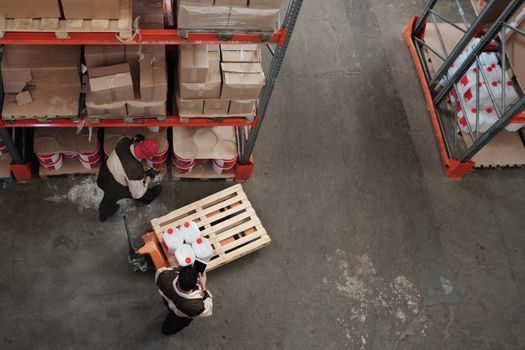
Stacking the four common materials against four engineering decision criteria makes the spec clear: cost, temp ceiling, water absorption, and trip count. HDPE scores high on water and cost, moderate on temp; PP wins on temp ceiling at the cost of price; PLA is cheapest in trip cost only if composting is the disposal path; wood is cheapest on unit cost but pays for it in weight, hygiene, and trip count [S1][S3][S6].
Standards and Sourcing References
The most-cited specs in pallet procurement are ISO 6780 (intermodal pallet sizes — defines the 48x40 GMA as a recognized footprint), ASTM D1185 for pallet testing, and ISPM-15 for wood-pallet heat treatment (a compliance gate plastic pallets bypass by default) [S6]. For rackable designs, the Working Load Limit must be marked per ASTM D6178 / D6193-style dynamic and static load tests, and the deck dimensions must match the electric pallet truck and manual pallet jack fork geometry on the floor.
For deeper context on rack-and-pallet geometry and how molded stringers seat on selective rack, see the installation guide for the four-gate plastic pallet variants — the same mating logic applies to any HDPE or PP molded deck. For a wider view of polymer trade-offs in industrial material handling, the industrial solvent trade-off map covers the resin-vs-application reasoning from a different angle.
Trackable signal: monitor ASTM D1185 / D6178 revisions and ISPM-15 scope updates, watch PLA pallet pricing as corn-starch feedstock stabilizes, and re-evaluate rackable HDPE every 24 months against structural-foam PP as resin bale prices move.