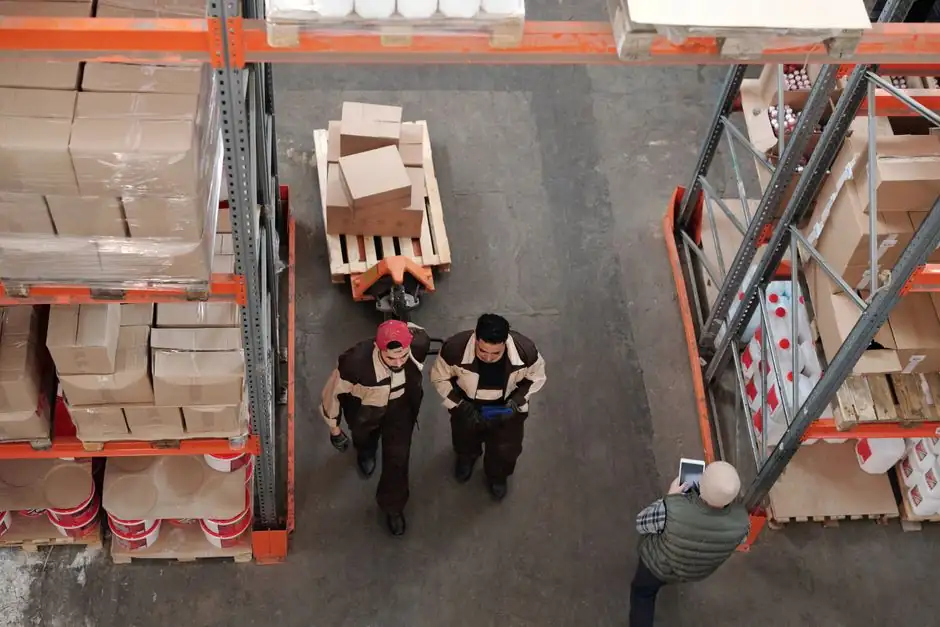
Automated pallet warehouses using shuttle-based channel storage routinely handle 3,000+ pallet positions with one dedicated distribution vehicle per storage level, so any pallet outside dimensional or stiffness spec will stop the line [S1]. North American warehouse automation spend reached $9.33 billion in 2026, up from $5.88 billion in 2023, and that capital intensity is what forces the pallet spec conversation upstream of equipment purchase [S2].
The decisive attributes are not material, color, or weight, but footprint tolerance, top/bottom deck flatness, and the maximum deflection the pallet exhibits on a shuttle cart or crane fork. Plastic pallets win on uniformity: injection-molded HDPE or structural-foam PP delivers tighter dimensional control than mixed hardwood stringer pallets, which is why they dominate greenfield automated builds [S3][S5].
Dimensional Footprint and Tolerance: The Non-Negotiable Baseline
The two footprints that drop into nearly every European and most North American shuttle, crane, and conveyor cell are 1200×1000 mm and 1200×1200 mm, with the 1200×800 mm Euro footprint remaining common for case-pick and conveyor-only lines [S8]. Specifying a pallet that does not sit within ±2 mm of nominal on length and width is a common root cause of shuttle mis-picks and conveyor edge jams [S8]. For high-throughput AS/RS, target mold-grade tolerance bands of ±1 mm, since even small creep after months of stacked racking shifts a nominally "in spec" pallet out of the pick envelope [S7].
Bottom-deck geometry matters as much as footprint. Pallets available on 3 or 5 runners with an open or fully closed deck are the standard plastic build for automated handling; 5-runner closed-deck gives the best roller-transfer and shuttle-cart pickup, while 3-runner open-deck suits pallet flow lanes and chain conveyors where debris clearance is needed [S6]. The OEM literature is explicit: deviating, inconsistent, and uneven pallet sizes, tolerances, and quality are a primary driver of unplanned downtime, and the same logic applies whether the asset is a shuttle truck, a stacker crane, or a pallet stacker on a mezzanine [S9].
Stiffness, Deflection, and Why a Stiffer Pallet Is Not Always Better
AS/RS shuttle carts and unit-load ASRS cranes typically cap pallet deflection at 0.5 in (12.7 mm) under rated load, which is the design point most rack and shuttle OEMs publish for new equipment [S2]. The common engineering error is to over-spec deflection to 0.25 in (6.35 mm) for "extra safety", but pallet-design software already embeds a 2.5x safety factor on the 0.5 in baseline, so doubling stiffness burns material cost without measurable reliability gain [S2]. A four-stringer block-style pallet or a runner-style pallet with reinforced rib spacing delivers the 0.5 in deflection at a realistic cost for a 1,000 kg / 2,200 lb dynamic load.
Where stiffness cannot be raised on the pallet side, the alternative is to reinforce the conveyor: add rollers, close roller gaps, or fit belt supports under the pallet's stringer lines so the loaded pallet never sees an unsupported span longer than the design limit [S2]. This is where the conversation between pallet supplier and integrator pays back: reinforcing one conveyor section costs far less than retooling a mold.
Co-Design Workflow: Pull Pallet Spec Into the Automation Project Early
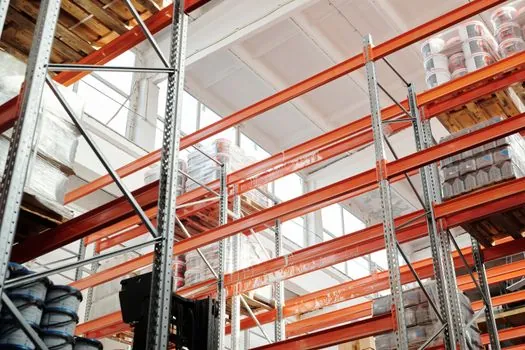
Co-design between the pallet supplier and the automation integrator is the single highest-leverage activity in a greenfield AS/RS project, and leaving pallet specification to procurement at the end routinely forces a custom-tooling charge that exceeds the entire pallet line item [S2]. The handover artifact that prevents this is a pallet spec sheet locked at front-end engineering design (FEED), containing footprint, tolerance, deflection, runner count, deck open/closed, RFID/ID marking position, and load cases (static, dynamic, racking) [S7].
In practice that means three procurement gates: first, a sample lot of 50-100 pallets run through the integrator's simulator or test lane to verify pick reliability over 10,000 cycles; second, a production run validated against a quality plan with CMM or go/no-go gauge checks on critical dimensions; third, a change-control clause locking the mold so any downstream dimensional drift is a documented deviation, not a silent field failure [S2][S9]. When the pallet rack uprights, beam flange widths, and shuttle fork pockets are sized off the same drawing, downstream retrofit risk drops sharply.
Selection Criteria by Use Case: AS/RS Shuttle, Conveyor, and Pallet Flow
For unit-load AS/RS shuttle and crane cells, a 1200×1000 mm or 1200×1200 mm 5-runner closed-deck HDPE/PP pallet with ≤12.7 mm deflection and ±1 mm dimensional tolerance is the default [S2][S6][S7]. For conveyor-only e-commerce fulfillment, a lighter 3-runner open-deck pallet cuts cost and debris traps, with the same footprint family [S6]. For pallet-flow lanes, a 9-block or 3-runner pallet with chamfered bottom edges feeds cleanly onto the flow rails, and a manual pallet jack still indexes without hang-ups [S8].
For mixed-mode operations combining racking, conveyor, and occasional AGV or electric pallet truck handling, the safest spec is a 5-runner closed-deck pallet that presents a flat top for slip-sheet or layer-pick robots and a clean bottom for fork-entry from any direction [S6]. A consistent plastic pallet pool also feeds into WMS slotting logic and reduces the dimensional exceptions the electrical automation stack has to handle on the PLC side [S3].
Failure Modes and Constraints Buyers Underestimate

Three failure modes show up in almost every post-mortem of a stalled AS/RS retrofit. First, creep: plastic pallets loaded to 1,000 kg in a 35°C (95°F) warehouse can grow past tolerance after 6-12 months, even if they left the mold in spec; the spec sheet must call out post-creep dimensions, not just as-molded [S7]. Second, deck wear: shuttle-cart pickup tabs and chain-conveyor drag bars slowly wear high spots on injection-molded decks, and the worn geometry no longer matches the plastic pallet CAD the integrator used to design the forks [S2]. Third, RFID/ID placement: barcodes or RFID inlays placed over rib transitions misread at rates above 0.5%, which silently kills pick reliability in a high-availability AS/RS [S4].
The other common constraint is rack fit. Plastic pallets that pass shuttle and conveyor checks still hang up on selective rack cross-bars if the bottom deck is not reinforced at the runner ends, and a 4-way entry pallet is the only practical way to avoid per-aisle orientation rules in a deep-lane flow rack [S4][S8]. Buyers who skip a site acceptance test (SAT) on the first 500 production pallets typically discover these issues during go-live, when the cost of a bad batch is measured in hours of conveyor stoppage, not in pallet unit price [S9].
Trackable Signals for the Next Procurement Window
Two data points are worth watching through Q4 2026. The first is whether major AS/RS integrators publish updated pallet CAD libraries (most keep them under NDA, but revision dates are trackable on request) and align them with ISO 6780 interline pallet dimensions, which still anchor most shuttle-cell designs. The second is whether automation-ready plastic pallet specification guides converge on a common deflection test method, since the current 0.5 in / 12.7 mm figure is an OEM convention rather than a published ISO test load case [S2][S7]. A third, lighter signal: the ramp of 5-runner closed-deck mold capacity in Asia-Pacific, which will determine whether the 1200×1000 mm automation-grade pallet gets materially cheaper by mid-2027 or stays a premium SKU [S6].