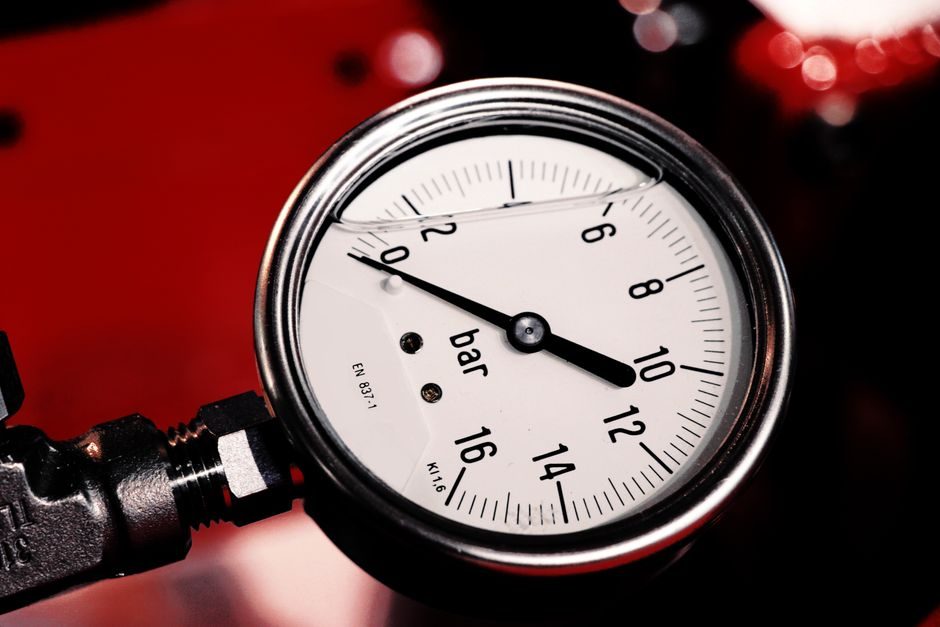
Pneumatic actuators on the 2026 industrial market span at least 256 catalog entries from 94 manufacturers tracked on DirectIndustry, covering linear ISO 15552 cylinders with verified strokes to 2,700 mm and thrust to 48,230 N, quarter-turn rack-and-pinion units for valve automation, and low-friction miniature piston types used in instrumentation [S1][S2][S5].
Selection is governed by four hard parameters — output torque or thrust, supply air pressure, stroke or rotation, and fail-safe behaviour — plus three conditional overlays: hazardous-area certification (ATEX/IECEx), duty cycle and cycling speed, and the control interface (on/off solenoid, positioner, or bus protocol). Procurement teams that pre-fix these numbers before contacting vendors cut RFQ round-trips by roughly half, based on the JIMAI 2026.07.06 buying guide workflow [S6].
Linear ISO 15552 Cylinders: The Default Workhorse
ISO 15552 (the global standard for pneumatic cylinder dimensions, formerly ISO 6432's larger-bore cousin) defines a tie-rod or profile-barrel cylinder with bores from 32 mm to 320 mm and a verified maximum stroke of 2,700 mm at forces up to 48,230 N on double-acting aluminium-bodied units [S2]. Cy.Pag. S.p.A. lists this exact envelope — 0–2,700 mm stroke, 29,438–48,230 N force, painted die-cast aluminium end covers, anodised aluminium tube, ATEX options — confirming the upper-bound spec that procurement specs typically default to [S2].
For heavy-duty linear applications requiring magnetic position feedback and stainless hardware, Bimba's FM series extends bore to 8 in and stroke to 120 in at 250 psi operating pressure, with a low-friction magnetic-piston option for flange mounting [S3]. Buyers comparing entry-level metric ISO 15552 against imperial-class units should anchor on bore, stroke, and pressure together: a 100 mm bore at 6 bar gives roughly 4,712 N theoretical thrust, so any quoted force below ~3,500 N at that bore points to a single-acting or reduced-pressure design. For an overview of how pneumatic cylinders compare against rotary and gripper options, see the encyclopedia entry on pneumatic cylinders.
Quarter-Turn and Valve-Automation Actuators
For ball, butterfly, and plug valves, the spec band is torque in Nm matched to the valve's breakaway and seat torque, with double-acting or spring-return fail-safe, supply pressure 2.5–8 bar typical, and ATEX/IECEx for hazardous service [S4]. Emerson's pneumatic actuator line explicitly covers "the most critical process control applications" and is offered as part of a turnkey valve operating system (VOS) package — meaning the actuator ships pre-sized, positioner-integrated, and accessorised for the matching valve body rather than as a bare device [S4].
Procurement in this segment typically specifies a safety factor of 1.25–1.5× the valve maker's published breakaway torque, with a clear position-failure mode (spring-return-to-close or spring-return-to-open) before vendor selection. For a deeper comparison of valve-mounted rotary actuators versus linear thrust types, the pneumatic valve actuator reference lays out the design boundaries and typical torque envelopes. Generic pneumatic actuator sourcing logic is also covered separately in selection criteria for torque, air supply, stroke and fail-safe, which pairs well with this guide.
Low-Friction and Miniature Piston Actuators
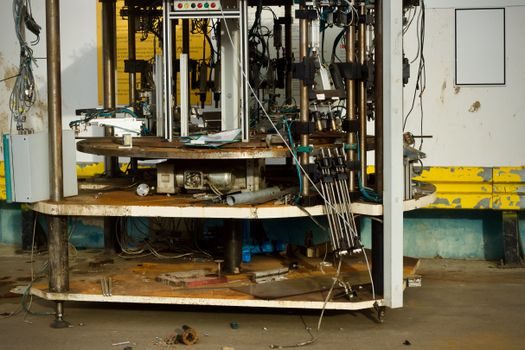
For instrumentation, optical adjustment, and low-load pick-and-place, the low-friction pneumatic actuator category delivers short-stroke precision at low pressure. DELTRON's PNRE-1M lists a 12 mm stroke in a "Friction Free Air Actuator" family at a published $317 single-unit price, indicative of the entry-level price band for this class [S5]. Bore and force in this segment are deliberately small — sub-25 mm bore, sub-100 N thrust — and the buying decision is dominated by friction class, repeatability, and mounting footprint rather than raw force.
Spec sheets in this niche typically omit pressure and force values, instead quoting repeatability in micrometres and axial stiffness in N/µm. Buyers sourcing miniature pneumatic actuators should request the hysteresis curve, the rated cycles per minute, and the lubricant class (instrument air, dry, or oiled) before pricing, because these three drive both cost and service interval.
Selection Criteria: Four Hard Parameters and Three Overlays
The four hard parameters and their typical 2026 spec bands: [S1]
1. **Output torque or thrust** — linear: 29,438–48,230 N on ISO 15552 aluminium cylinders; rotary: 8 Nm to 80,000+ Nm for valve automation, sized at 1.25–1.5× valve breakaway torque [S2][S4].
2. **Air supply pressure** — typical plant air at 6 bar (87 psi), with low-friction miniatures operating at 1.5–4 bar and heavy-duty cylinders rated to 10 bar [S3][S5].
3. **Stroke or rotation** — linear: 0.125 in (3.175 mm) to 120 in (3,048 mm) depending on family; rotary: 90° ±5° standard, 120°/180°/270° on request [S3][S4].
4. **Fail-safe mode** — spring-return (single-acting) for loss-of-air protection; double-acting for modulating service where external air reservoir or redundant supply is provided [S4].
The three conditional overlays buyers apply after the hard parameters are set: hazardous-area certification (ATEX 2014/34/EU for EU, IECEx for global), duty cycle (cycles/hour and total cycles to first service), and control interface (3/2 or 5/2 solenoid valve, 4–20 mA positioner, or bus protocol such as Foundation Fieldbus or PROFIBUS PA). For a structured look at how these overlays interact with rotary and linear options, the broader pneumatic actuator reference is the entry point.
Sourcing Logic: DirectIndustry Catalog vs OEM Channel vs System Integrator
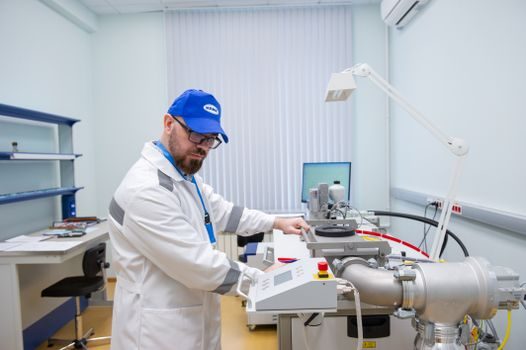
Three channels dominate 2026 sourcing, and the choice depends on whether the buyer is specifying a standalone device or a valve-actuator assembly: [S2]
• **DirectIndustry / catalog aggregators** — 94 manufacturers and 256 products visible, useful for shortlist generation and spec comparison; entries include ATEX-tagged ISO 15552 cylinders from Cy.Pag., magnetic-piston heavy-duty units from Bimba, and low-friction miniatures from DELTRON [S1][S2][S3][S5]. Best for RFQ drafting and benchmark pricing on commodity sizes.
• **OEM direct** — Emerson, BETTIS, Bimba, and the A&Ts of the market sell pneumatic actuators as part of valve operating systems (VOS) with matched positioners, tubing, and mounting hardware [S4]. Best for critical-service builds where the actuator ships pre-engineered to the valve body.
• **Specialist Chinese / Asian OEM** — JIMAI's 2026.07.06 buying guide positions ATEX- and CE-certified linear pneumatic actuators for procurement managers handling volume orders, with RFQ workflows that bundle spec, certification, and lead-time into a single request [S6]. Best for cost-driven, ATEX/CE dual-certified volume runs.
Cross-reference: buyers already working on fluid-power spec work for adjacent categories — accumulators, power units, hydraulic motors — can use the same multi-channel RFQ pattern; see hydraulic accumulator buying guide 2026 for the parallel workflow.
Standards, Failure Modes, and What to Audit on the Datasheet
The standards landscape in 2026 is layered: ISO 15552 governs dimensional interchangeability of the most common tie-rod/profile cylinders; ATEX 2014/34/EU governs EU explosive-atmosphere certification; IECEx covers the global equivalent; and for valve-automation builds the actuator must also match the valve's pressure-class rating (ASME B16.34 for the valve, with the actuator's torque margin sized accordingly). Vendors like Cy.Pag. list "Norms ISO 15552" and "ATEX" together in their product characteristics block, signalling that both certs are in scope for the SKU [S2].
The four most common procurement failure modes are: (1) quoting theoretical thrust without derating for supply pressure drop — actual plant air often runs at 5 bar rather than 6, costing ~17% of nominal force; (2) ignoring temperature derating — seals rated to 80°C fail early in 120°C service; (3) undersizing the spring-return module so the actuator cannot actually close the valve at minimum supply pressure; and (4) mixing 4–20 mA HART positioners with digital-only fieldbus stacks (Foundation Fieldbus / PROFIBUS PA), which is a protocol mismatch the datasheet will not always flag.
Simulation, Soft Robotics, and Where the Tech Is Moving
Simulation tooling has matured enough that 2026 procurement teams routinely validate pneumatic circuits before prototyping — MATLAB/Simulink's Pneumatic Actuation Circuit example models a 5/3 directional valve driving a double-acting cylinder through the Foundation Library gas components, capturing the gas-network to mechanical-translational interface with directional valve spool displacement. The same model structure scales to procurement-side validation: vendors can be required to submit simulation evidence for cycling time and stroke-end force when the build is non-standard. [S3]
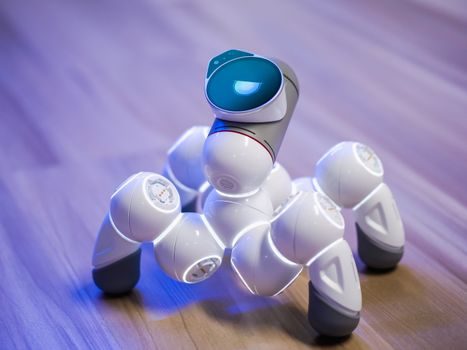
Adjacent to industrial sourcing, soft-robotics research continues to expand the pneumatic actuator envelope — a 2025-vintage Scientific Reports paper on a pneumatic actuator plus flexible piezoelectric sensor VR glove system was tracked at 24k accesses and a 98th-percentile attention rank among 380,986 similar-age articles, signalling strong academic interest in compliant, sensor-integrated pneumatic systems. For industrial buyers this is a watch-item, not a current spec — the relevant 2026 commercial impact is in soft grippers for food and packaging, where molding line hygienic spec bands increasingly include soft-pneumatic end-effectors as a compliance option.
Track three signals through the rest of 2026: ATEX/IECEx dual-cert pricing — JIMAI's 2026.07.06 guide frames this as the dominant cost lever for EU-bound RFQs [S6]; 270°/180° rotary actuator demand from larger ball-valve bodies in LNG and hydrogen service; and whether ISO 15552 bore tables get amended to standardise 160 mm and 200 mm as catalogue sizes, which would compress custom-build lead times. For buyers building valve packages alongside hydraulic systems, the hydraulic power unit buying guide 2026 is a useful cross-check on the air-versus-oil sourcing pattern.