Rack-and-pinion, scotch-yoke, and straight-stroke (linear) designs dominate the pneumatic actuator output of Chinese OEMs, with 8,000-piece monthly capacity now listed on standard rotary product pages and CE certification treated as the entry-level spec [S3][S4].
Wuxi Xinming Auto-Control Valves Industry Co., Ltd. (Jiangsu), Zhejiang Theoborn Auto-Control Valves Co., Ltd. (Wenzhou, Binhai Industrial Zone), and Zhejiang Wisley Automatic Valve Co., Ltd. all publish overlapping process lines covering spring-return and double-acting rotary units plus linear-stroke bodies for ball, butterfly, gate, and knife-gate valves [S1][S2][S3].
Three Mechanical Families, Three Different Process Routes
Rack-and-pinion units use a pair of pistons with linear gear teeth riding on a central pinion: the process sequence is bar-stock or forged-aluminum body machining, piston OD grinding, pinion hobbing or extrusion, and bearing-fit assembly with a live-load spring pack for fail-safe variants [S3].
Scotch-yoke actuators convert piston linear motion into torque through a slot-and-yoke linkage, and are specified where high break-torque on quarter-turn valves (ball, butterfly) is required at low supply pressure [S3].
Straight-stroke and fork-type (linear) actuators drive rising-stem valves — gate, globe, stop, and control bodies — with a diaphragm or piston cylinder, and Wisley's catalog separates them explicitly from rotary product lines [S2].
Body and Component Material Stack
Aluminum alloy extrusions are the default body material for rotary actuators; Wisley publishes an "Aluminum Alloy Straight Stroke Pneumatic Actuator Valve" SKU as a standard catalog item, with anti-corrosion, insulated, and high-performance linear variants built on the same cylinder base [S2].
End caps on rotary units are typically powder-coated die-cast aluminum; pneumatic conveyor, mining, and bulk-handling actuators increasingly use hard-anodized bodies where dust and abrasion are part of the service envelope (see the pneumatic conveyor duty profile).
Sealing stacks combine NBR or FKM O-rings with PTFE back-up rings on the piston; PTFE-lined seats are common when the actuator drives a pneumatic valve actuator into chemical service, mirroring the material choices laid out in the PTFE sealing reference.
Process Flow From Bar Stock to Shipment
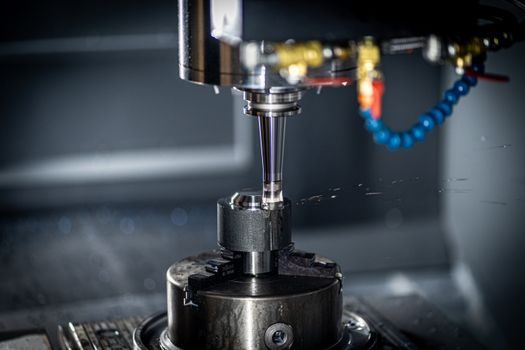
Standard production on a Chinese OEM rotary line runs: (1) CNC lathe turning of cylinder bores to ±0.05 mm tolerance, (2) piston machining with rack teeth cut in a single setup, (3) pinion shaft hobbing and keyway broaching, (4) end-cap die-casting and powder-coating, (5) spring pack pre-load assembly for spring-return units, (6) limit-switch and position-sensor bracket fitment, and (7) leak test at 0.6–0.8 MPa shop-air pressure. [S3]
Fast-acting rotary SKUs are tuned for sub-second stroking: Wuxi Xinming's "China Manufacturing Fast Acting Rotary Pneumatic Actuator" lists a 10-piece MOQ at US$20 and 8,000-piece monthly capacity, with carton plus foam-box inner packing as the standard transport pack [S4].
Surface protection on export units is typically an anodized body plus e-coated end caps; the spring cartridges on spring-return units are individually pre-loaded and tagged with cycle count, then assembled into the body in a dedicated fixture to control break-torque output.
Selection Criteria and Cross-Type Comparison
For quarter-turn service (ball, butterfly, plug) the choice is between rack-and-pinion and scotch-yoke: rack-and-pinion gives compact envelope and bidirectional equal torque, scotch-yoke gives higher break-torque at low pressure but a larger footprint [S3].
For linear service (gate, globe, stop, control) the choice is diaphragm-cylinder versus piston-cylinder: diaphragm units cap out at lower supply pressures but give cleaner throttling; piston units handle higher thrust and are standard for pneumatic valve actuator modulating duty [S2].
Corrosion and chemical service push the spec toward PTFE-lined seats, FKM seals, and stainless steel trim — see the comparison table below.
Type-by-criteria comparison:
• Rack-and-pinion: compact envelope, balanced bidirectional torque, 2–8 bar supply standard, suited to 1/4-turn valves.
• Scotch-yoke: high break-torque at low pressure, larger footprint, suited to large butterfly and ball valves above DN300.
• Straight-stroke (piston): high thrust, modulating-capable, suited to gate/globe/control valves in chemical and power service [S2].
• Straight-stroke (diaphragm): low-pressure throttling, cleaner operation, suited to light-industry and water service.
Quality Systems, Certifications, and Capacity Reality
Theoborn's Wenzhou facility is registered against ISO 9001 and ISO 14000, and lists CE certification for its rack-and-pinion and scotch-yoke lines plus electric ON/OFF and modulating actuators [S3].
Wuxi Xinming's Jiangsu plant publishes account-registered-in 2015, with pneumatic rotary, valve-actuator, and positioner products on the same SKU list; the fast-acting rotary model carries 8,000-piece monthly production capacity and ships in foam-lined cartons [S1][S4].
Wisley's Zhejiang operation integrates R&D, manufacturing, sales, and after-sales under one entity, and lists chemical, oil, light-industry, and power as the four primary application verticals for its pneumatic actuator range [S2].
Failure Modes and Shop-Floor Pitfalls
The three most common field failures on rack-and-pinion units are piston-O-ring extrusion at high temperature, pinion-shaft seal blow-by, and spring-pack fatigue on spring-return SKUs — all of which are caught at the leak-test step on a controlled production line [S3].
Scotch-yoke units fail at the yoke-slot wear surface when lubrication is interrupted, which is why most Chinese OEM data sheets now specify food-grade grease on yoke slots and recommend re-lube at 50,000-cycle intervals.
Linear (straight-stroke) actuators fail at the diaphragm in cycling service above 1 million cycles; Wisley and Theoborn both publish diaphragm-replacement kits as separate catalog items, and a quality pneumatic actuator line will document cycle life on the data sheet [S2][S3].
Standards Anchoring the Build
Quarter-turn pneumatic actuators driving valves for oil and gas service are typically referenced against API 6D for the valve body and ISO 5211 for the actuator mounting interface, with CE marking for the European market and ATEX category 2 for hazardous-area builds [S3].
For Chinese OEM export to Europe, the data sheet will normally reference EN 15714 (the European standard for industrial valve actuators) alongside CE conformity — though only where the manufacturer has completed third-party testing.
For modulating service, signal protocols (4–20 mA, 0–10 V, HART) sit on top of the pneumatic positioning stack, and the positioner enclosure is rated to IP67 as a typical minimum [S2].
Process Line Economics and 2026 Throughput Signals
Listed Chinese OEM MOQs for standard rotary SKUs start at 10 pieces, with published per-unit pricing in the US$20 band for fast-acting rotary models and tier pricing for higher-torque scotch-yoke SKUs [S4].
Monthly published capacity of 8,000 pieces per rotary line implies a cycle time under 5 minutes per unit at full shift utilization — a benchmark that aligns with the industrial fastener manufacturing throughput model for high-volume CNC-and-assembly lines.
Trackable signals to watch through the rest of 2026: third-party IECEx certification announcements for hazardous-area Chinese OEM rotary lines, expansion of stainless-steel-body options to replace aluminum on chemical-service SKUs, and the first published data sheets quoting ISO 5211 mounting compliance explicitly.