A 15 or 16 gauge angled pneumatic finish nailer, fed by a compressor at 70 to 120 PSI and loaded with 1-1/2 to 2-1/2 inch strip nails, is the spec-correct primary nailer for residential and light-commercial plumbing trim-out [S3][S4].
Plumbing installation rarely calls for full framing nailers: the typical fastened items are wood blocking behind escutcheons, plywood backing for wall-hung lavs, pipe brackets, tub surrounds, and PVC or CPVC trim boards, all of which sit in the medium-fastener zone covered by 15 to 16 gauge finish nailers rather than 11 to 12 gauge framing nailers [S3][S4].
Why a 15 to 16 Gauge Finish Nailer Is the Default Plumbing Tool
Finish nailers in 15 and 16 gauge drive nails in the 1 to 2-1/2 inch range and are explicitly listed for trim, baseboards, cabinetry, door and window casings, and chair rail, which overlaps directly with the wood substrates a plumber fastens to during trim-out [S2][S3]. A 16 gauge finish nail is the most versatile general-purpose finish fastener per Lowe's buying guidance, while 15 gauge is the heavier sibling specified for thick trim [S1][S2].
Angled magazine finish nailers (typically 15° to 20°) clear toe kicks, inside corners, and the tight space between studs and existing piping better than straight magazines, and they accept the longer 2 to 2-1/2 inch nails that a plumber needs to bite into backing rather than just drywall [S3]. Operating pressure for pneumatic finish nailers sits in the 70 to 120 PSI window supplied by a portable pancake or hot-dog compressor with at least 2.5 CFM at 90 PSI for continuous duty [S3].
What a Pneumatic Nailer Adds Over Cordless on a Plumbing Job
A pneumatic nail gun uses compressed air to reciprocate a firing piston inside the cylinder, driving the fastener through a barrel into the workpiece, a mechanism that delivers consistent drive energy as long as the compressor maintains regulated pressure [S4]. Cordless nailers are acceptable for finish work, but on multi-day plumbing rough-in and trim-out, pneumatic avoids the battery-swap downtime and the power droop that hits a cordless tool when the cell drops below roughly 30% charge [S2][S3].
For a working plumber, the practical pneumatic advantage is repeatable depth-of-drive adjustment, dry-fire lockout, and a directional exhaust that can be aimed away from copper joints and soldered DWV fittings, none of which are sensitive to a small volume of oil-free compressor air, but all of which are features Lowe's lists as must-have for pro-grade pneumatic guns [S2]. A standard 1/4 inch NPT quick-connect fitting on the air hose mates to most finish nailers, and a 3/8 inch hose ID is preferred over 1/4 inch to keep pressure drop under 5 PSI at the tool on runs longer than 25 ft [S3].
Framing, Roofing and Brad Nailers: Where Each Fits and Fails for Plumbing
Framing nailers drive 11 to 12 gauge nails in the 2 to 3-1/2 inch range and are designed for studs, joists, sheathing and subfloor, which is overkill for plumbing trim and risks blowing fasteners through 1/2 inch backing or splitting PVC trim boards [S2][S3]. Roofing nailers fire 3/4 to 1-3/4 inch round-head coil nails into asphalt shingles and felt; using one on a tub surround or vanity install leaves oversized holes and may violate the fixture manufacturer's fastening schedule [S2][S3].
Brad nailers use 18 gauge fasteners in the 5/8 to 2 inch range and leave nearly invisible holes, but their thin shanks do not hold pipe brackets, tub flanges, or nailer boards under load, and they split 1/4 inch plywood backings [S3][S4]. Pin nailers at 23 gauge are glue-only fasteners and should not be relied on for any load-bearing plumbing attachment [S3]. The clear division: 15 to 16 gauge for plumbing fastening, 18 gauge only for temporary glue-assisted alignment, 23 gauge for nothing structural, 11 to 12 gauge reserved for rough framing before the plumber arrives.
Compressor, Hose and Fastener Sizing for a Plumbing Pneumatic Kit
A 6-gallon pancake compressor at 150 PSI max with a 2.6 CFM rating at 90 PSI will drive a 16 gauge finish nailer continuously without the motor cycling on every shot, which is the threshold below which the tool starves and nails sit proud [S3]. For trim-out volume on a single residential job, a 20 to 30 ft 3/8 inch rubber hose keeps the plumber mobile between floors without tripping over a long whip, and an in-line regulator dialed to 90 PSI gives repeatable drive depth on successive trim pieces [S2][S3].
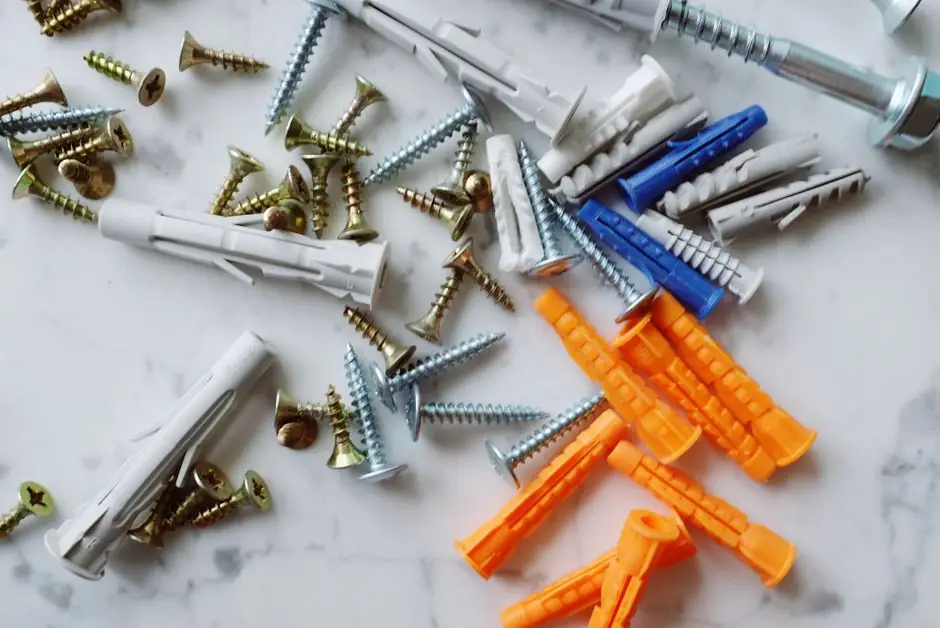
Fastener choice matters as much as tool choice. Hot-dipped galvanized 16 gauge 2-1/2 inch nails are appropriate for pressure-treated blocking behind a wall-hung toilet carrier, while electro-galvanized 15 or 16 gauge 2 inch nails are fine for interior blocking in dry locations [S3]. For PVC trim boards around a tub or shower, stainless 15 gauge nails are recommended to avoid rust streaks, since the trim is exposed to humid air and direct splash [S2]. Pneumatic nailers, including plumbing kit finish nailers, should always be fed with the fastener the manufacturer specifies, and any deviation (mixing 18 gauge brads in a 16 gauge magazine, for example) will misfire or jam the tool [S2].
Safety, Codes and Failure Modes Specific to Plumbing Trim-Out
Air nailers must be disconnected from the air hose before any jam clearing, and a dry-fire lockout is mandatory on any pro finish nailer specified for plumbing work where the tool will cycle against a stud rather than a softer substrate [S2][S4]. Eye and hearing protection are non-negotiable at 100+ PSI discharge, and the tool's exhaust should be vented away from any open copper joint waiting to be soldered, since oil aerosol from a lubricated compressor can contaminate the joint [S2][S4].
Failure modes unique to plumbing fastening: (1) proud nails in 1/2 inch plywood backings that the plumber then has to set flush before the drywall crew arrives, fixable by reducing regulated pressure by 5 to 10 PSI rather than switching tools; (2) split PVC trim boards from over-driven 15 gauge nails, fixable by switching to 16 gauge at the same length, not by sinking the fastener further; (3) rust bleeding through stainless-trimmed shower surrounds, fixable only by replacing the fasteners with 304 or 316 stainless, not by sealing over the stain [S2][S3].
For a complete plumbing pneumatic kit, the working minimum is one 15 to 16 gauge angled pneumatic finish nailer, one 18 gauge brad nailer for delicate trim and pipe-cover escutcheons, a 6-gallon compressor at 2.5+ CFM at 90 PSI, a 25 ft 3/8 inch hose with quick-connect fittings, and a matched fastener stock in galvanized and stainless. If a job calls for fastening into concrete or CMU behind a wall-hung carrier, swap the nailer for a pneumatic-actuator -driven pinner or a powder-actuated tool, and leave the finish nailer in the bag. For pipe hangers and bracket work on threaded black iron or copper, a dedicated pneumatic cylinder -style press tool is the right class of pneumatic equipment, and a finish nailer will not substitute. Related reading on complementary plumbing-installation tools is in the plumbing-installation sander spec map and the cut-off machine selection for plumbing installations guide.