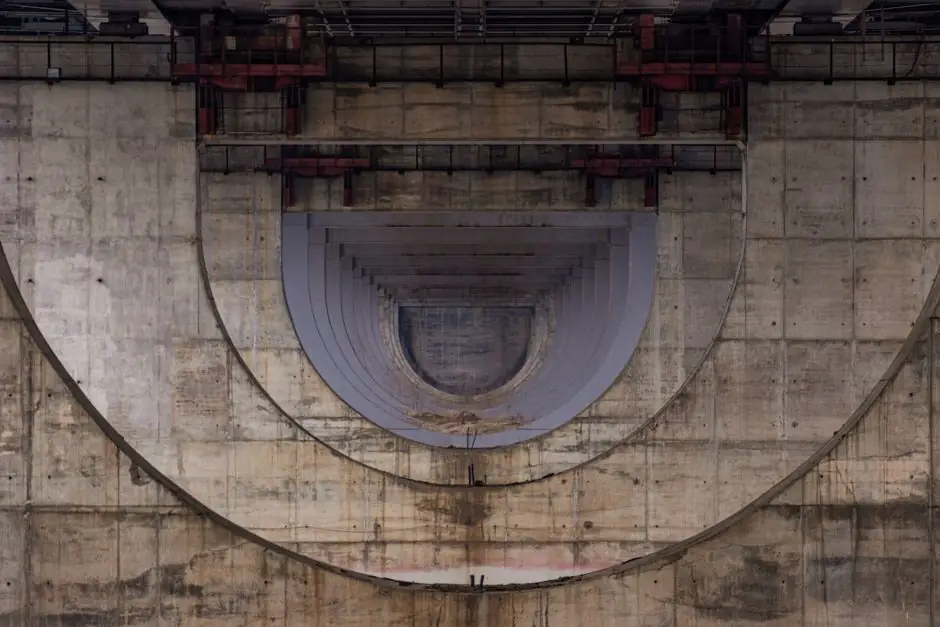
Tunnel construction sander selection is dictated by three interlocking factors: rock-mass classification, water inflow rate, and the chosen excavation method (NATM, TBM, or cut-and-cover), with most underground sanders rated to either dry-cycle or wet-cycle service per the surrounding rock category [S3].
The Xiaopu dolomite-sanding tunnel case in Yunnan showed that even weak, water-rich rock can be traversed with mechanical excavation plus short grubbing and strong support when sanding risk is mapped from the geotechnical baseline, not guessed on site [S1]. Selection of the sander (and its dust extraction) flows directly from that baseline.
Scope: Where Sanders Sit Inside a Tunnel Construction Workflow
Sander scope in a tunnel project is narrower than in building trades: most cycles involve grinding shotcrete flash, smoothing precast segment faces, deburring steel arch flanges, or polishing invert concrete before waterproof-membrane lay-down [S5].
Tunnel construction methods break into three families: cut-and-cover (shallow urban), bored (TBM, soft ground or hard rock), and mined/conventional (NATM, SEM, drill-and-blast), and sander specification differs by family [S3]. Cut-and-cover headings typically use handheld angle grinders with dust shrouds. TBM segments are finished above-ground in segment yards, so heavy-duty stationary belt or disc sanders apply. NATM headings, which still dominate mountain rail and hydro tunnels in China, require portable, dust-controlled wall sanders that operate on 110 V site power or compressed air [S3][S5].
For an overview of adjacent tool categories such as rotary hammers, which share the same dust-class M ventilation logic, see this rotary hammer selection guide for tunnel work.
Selection Criteria: Geology, Dust, Power, and Abrasive
Geological conditions (rock type, joint spacing, water inflow) drive the choice between dry sanding, wet sanding, and sealed-brushless dust extraction in tunnel headings, per the engineering-geology-and-hydrogeology-first rule used in Chinese rail and hydro practice [S1].
Four decision criteria dominate sander specification on a tunnel site: (1) rock-mass class I-V per the surrounding-rock rating, (2) water inflow in L/s per 10 m heading, (3) available power (electric 110/220 V, three-phase 380 V, or compressed air at 6-8 bar), and (4) dust class per EN 60335-2-69 (Class M for mineral dust, Class H for carcinogens). The Xiaopu project documented three sanding-intensity zones (normal, weak, strong/intense) and used that zoning to drive support class rather than sander choice directly [S1]. In practice, planners cascade that zoning down to dust extraction class and abrasive grit selection.
Power mixers used in adjacent shotcrete work share dust and ventilation constraints with sanders; the power mixer spec map for bridge sites outlines comparable drive and dust logic.
Who Sanders Are (and Are Not) For on a Tunnel Site
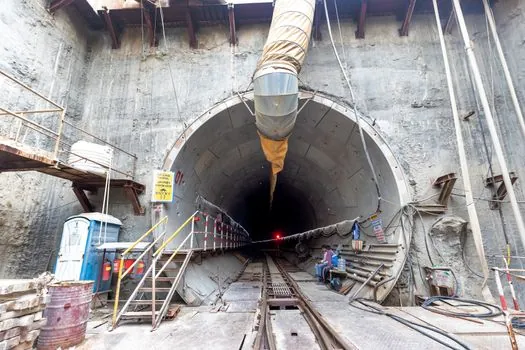
Wall and floor sanders sized 125-225 mm pad diameter are appropriate for NATM headings with concrete or shotcrete finishes, but are the wrong tool for TBM cutterhead interventions where hydraulic breakers dominate [S3].
Use sanders in tunnel construction when: smoothing shotcrete flash (125 mm random-orbit, hook-and-loop pad, 6 mm orbit); finishing precast segment contact faces (stationary 300-600 mm belt or disc, dust extraction port 50 mm); deburring welded steel arches (75-125 mm angle grinder, flap disc P40-P60); and keying invert concrete before membrane (180-225 mm rotary, diamond cup wheel). Do not specify a sander when: cutting rock (use a rotary hammer or roadheader); drilling bolt holes (use rotary hammer per impact drill picks for steel construction); or scaling loose rock (use a pick hammer or hydraulic breaker). The wrong tool in any of those slots costs cycle time and creates safety exposure.
Comparison: Sander Types Mapped to Tunnel Conditions
Comparing the four sander archetypes used underground across three decision criteria shows clear siting logic: 125 mm random-orbit for confined NATM faces, 180 mm rotary for invert membrane prep, belt sander for segment yard flatwork, and angle grinder for steel-arch deburr [S3][S5].
The 110 V low-voltage rule reflects Chinese site practice and IEC 60364-7-704 for construction-site outlets, which mandates residual-current devices with rated residual operating current not exceeding 30 mA for hand-held tools outdoors and on construction sites, a limit frequently cited as the baseline for underground 110 V distribution in NATM headings [S4].
Real Use Cases: NATM Heading, TBM Segment Yard, Steel Arch
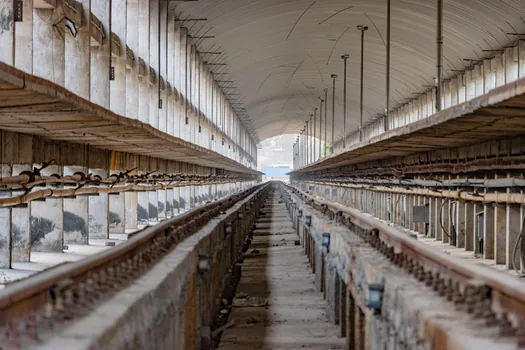
In a NATM heading after shotcrete application, a 125 mm random-orbit sander paired with a Class M extractor removes flash and laitance so the contact surface for the next spray pass stays within the 5-10 mm tolerance band typically called for in Chinese rail and hydro tunnel finishing specs [S1].
In a TBM segment yard, a 600 mm wide belt sander runs at 16-25 m/s belt speed to flat-bed segment contact faces before gasket application; dust extraction is hard-ducted, not portable, because segment yards sit above ground and can host fixed extraction. On steel-arch headings, a 125 mm angle grinder with P40-P60 flap disc cleans weld spatter at the flange before waterproof membrane is laid; pneumatic drive is preferred when the heading is in firedamp-classified rock, since it removes the spark risk from electric motors. Note that the broader excavation-method selection itself (NATM vs TBM vs cut-and-cover) sits with the contractor or the owner's engineer, depending on the contract model, and is documented in the geotechnical baseline report before any sander spec is written [S2][S4].
Limitations, Failure Modes, and Standards Anchors
Sander failure modes on tunnel sites cluster around three issues: dust-induced motor burn (no Class M extraction), water ingress into electric motors in wet-heading cycles, and abrasive disc shatter from overpressure on uneven shotcrete [S5].
Standards anchors commonly cited for tunnel sander selection include EN 60335-2-69 for dust class (Class M for mineral wood/stone dust typical in tunnel headings, Class H where silica or carcinogens exceed the threshold), IEC 62841 for hand-held motor-operated electric tools safety, and ISO 603 for bonded abrasive product designation (shape, size, specification). The abrasive specification (e.g. A 24 P BF for shotcrete, A 36 Q BF for steel) follows ISO 603 type-marking, with grain size 16-30 (coarse, P24-P36 equivalent) for stock removal and 60-120 (fine) for finishing [S5]. For excavation-method selection itself, the dominant risk-management model on large tunnel projects is the Progressive Partnership Framework documented at the IPD Innovation Hub, University of the Bundeswehr, which is built on more than 20 national and international projects and integrates cost, time, and risk under one delivery model [S2].
The standard catalogue for the wider construction tools family, including dust shrouds and extraction adaptors, sits in the SourceBySpec encyclopedia and overlaps with sander selection on the dust-class dimension.
Sourcing, Standards, and a Trackable Next Signal

Procurement should anchor sander orders to the geotechnical baseline report (rock class, water inflow), a written dust-management plan, and the excavation-method decision recorded in the contract model, with delivery model selection following the Progressive Partnership Framework on large infrastructure projects [S2][S4].
Trackable signals over the next planning window: revisions to EN 60335-2-69 dust-class definitions and any change to the IEC 62841-2-4 orbit-sander-specific clause, plus the next round of Chinese rail tunnel geotechnical-baseline reports covering dolomite-sanding zones comparable to the Xiaopu case [S1]. For related tool specs across the tunnel site, the sander and construction machinery and equipment encyclopedia entries map the wider product tree.