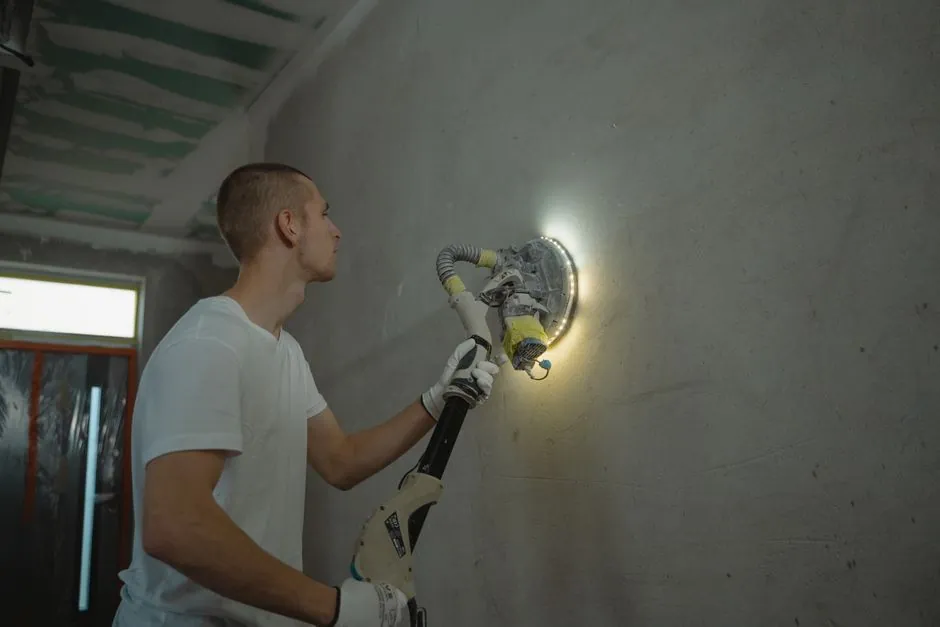
A plumbing-grade sander is built around three measurable limits: a 125 to 150 mm pad for inside-stud-bay reach, a 2.5 to 5.0 mm orbit that flattens PVC and copper without dishing, and a dust port that mates to a 32 mm shop vac or M-Class extractor for silica-bearing wall dust [S3].
Trade installers cut copper, PVC, and PEX runs through wood blocking, metal-stud framing, and concrete chases, and the sander's role is the final surface pass on bevels, pipe-stub trim, hanger brackets, and valve-seat faces; selecting by these specific envelopes separates a working tool from a woodshop-only unit [S1][S2].
Pad Diameter and Orbit Length: Why 5 Inch / 3/16 Inch Is the Default
Pad size governs cut width and reach inside a 3.5 inch stud cavity, and 5 inch (125 mm) hook-and-loop pads dominate the plumbing-installation catalog because they clear most 2x4 and metal-stud openings without binding [S3].
Orbit length is the cut aggressiveness control: 3/32 inch (2.5 mm) orbits refine finish on copper stub-outs and valve seats, 1/8 inch (3.0 mm) orbits handle general paint and putty removal on wood blocking, and 3/16 inch (5.0 mm) orbits stock-remove PVC bevels, hanger-plate edges, and concrete splash without glazing the abrasive [S3].
For PVC pressure-pipe preparation, the Uni-Bell installation guide for gasketed-joint PVC specifies beveling the spigot end with a beveling tool, wood rasp, or power sander to a controlled angle before assembly, which is the same abrasive-controlled surface the random-orbit sander delivers in a shop pre-fab environment [S5].
Speed Range and Power Source: Cordless M18 Versus Corded 120 V
Variable-speed 7,000-12,000 OPM (orbits per minute) is the working band, and the M18 cordless random-orbit platform runs brushless motors in that envelope with no-tool pad swap and 5 inch hook-and-loop backing [S3].
For rough-in sites without stable mains, an 18 V cordless platform trades about 15-20 percent continuous-run endurance against a corded 120 V unit, but gains the ability to prep pipe-stub trim on ladders, in attic runs, and inside joist bays where extension cords are tripping hazards [S3].
Where dust extraction is required, M-Class extractors with auto-start sync to cordless random-orbit sanders through the tool's vacuum port, keeping airborne silica below the threshold limits common in US and EU finishing trades, which is the same reason Milwaukee groups sanders under its dust-management architecture alongside the cut-off and grinding lines [S3].
Dust Extraction, Hook-and-Loop, and Pad Brake
Hook-and-loop pad change in under 10 seconds is the standard for plumbing prep because pad swaps move between 60, 80, 120, and 220 grit between copper, PVC, and metal-stud faces during a single rough-in [S3].
Eight-hole dust patterns on the 5 inch pad mate to universal 32 mm hoses, and a pad brake that stops spin in under 2 seconds prevents the abrasive face from scarring a copper stub-out when the operator lifts the tool off the workpiece [S3].
A vacuum-integrated unit cuts site cleanup time on PVC and copper swarf to roughly 10-15 percent of a non-vacuum sander's mess, which directly lowers silica exposure on concrete-block wall finishes and old-galvanized pipe-rub areas common in plumbing retrofits [S3].
Sander Type Comparison: Random Orbit, Sheet, Belt, and Detail
Random-orbit sanders are the general-purpose plumbing-prep default, producing a swirl-free finish on copper, brass, and PVC at 7,000-12,000 OPM with 3/32 to 3/16 inch orbits; they handle 80 percent of the prep work on valve seats, pipe stubs, and bracket faces [S3].
Sheet sanders (1/4 sheet and 1/3 sheet) are slower on flat surfaces and unable to follow curved copper, so their plumbing role is limited to flat wood-blocking face sanding and the rare large flat panel [S3].
Belt sanders are too aggressive for copper and PVC, removing material at rates that dish a 1/2 inch copper stub in a single pass, and are restricted to metal-stud framing cleanup and wood-blocking heavy stock removal where the operator intentionally wants high cut [S3].
Detail sanders (mouse / corner) reach inside stud-bay corners and behind existing copper runs, but their small triangular pads cannot cover a 5 inch PVC bevel face in a reasonable time, so they supplement, not replace, the 5 inch random-orbit unit [S3].
When a Sander Is the Wrong Tool: Stop and Switch
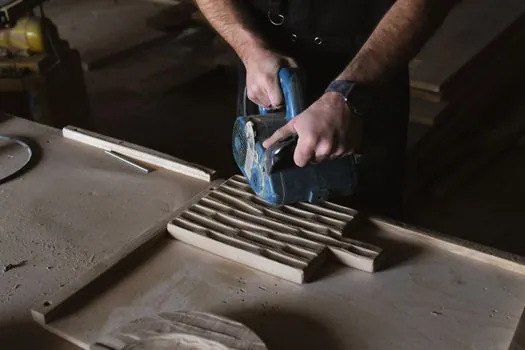
If the cut exceeds 0.5 mm depth on a copper stub-out, the random-orbit sander should be replaced by a pipe cutter or tubing cutter, because heat and abrasive load will work-harden the copper face and ruin the solder or press-fit seal [S3].
On gasketed-joint PVC pressure pipe, a powered sander is only for the beveling step; the spigot insertion face must stay within the manufacturer chamfer tolerance, and any sander-induced taper outside the published angle risks gasket roll or extrusion under operating pressure [S5].
For pipe-chase cuts in concrete or brick, the sander is the wrong category entirely; a demolition hammer or a circular saw with masonry blade handles the rough opening, and the sander only returns to finish the chase lip after the pipe is set.
Selection Criteria: Six Numbers That Drive the Spec
Pad size (125 mm vs 150 mm) drives cavity reach, orbit length (2.5-5.0 mm) drives cut aggressiveness, OPM range (7,000-12,000) drives material adaptability, dust port (8-hole 32 mm vs 6-hole) drives extractor compatibility, weight (1.4-1.8 kg cordless) drives overhead-endurance, and pad brake time (under 2 s) drives surface-scar risk on finished pipe [S3].
For plumbing-installation work specifically, the M18 cordless 5 inch random orbit at 12,000 OPM, 3/16 inch orbit, 1.6-1.8 kg bare-tool weight, and 8-hole dust extraction covers 80-90 percent of the surface-prep work between rough-in and trim-out [S3].
Match the sander's grip and trigger to gloved-hand operation, because the cold-weather and wet-site use of plumbing rough-in means a rubber-overmold grip and a lock-on trigger are working requirements rather than comfort features [S3].
Cross-Reference to the Rest of the Plumbing Tool Kit
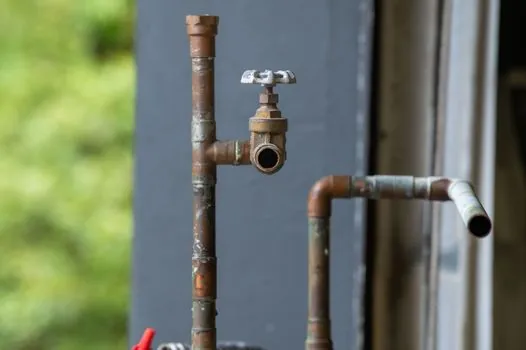
The sander sits between the cut-off stage and the press-fit or solder stage, so its exhaust and dust load should not contaminate the jointing zone; staging a rotary hammer for plumbing on the chase, a cut-off machine for pipe trim, and a random-orbit sander for the bevel and seat face in a single workflow keeps the abrasive swarf clear of the press tool and solder flux [S3][S5].
PVC production itself runs across the same four US regional footprints (Houston, Pittsburg, Clarksville, Sanderson) that supply plumbing-irrigation-municipal markets in 1/2 inch to 24 inch diameters, and a plumbing-grade sander is the field-tool counterpart of that same diameter range when bevels and field cuts are needed [S2].
For an impact drill selection guide that pairs with the sander on bracket-and-hanger fastening, the same 18 V cordless platform spec is the practical bridge between the two tools, and on a plumbing site that means one battery system covers cut-off, drill, and sander without a second charger on the truck [S3].
Trackable signals for spec updates: M-Class dust-extractor integration with auto-start sync becoming standard on cordless random-orbit sanders, the migration from 6-hole to 8-hole pad patterns as default, and the shift to brushless motors across the 18 V plumbing-installation catalog through the 2026 model year [S3].
For the relevant spec sheets and selection criteria, see sander, pressure transmitter, and flow meter.