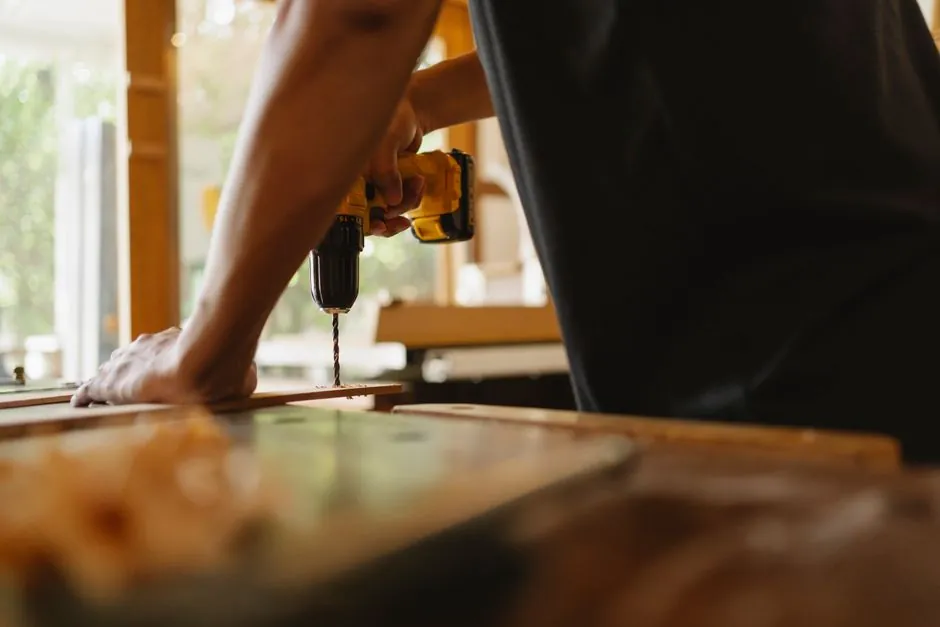
A pneumatic nailer specified for electrical installation is not the same tool as a framing nailer sold for timber joists; the correct baseline is a 21° or 30° sequential-trigger framing nailer fed with 2.5-3.3 mm collated nails, supplied at 70-120 psi (0.5-0.83 MPa) shop air, with a tool-free depth-of-drive adjuster and an adjustable exhaust that can be rotated away from the operator's line of sight [S1][S2].
Selection pivots on the fastening target: wood-to-wood stud work, wood-to-conduit-clip strap-up, wood-to-PVC cable-tray cleat, or low-voltage faceplate trim. Each of those asks for a different nail gauge, head style, and actuation mode, and mis-matching any one of them is the single largest root cause of misfires and split framing on electrical jobs [S1][S2].
Trigger Mode and Code-Compliance Gate
OSHA 29 CFR 1926.302(a)(1) requires a positive-locking contact-actuation switch on pneumatic nailers used in construction, and many spec writers go further by mandating sequential (single-shot) trigger mode for any work near live conductors, switchgear rooms, or occupied tenant fit-outs, because contact (bump) actuation statistically drives the bulk of unintended discharges on site [S1].
For an LV distribution board or consumer-unit mounting, the workstream is single-shot by definition: one stud, one cable cleat, one strap; a contact-actuation gun in this context is a mis-purchase that will be locked in a box within a week. The pneumatic nail gun selection guide on this site walks through trigger-mode logic against substrate, and the same discipline applies in electrical measurement work where a stray discharge on a live busbar is a fatality event, not a rework event [S1].
Pressure, Hose, and Air-Flow Requirements
Most 21° and 30° framing nailers in the 2.5-3.3 mm nail range rate at 70-120 psi operating pressure and pull 0.5-2.5 CFM at 90 psi depending on cycle rate, so a 6 CFM (170 l/min) compressor tank of 25-50 L is the practical minimum for continuous strap-up work without thermal-cutoff trips [S1][S2].
Hose spec is non-negotiable: 3/8 in (10 mm) ID reinforced PVC or rubber at 150 psi working pressure, 50 ft (15 m) maximum run to keep pressure drop below 10 psi; a 1/4 in (6 mm) hose used by hobby guns will starve the tool above 25 ft and produce shallow-set nails that fail pull-out on a 2x4 stud. For explosion-proof electrical hazardous-area work the compressor itself must be sited in the safe zone, with the hose crossing the boundary through a certified cable gland; never run a gasoline-powered set inside a Class I Division 1 space [S1].
Nail Gauge and Head-Style Map by Substrate

The 15-gauge 34° angled finish nailer (1.8 mm shank, 25-50 mm length) is the right tool for low-voltage faceplate trim, dado trunking capping, and plastic surface-mount box fixing where the head must sink below putty and the split risk on MDF or plywood edges is real; the 16-gauge straight nailer handles heavier trunking covers in the 32-64 mm range [S1].
For framing a 2x4 stud wall that will later carry 39 mm PVC conduit clips every 600 mm, the correct tool is a 21° or 30° framing nailer driving 2.87-3.33 mm (0.113-0.131 in) sinker or common nails at 75-90 mm length, because the shear and withdrawal rating of a 16-gauge nail in a 2x4 is below the 220 N static load of a typical clip stack. For masonry backing or cable-tray cleat into brick, a different tool class applies entirely, and the Pneumatic Nail Gun Selection for Masonry spec map is the right reference rather than this one [S1][S2].
Comparison: Framing vs Finish vs Brad Nailer on Electrical Tasks
Lining the three common pneumatic families against the four decision criteria that actually matter on an electrical fit-out, the table below summarises the trade-off. Use it as the gate at the moment of purchase, not after [S1][S2].
Depth-of-Drive, Dry-Fire Lockout, and Exhaust Management
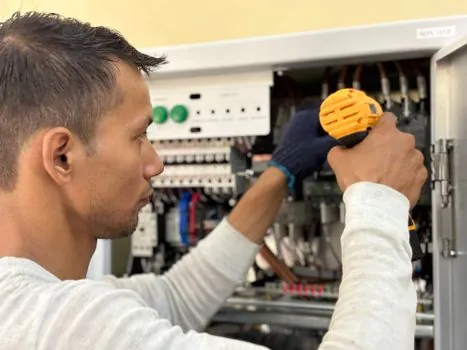
Tool-free depth-of-drive adjustment at the nose is a hard requirement on any electrical job, because the same nailer will be driven into softwood studs, hardwood noggins, and the harder OSB web of engineered I-joists, each of which needs a different set depth to avoid blowing out the surface or leaving proud heads that snag cable pulling [S1].
Dry-fire lockout is the second gate: a nailer that continues to cycle against a spent magazine damages the driver blade and fires ricochets, both of which are unacceptable next to live busbars or exposed LV cable in the same cavity. The third gate is a 360° rotating exhaust deflector, because a fixed rear exhaust on a framing nailer will blow chips and oil mist directly into the face of an operator working under a floor void with a headlamp, and the LV electrical environment tends to magnify that nuisance into an arc-flash-adjacent distraction [S1][S2].
Failure Modes and When to Replace, Not Repair
The three field failures that should push a tool to replacement rather than repair are: cracked housing around the nose (polyamide or magnesium), which cannot be re-certified for the 100 psi cyclic pressure rating; bent or peened driver blade, which will fire misaligned nails; and any trigger assembly that fails the OSHA 1926.302(a)(1) positive-lock test on a 5-cycle check, because the trigger is the single safety-critical part on the tool [S1].
A common misfire symptom, the nail stops at half-stroke and stays proud of the work, is almost always a pressure issue (compressor below 80 psi, hose too long or too small) or a magazine feed issue (wrong collation angle, wrong nail gauge), not a tool failure. Verify both before opening the gun. For deeper context on tool choice across an electrical fire monitor cabinet fit-out, the pneumatic-system reference on this site lays out the broader compressed-air discipline that an electrical crew will inherit from the mechanical trades [S1].
Close-out signal: track the next edition of ANSI / ASME B18.6.1 (wood nail dimensional standard) and any 2026 update to NFPA 70E Article 130 work-clearance rules for hot-work-adjacent tasks, since either will shift the depth-of-drive and trigger-mode spec for electrical-installation nailers within 2026-2027.