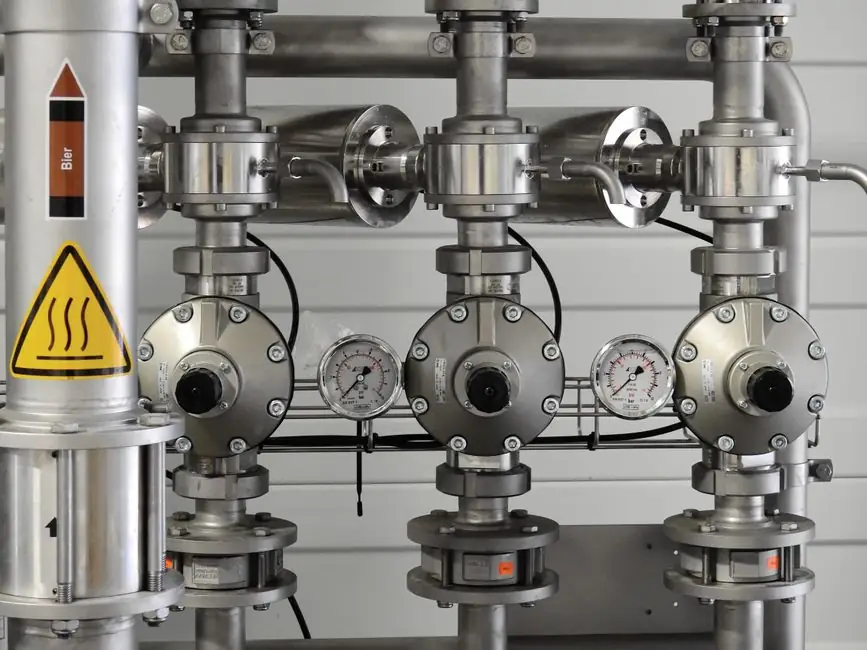
Pneumatic valve actuators in 2026 span torque outputs from 1 Nm on small rack-and-pinion units up to 678,000 Nm on heavy Scotch-yoke models, all operating on a 1–8 bar supply-pressure band across the surveyed product set [S1].
Three mechanism families dominate: rack-and-pinion for quarter-turn service, Scotch-yoke for high-torque isolation, and rolling-diaphragm for throttling and damper duty, each with a distinct torque envelope, cycle-life profile, and ATEX/IECEx story [S1]. The right pick is rarely the most expensive; it is the one whose failure mode matches the plant ESD philosophy.
Mechanism Map and Torque Envelopes
Quarter-turn rack-and-pinion actuators cluster between 2 Nm and 13,367 Nm in the 2026 catalogue, making them the default for ball and butterfly valves up to DN300 in chemical and water service [S1]. The Bettis RPE series spans 2 Nm to 4,449 Nm in a double-acting rotary package, while the MAROS Mosfe extends the aluminium/stainless rack-and-pinion range to 13,367 Nm at 1–8 bar supply [S1]. Most compact rack-and-pinion units in this class weigh well below 30 kg, with the SAMSON 3278 membrane unit offered from 16 kg up to 50 kg depending on spring stack.
Scotch-yoke designs take over above roughly 100,000 Nm: the Bettis G series runs 1,420 Nm to 678,000 Nm, and the Rotork GP/GH hydraulic-pneumatic hybrid reaches 600,000 Nm, both aimed at large ball and butterfly valves in pipeline and offshore service [S1]. Membrane actuators top out lower, with the Fisher 2052 reaching 930 Nm and the SAMSON 3278 capping at 730 Nm at 6 bar supply, which keeps them in the throttling-and-damper segment [S1]. A 2–3× safety factor on the valve's published breakaway torque is the baseline sizing rule across these mechanisms, and undersizing remains the single most common field failure mode.
Single-Acting vs Double-Acting and Fail-Safe Direction
Spring-return (single-acting) units store fail-safe energy in a compressed spring stack, while double-acting units need a separate air reservoir or a 5/3-way valve to achieve the same safe-state behaviour [S1][S4]. The SAMSON 3278 is built as a single-acting membrane unit with a handwheel, the Fisher 2052 is offered in spring-return, and the Rotork GP is configurable as spring-return double-acting, so the fail-safe decision is often made on the actuator spec sheet, not the valve spec sheet [S1].
Air consumption is the trade-off. A double-acting Bettis RPE only consumes air during stroke, while a single-acting Mosfe cycles the full spring volume each stroke, which roughly doubles compressor duty on modulating loops [S1]. On ESD-1 loops where loss of air must close the valve, spring-return is mandatory and double-acting is rejected; on heating-loop isolation where fail-last is acceptable, double-acting saves 15–25% of actuator mass and shortens stroke time by a measurable margin. For related actuator architecture context, the pneumatic-actuator working envelope is the same regardless of vendor brand.
Advantages: Why Specifiers Keep Choosing Pneumatic
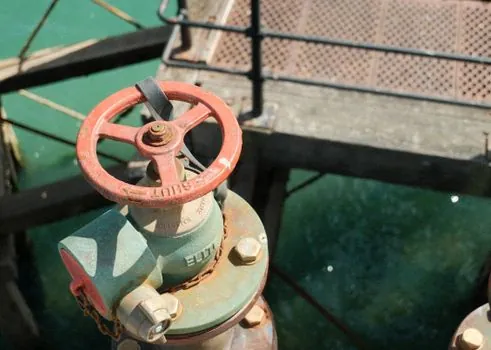
Pneumatic valve actuators respond within sub-second windows, do not generate sparks, and tolerate dusty, humid, and flammable atmospheres that would defeat an electric drive [S3][S4]. They are specified in oil and gas flow regulation, water and wastewater treatment, power-generation steam and cooling loops, and hygienic food/pharmaceutical lines where 316L stainless and IP69K cylinder finishes are required [S4][S8]. Diaphragm components in quality builds withstand more than 1 million reciprocating cycles, which extends the overhaul interval well beyond typical electric-actuator gear-train service [S5]. Initial cost also runs lower than electric or hydraulic equivalents of the same torque class, and a stainless IP69K cleanroom build has been documented passing high-pressure wash-down in food plants [S8].
Closed-loop positioner accuracy on modulating duty reaches ±1% of stroke when paired with a valve positioner that reads the 4–20 mA or 3–15 psi control signal, which is enough for most flow and pressure loops short of high-precision pharmaceutical batching [S5]. Spring-return units provide inherent fail-safe action without battery or capacitor backup, and pneumatic energy stored in a plant air receiver survives longer grid outages than a typical UPS-fed electric actuator. A process overview of how this drive family integrates with a pneumatic valve actuator is given in the mechanism reference page.
Disadvantages and Failure Modes
Air consumption on spring-return units is the single largest operating penalty, and on modulating loops the compressor package, dryer, and filter regulator become a hidden second maintenance system [S1]. Cycle life on a single-acting piston unit is bounded by the spring stack, which loses preload and cracks after roughly 10⁶ cycles; running the actuator near its torque ceiling accelerates that wear [S5].
Position accuracy below ±1% requires a digital positioner plus a stable supply, because any fluctuation in supply pressure maps directly into stem thrust variation; on a 5-bar-rated actuator run at 3 bar, output torque drops to roughly 60% of nameplate, which silently starves the valve and stalls mid-stroke [S1]. Seal leakage on worn piston rings is documented at ≤0.01 mL/min in quality builds, but field-aged units with nicked cylinder walls can leak 10–100× that figure and trip the compressor on a slow Sunday [S8]. Pneumatic drives are also loud without silencers, and the exhaust must be piped away from control rooms, which adds installation cost that spec sheets rarely itemise.
Supply Pressure, Ambient Limits, and Cycle Life
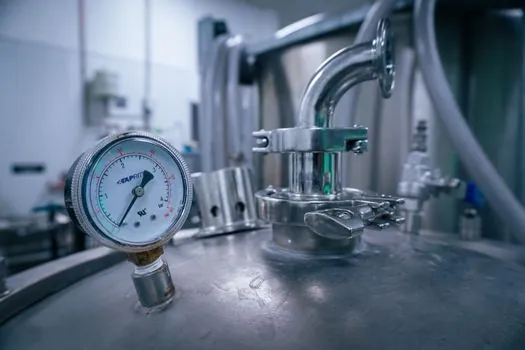
Supply pressure in the surveyed 2026 product set runs from 1 bar minimum on the MAROS Mosfe up to 8 bar maximum, with the Fisher 2052 explicitly rated for 2/3/5 bar spring ranges [S1]. Hydraulic cushioning at the cylinder end-stops reduces piston impact velocity from 3 m/s to 0.1 m/s, which extends service life by 3–5× on high-cycle dampener duty [S8]. Ambient ratings typically span −20 °C to +80 °C on standard builds, with arctic and high-temperature variants pushing the envelope to −40 °C and +150 °C at extra cost.
Air quality is non-negotiable: ISO 8573-1 Class 1.4.1 (solid ≤0.1 µm, water dew point ≤3 °C, oil ≤0.01 mg/m³) is the typical OEM filter spec, and most warranty exclusions start with the air package. A correctly sized FRL (filter-regulator-lubricator) upstream is the difference between a 10-year service life and a 3-year rebuild, especially for modulating service on a process skid with multiple valve actuators tied to the same header.
Comparison: Pneumatic vs Electric vs Hydraulic
Pneumatic, electric, and hydraulic actuators each win a different quadrant of the selection matrix, and the choice is usually driven by three or four dominant criteria [S7]. On torque-per-dollar, pneumatic and hydraulic lead electric by a wide margin above 5,000 Nm. On positioning accuracy, electric leads (±0.1%) over pneumatic (±1% with positioner) and hydraulic (±0.5%). On hazardous-area suitability, pneumatic and hydraulic are intrinsically safe without Ex d enclosures, while electric requires ATEX/IECEx-certified terminal housings that add cost. On response time, pneumatic typically strokes a quarter-turn ball in 1–3 seconds, faster than hydraulic (3–10 seconds) and electric (5–30 seconds for geared units).
On energy infrastructure, pneumatic needs an instrument-air ring (compressor, dryer, receiver, FRL) which electric does not, so plants without existing instrument air lean electric; conversely, plants with a 6–8 bar air net already in place find pneumatic 30–50% cheaper on total installed cost. For ambient temperature extremes above +80 °C or below −40 °C, hydraulic out-rates both, but at the price of a hydraulic power unit, leak-tight hoses, and fire-resistant fluid. A more detailed electric drive taxonomy is mapped in the electric actuator types and classifications spec map companion article.
Selection Gate and Sourcing Map
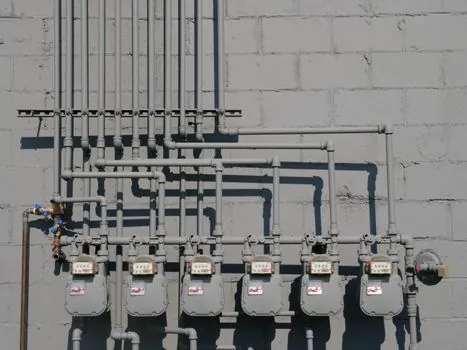
Lock the torque envelope, fail-safe direction, ambient rating, and certification scope before comparing brands, because those four parameters eliminate roughly two-thirds of the catalogue on the first pass [S1]. For quarter-turn service below 5,000 Nm, default to a double-acting rack-and-pinion aluminium unit; for spring-return ESD-1 service, add a spring stack sized to deliver at least 1.5× the valve breakaway torque at minimum supply pressure [S1]. For pipeline and offshore service above 100,000 Nm, default to Scotch-yoke, and insist on documented low-temperature impact testing at the project minimum temperature.
Supply-side, the 2026 catalogue is dominated by Bettis (RPE, G series), Rotork (GP/GH), SAMSON (3278), Fisher (2052), and MAROS (Mosfe) on the mechanism side, with regional system integrators supplying panel-mounted FRL and positioner packages [S1][S2]. For a deeper taxonomy of the mechanism families, the pneumatic valve actuator types and classifications 2026 spec map covers rack-and-pinion, Scotch-yoke, and membrane variants in detail. A typical sourcing lead time in 2026 runs 8–14 weeks for catalogue units and 18–26 weeks for engineered Scotch-yoke builds with full material traceability.
Trackable signals to watch: any tightening of ATEX 2014/34/EU documentation requirements for Group I M2 mining equipment, and any revision to ISO 8573-1 air-quality classes that would force an FRL upgrade on existing installations. Independent of the mechanism family, the pneumatic system fundamentals page covers the supply-side architecture that every actuator on this list depends on.