
Industrial Ethernet switches, gateways, and media converters are most often built under one of two outsourcing models: the brand-owned OEM build, where the customer supplies the schematic, BOM, firmware, and mechanical drawings, and the manufacturer executes the production line, or the ODM build, where the manufacturer contributes the reference platform, including the processor, the managed-switch firmware stack, the industrial camera sensor interface, or the industrial buzzer alert path, and the customer rebrands or customises within the ODM's design envelope [S1][S4].
Under OEM, design authority, regulatory certification ownership, and the right to switch contract manufacturers all sit with the customer; the partner is paid for NRE, tooling, and per-unit build cost. Under ODM, the reference design and the underlying IP usually remain with the manufacturer, and the same base product can be sold to several brand owners, which is why ODM wins on speed and unit cost but loses on exclusivity [S1][S3][S6].
Decision Criteria Across the Two Models
Engineers evaluating the two models for managed switches, protocol gateways, or edge I/O should weigh six criteria. NRE and tooling cost sit with the customer in OEM, and with the manufacturer in ODM, which the customer recovers through per-unit amortisation [S3][S4]. Time-to-market typically spans 6-12 months for an OEM industrial Ethernet device once the design is frozen, versus roughly 2-4 months for an ODM rebrand of a proven reference platform [S1][S6]. IP ownership of schematic, Gerber, firmware source, and certification artefacts stays with the brand owner in OEM and with the ODM in ODM unless a contract transfers it [S3][S4]. Customisation depth is full in OEM, including custom PHY, TSN profile, and conformal coating, and bounded in ODM, generally limited to SKU options, branding, firmware feature flags, and selected connectors or industrial adhesive gasket specs [S1][S5]. Switching cost is low in OEM, because the design is portable, and high in ODM, because the reference design, tooling, and certification all stay with the original manufacturer [S3]. Unit cost is higher in OEM at low volume, and converges with ODM only at high annual volumes that justify the NRE and tooling amortisation [S1][S4].
Who Each Model Is Built For
OEM fits a plant-automation vendor that already maintains a hardware engineering team, owns proprietary deterministic Ethernet firmware, and needs to lock TSN, PROFINET, or EtherNet/IP conformance in its own name; the ODM model does not give that vendor the IP control it needs [S3][S4]. It also fits a system integrator sourcing a custom subassembly, such as a vibration-monitoring node with a bespoke industrial borescope probe interface, where the integrator must hold the design and the certification paperwork [S1].
ODM fits a software or automation brand that wants to ship an industrial gateway or a small managed switch in two quarters, not two years, and is comfortable branding a reference design the ODM already ships to peers [S1][S5]. It also fits channel players entering industrial Ethernet with low volume, where the ODM's existing UL/IEC/EN 62368-1 and CE/UKCA paperwork is reused [S5][S6].
Comparison of the Main Engagement Options
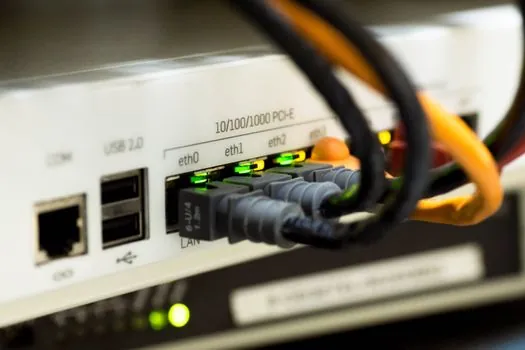
Three engagement options dominate the industrial Ethernet outsourcing market. The ODM-only path, where the manufacturer supplies a complete reference product with firmware and certifications, is the fastest and the cheapest per unit, but the customer's design freedom is bounded by the reference platform and the ODM's IP stays intact [S1][S5]. The pure OEM path, where the customer delivers a full design pack and the manufacturer only builds, gives full design control and the freedom to switch partners, but raises NRE, lengthens the schedule, and pushes all certification cost onto the customer [S3][S4]. The hybrid or JDM path, where both parties co-develop the design and IP, splits ownership, which suits a vendor that wants to combine its proprietary firmware with a partner's industrial Ethernet hardware reference [S3].
Real Use Cases in Industrial Ethernet
A PROFINET or EtherNet/IP conformance programme is a classic OEM use case, because conformance tests, declaration of conformity, and vendor-ID ownership are easier to defend when the brand owner controls the schematic and the firmware source [S3][S4]. A managed industrial Ethernet switch destined for hazardous-area or outdoor cabinets is another OEM case, where the brand owner specifies the PCB conformal coating, the industrial adhesive staking compounds on connectors, the IP67 housing, and the operating-temperature range, all of which are awkward to back-fit on an ODM reference [S1].
An ODM use case is a regional system integrator that wants to ship a small unmanaged or lightly managed switch under its own label within a single quarter, reusing the ODM's existing UL/CE paperwork and basic firmware [S5][S6]. Another ODM use case is a software vendor adding a hardware SKU to its edge or SCADA portfolio, where the hardware is essentially a vehicle for the software and exclusivity on the chassis design is not commercially important [S1][S5]. For a deeper look at the production-line side of a related industrial assembly programme, see this EV charging station production line spec map, which illustrates how OEM-style design ownership plays out when modules are sourced from multiple partners.
Limits, Failure Modes, and Sourcing Reality

ODM has three recurring failure modes. First, the reference platform is shared, so a feature request, a connector change, or a custom firmware branch can be refused or quoted as a paid deviation [S3]. Second, switching ODM partners mid-life is expensive, because tooling, certification reissue, and supply-chain requalification are repeated [S3]. Third, long-term availability of the ODM reference is at the manufacturer's discretion, which is a real risk for industrial buyers with 7-10 year plant lifecycles [S5].
OEM also fails in predictable ways. NRE overruns, long technical-alignment cycles between the brand owner's R&D and the manufacturer's process engineers, and full ownership of certification risk all land on the customer [S3][S4]. For a worked example of how a high-mix logistics programme maps onto a tightly specified equipment base, see this AGV robot selection map for automotive parts logistics, which shows the kind of vendor-owned design discipline OEM is built to support. Sourcing discipline matters in both models: industrial buyers should always confirm in writing who owns the schematic, the Gerber, the firmware source, the test reports, and the right to manufacture at an alternate site [S1][S4].
Choosing the Right Model for 2026 Programmes
For a 2026 industrial Ethernet launch where the differentiator is proprietary firmware, a unique PHY or TSN configuration, or a regulatory dossier the customer must own, OEM is the correct default and the premium in NRE and schedule is the cost of keeping IP and certification under the customer's control [S3][S4]. For a launch where speed, low NRE, and a known-good UL/CE base outweigh exclusivity, ODM is the correct default, provided the contract explicitly grants the brand a custom firmware branch, defined change-control rights, and an end-of-life clause that protects the customer's installed base [S1][S5][S6]. Volume is the tie-breaker: OEM wins financially above the volume at which the NRE and tooling amortise, and ODM wins below it [S1][S4].
Trackable signals to watch through 2026 include the publication of additional ODMs offering pre-certified PROFINET and EtherNet/IP reference designs, and the continued migration of mid-volume buyers from ODM rebrand programmes back to OEM as proprietary firmware becomes a larger share of product value; for another example of how mid-volume specification choices reshape a programme, see this gear pump selection map for pharmaceutical manufacturing.