
Global polysilicon demand in 2026 is being driven overwhelmingly by the solar PV segment, with monocrystalline wafer capacity outpacing multicrystalline and reshaping upstream silicon-metal offtake contracts [S1].
Two FerroAlloyNet gatherings bracket the year's silicon and polysilicon dialogue: the 21st Silicon Industry Development Forum & Polysilicon Industry Conference on 25-27 March 2026 at JW Marriott Chongqing, and the 22nd Industrial Silicon Development Forum on 5-7 August 2026 in Lanzhou, Gansu, China [S2].
End-Use Split: Solar PV vs Electronics
The polysilicon market is segmented into Solar PV (monocrystalline and multicrystalline solar panels) and Electronics, with Asia-Pacific, North America, Europe, and Middle East & South America as the regional cuts [S1]. The Solar PV end-use has structurally eclipsed the semiconductor-grade share since the 2016-2021 forecast window, when the total addressable market was sized at USD 8.90 billion by 2021 at a 13.00% CAGR from 2016 [S1].
Polysilicon form factors supplied to these end-uses are chunks, granules, and rods, with granules increasingly preferred by mono-czochralski pullers for their flowability and lower breakage rate in crucible charging [S1]. For background on how flowable feedstock is metered through the flow meter network feeding a CVD reactor bell jar, the encyclopedia entry covers Coriolis and thermal-mass options used in trichlorosilane and silane lines.
Process Routes: Siemens vs Fluidized-Bed Reactor
Two production routes dominate 2026 capacity additions: the modified Siemens process, which deposits polysilicon on slim-rod silicon carriers from trichlorosilane, and the fluidized-bed reactor (FBR) route, which yields granular polysilicon directly from silane or TCS [S1]. Modified Siemens remains the workhorse for electronic-grade and high-purity solar-grade output, while FBR is positioned to capture cost-sensitive utility-scale module feedstock.
Reactor-zone pressure transmitter selection — typically absolute units clamped to the bell-jar headspace — drives Siemens line yield; low ranges (0-50 mbar abs) and high overpressure tolerance are common asks on new Asian builds. Granule-handling and bin-venting downstream benefit from the same instrument class with different diaphragm materials (Hastelloy C276 for HCl-bearing vent streams).
Manufacturer Landscape and Capacity Anchors

Polysilicon manufacturers tracked in the published value chain include GCL-Poly Energy Holdings (Hong Kong), REC Silicon ASA (Norway), Tokuyama Corporation (Japan), Wacker Chemie AG (Germany), OCI Company Limited (Korea), Daqo New Energy Corp. (China), SunEdison Inc. (U.S.), and Hemlock Semiconductor Corporation (U.S.) [S1]. Upstream silicon-metal suppliers named in the same ecosystem are JFE Holdings (Japan), Elkem Holding (Norway), Nitol Solar (Russia), Renewable Energy Corporation (Norway), and SunEdison (U.S.) [S1].
For a sense of how instrumentation demand ripples into adjacent component markets, the 2026 industrial laser market is sized at USD 17.36 billion with ultrafast and EUV drive beams leading spec shifts, a figure that intersects polysilicon via wafer-scribing, edge-isolation, and PVD/PECVD chamber maintenance lasers — see the industrial laser market 2026 analysis.
Technology Trends Cited by Chinese Research Houses
Forward-looking 2026 reports from Chinese research institutes track three vectors: (1) higher polysilicon deposition throughput per Siemens rod, (2) mono-cast feedstock granularity and purity grades converging toward semiconductor specs, and (3) silane-FBR cost reduction via larger reactor diameters and higher per-pass conversion [S5].
These vectors are coupled to silicon-metal supply: the FerroAlloyNet Industrial Silicon Development Forum on 5-7 August 2026 in Lanzhou covers the upstream metal pricing, energy-intensity of submerged-arc furnaces, and the Northwest China grid-mix that directly sets the 553/441/330 grade price band used in PV-grade polysilicon plants [S2].
Module-Side Anchor: IEC 62941 and PV Manufacturing Quality
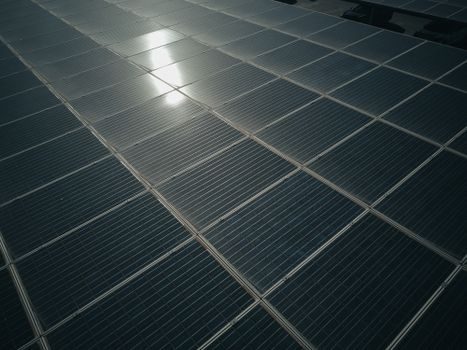
Downstream PV module manufacturing now cites IEC 62941 as the quality-system anchor for polysilicon-to-module traceability, with 2026 specification mapping covering design-qualification, BOM-control, and supplier-management requirements across mono and multi lines. The detailed spec map is reviewed in the PV module manufacturing quality standards guide. [S1]
Chemical-reagent purity is the binding constraint between silicon-metal, trichlorosilane, and finished polysilicon: HCl, H2, and SiHCl3 specifications, plus hydrogenation catalyst life, are reviewed in the chemical reagent trade-off map for process engineers, which lines reagent grade vs cost across wet-etch, CVD, and analytical lines.
Selection Criteria: Granular vs Chunk Polysilicon
For a 2026 mono-PV line, three criteria separate granular from chunk feed: (1) bulk density in the polysilicon hopper — granular typically sits at 1.4-1.6 g/cm³ versus 0.7-0.9 g/cm³ for broken chunks; (2) feeding consistency for continuous Czochralski charging, where granular flow through rotary valves and loss-in-weight feeders outperforms chunk; (3) impurity pickup — chunk fracturing surfaces carry higher metal contamination risk than virgin FBR granules [S1].
The Cz puller vacuum and argon backfill loop is the next integration point, and pressure sensor accuracy (typically ±0.05% of span at 1-1000 mbar abs) gates single-crystal dislocation density. For solar-grade mono lines the vacuum demand is less aggressive than semiconductor Cz, but still uses differential and gauge-capacitance transmitters on the pull chamber and melt-crucible zone.
What to Monitor Through Year-End 2026

Two trackable signals stand out for buyers and specifiers through 2H 2026: the August 5-7 Industrial Silicon Development Forum in Lanzhou will refresh silicon-metal 441-grade and 553-grade price discovery that feeds polysilicon plant economics [S2]; and any 2H 2026 capacity disclosure from Daqo, GCL-Poly, Tongwei, and Wacker on the FBR-versus-Siemens mix will reset long-term contract premiums for granular vs chunk [S1]. A secondary watch item is the FerroAlloyNet calendar entry for the 22nd International Ti & Zr Product Development Annual Conference on 7-9 September 2026 in Nanjing, which sits adjacent to polysilicon-grade quartz-ware sourcing [S2].