
Reagent-grade chemicals are specified to ACS, ISO, or vendor internal purity bands (commonly 95-99.9% assay) and that single number drives catalyst loading, downstream residue, and waste classification across the whole train [S1]. Get the purity band wrong by one tier and you can swing a batch yield, a residual-solvent test, or a wastewater permit category at the same time [S3].
The advantage side is concrete: reagents shorten reaction paths, lift selectivity above 90% in well-tuned catalytic systems, and replace multi-step physical separations with a single addition [S3]. The disadvantage side is equally concrete: many reagents introduce corrosive, oxidizing, or toxic hazards (acids, bases, halogens, cyanides), force specialised storage, demand neutralisation or solvent-recovery trains, and push the operator into regulated disposal routes [S1].
Purity grades and what they actually control
Technical, ACS, USP/NF, HPLC, and electronic/ULSI grades exist because each downstream use has its own tolerance for trace metals, water, particulates, and non-volatile residue — not because vendors like printing more labels [S1]. A reagent that assays at 98% with 200 ppm Fe can poison a Ziegler-Natta or precious-metal catalyst in the next step; the same reagent is perfectly acceptable for pH adjustment in a wastewater treatment loop [S3].
Lot-to-lot Certificate of Analysis (CoA) data is the working spec, not the catalog headline. Trace metal panels, anion panels, and water content (Karl Fischer) are the fields that decide whether a reagent is fit for a given synthesis, and the cost gap between technical and ACS grade is usually a fraction of one batch's raw-material value if the wrong grade is loaded [S1].
Advantages: why reagents earn their place
Green-solvent extraction using subcritical water or supercritical CO2 eliminates residual organic solvent in the final extract, removes a downstream purification step, and cuts the hazardous-waste line item at the same time — published examples consistently show higher extraction yield at lower environmental load versus classical Soxhlet with hexane or dichloromethane [S3].
In analytical chemistry, chemiluminescence-based detection gives detection limits in the parts-per-trillion range for certain metal ions and biomolecules because the signal-to-noise is set by the chemistry, not by an external light source, and the optical path can be very simple [S2]. In industrial chemistry, reagent-driven reactions collapse three or four unit operations into one vessel, which trims both capex (one reactor instead of four) and the inventory of intermediates sitting on the floor [S3]. A wider overview of chemical reagent types and classifications shows the same advantage pattern repeating across acid-base, redox, and precipitation families.
Disadvantages: the failure modes engineers actually hit
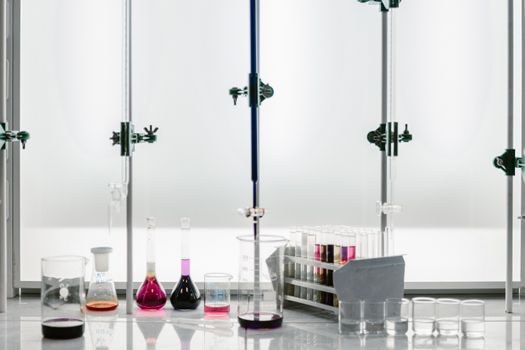
Corrosive reagents (concentrated HCl, H2SO4, NaOH, HF) force 316L stainless, hastelloy, PTFE-lined, or FRP equipment, drive PPE class up, and put the line into a stricter maintenance and inspection regime [S1]. Oxidizers (H2O2, perchlorates, nitric acid mixtures) andReducers (hydrides, alkali metals) force segregated storage per compatibility group, otherwise a single drum of peroxide next to a drum of solvent is a documented fire scenario rather than a theoretical one [S1].
Residue and waste handling is the second disadvantage bucket. Classical solvent extraction leaves solvent residue that must be stripped to meet food, pharma, or electronics specs, and the stripped solvent becomes a regulated waste stream with a disposal cost per litre that often exceeds the original purchase price [S3]. Chemiluminescence reagents, while analytically powerful, are commonly noted as toxic in handling and waste; the same is true for many classical wet-chemistry oxidizers and cyanide salts [S2]. A useful cross-reference is the casting mold trade-off map, where the same hazard-vs-throughput tension is resolved by containment rather than by avoiding the chemistry.
Decision criteria: which reagent class fits which process
For pharmaceutical, food, or electronics use, ACS / USP / HPLC / electronic grade is mandatory because residue, trace metal, and water specs are written into the product, not into the process [S1].
For extraction duty, classical organic solvents (hexane, DCM, methanol) are still the cheapest route on a yield-per-dollar basis for non-polar targets, but the residue burden, the ICH Q3C solvent-class limits, and the waste-disposal line often flip the decision toward subcritical water or supercritical CO2 once the plant is forced to internalise waste cost [S3]. For trace analytical work, chemiluminescence is a strong sensitivity win but is rarely a standalone technique — it is paired with separation (HPLC, CE) or selective chemistry, and the reagent toxicity has to be designed into the workflow from day one [S2].
Selection gates a process engineer should run

Five gates catch most reagent mis-specifications: (1) required assay and the impurity panel that actually matters for the reaction, not the one printed on the label; (2) physical compatibility with the dosing metallurgy and seals; (3) chemical compatibility with neighbouring drums in storage per the segregation matrix; (4) downstream residue spec including ICH Q3C class, USP/EP heavy-metal limits, or RoHS-style thresholds for electronics; (5) full life-cycle waste classification under the local EPA / EU waste catalogue code, not just the inbound hazard class [S1][S3].
Equipment selection is downstream of reagent selection, not independent of it. Once the reagent family is fixed, the chemical anchor on dosing lines, the choice of industrial valve elastomer and lining, and the flow-meter wetted material all follow from the reagent's corrosivity, viscosity, and solids content, not from generic plant standard.
Standards and sourcing
Reagent-grade definitions are anchored in ACS Reagent Chemicals specifications, ISO 6353 for general-purpose reagents, and pharmacopoeial monographs (USP, EP, JP) for pharma/food use, with vendor CoAs as the working traceability document [S1]. For green-solvent extraction, the relevant literature review (Cvetanović, Chemistry Africa, 2019) frames the trade-off explicitly: yield gain and waste reduction on one side, capital cost of high-pressure extraction vessels and the operating window of subcritical water on the other [S3]. Chemiluminescence detection methods are covered in the standard analytical-chemistry literature and are not a regulated reagent class by themselves, but the precursor reagents they consume sit inside the same hazard and waste framework as other oxidising or toxic wet-chemistry inputs [S2].
Trackable signals for the next review window: the 2026 ACS Reagent Chemicals revision cycle (typically a 2-3 year cadence), emerging ICH Q3C updates on residual solvent class limits, and any tightening of PFAS-related reagent restrictions in the EU and US — each of these will move which reagent family is the lowest-friction choice for a given duty. For broader plant-engineering context on the same trade-off logic, the industrial gas pros and cons map is a parallel case where the catalog decision is dominated by supply form, purity band, and waste handling rather than headline price.