Power meters return instantaneous watts, vars, and VA sampled at sub-second to one-second intervals, while energy meters integrate those samples into kWh / kVArh registers for billing and load profiling [S2][S3].
Surface finish, by contrast, is a geometric metrology topic governed by ISO 25178 areal parameters (Sa, Sz, Sdq) and ASME Y14.36M drawing symbols, with stylus and optical profilers producing Ra, Rz, or PSD curves [S1][S10]. No source ties electrical power metering to a surface-finish parameter; mixing the two topics is a common procurement search error.
Power meter: definition, signal chain, and typical accuracy class
A power meter samples voltage and current through a shunt, CT, or Rogowski coil and computes real power P = V·I·cosφ at the meter's update rate, which is typically 0.1 s to 1 s for panel instruments and down to one cycle (16.7 ms / 20 ms) for revenue-grade class 0.2 / 0.5S devices [S7][S8]. Power meters expose real-time W, kW, kVA, kVAr, PF, frequency, and THD, and they are the right pick when the question is "what is the load doing right now" — load shedding, motor starting, capacitor-bank switching, and generator paralleling [S2][S4].
Power meters are the front-end sensor of a PLC energy dashboard: the analog or Modbus output is read by the controller, which then drives VFDs, contactors, and soft-starters; this is the dominant architecture in ISO 50001 energy-management systems [S5].
Energy meter: definition, register types, and where kWh is mandatory
An energy meter is a long-integration device that sums active, reactive, and apparent energy over the billing interval; modern solid-state meters meet IEC 62053-22 class 0.2S / 0.5S for active energy and IEC 62053-24 for reactive energy, and they store profile data in 15-minute blocks used by utilities and on-site sub-metering [S3][S7].
Energy meters answer "how much has been used this shift / month / year" and are required wherever money changes hands: utility billing, tenant sub-metering, ESG scope-2 reporting, and carbon-accounting [S4][S8].
Surface finish: the actual metrology the user searched for

Surface finish (surface texture) describes the micro-geometry of a part and is quantified by areal parameters per ISO 25178 (Sa, Sz, Sdq, Sal) and profile parameters per ISO 4287 (Ra, Rz, Rt) [S1][S10]. The American drawing standard ASME Y14.36M defines the surface-finish symbol, the lay direction, and the production-method callout that machinists and inspectors read directly from the print [S10].
The NIST metrology tutorial shows that a deterministic surface such as a turned shaft shows a sharp fundamental in the Fourier spectrum, while a ground surface yields a near-monotonic PSD with no dominant harmonic — the same data can be read as Ra (amplitude), wavelength (spatial frequency), and PSD (frequency-domain power), which is conceptually analogous to, but not the same as, an electrical power-vs-energy distinction [S1].
Selection criteria: which device when, and what the procurement spec must say
For electrical monitoring, the choice is driven by the question being asked: pick a pressure transmitter analog-output power transducer for a sub-second control loop, a panel power meter for operator display, and a revenue-grade energy meter with CT/PT inputs for billing or ISO 50001 sub-metering [S2][S8]. On surface-finish metrology, the question is different: define the cutoff λc (0.08 mm / 0.25 mm / 0.8 mm per ISO 3274), the evaluation length, the filter type (Gaussian per ISO 16610), and the acceptance limit (e.g. Ra 0.8 µm, Rz 6.3 µm); the instrument is then selected as a consequence, not a starting point [S1][S10].
A direct comparison for an engineer scanning the spec sheet: power meters give you W / kW with 0.5% accuracy and 1-cycle response; energy meters give you kWh with 0.2S revenue accuracy over 1000-hour integration; surface-finish profilers give you Ra / Sa in µm with 0.001 µm resolution and 0.5 mm evaluation length — three different instruments, three different jobs [S2][S3][S10].
Use cases, limits, and common search confusion
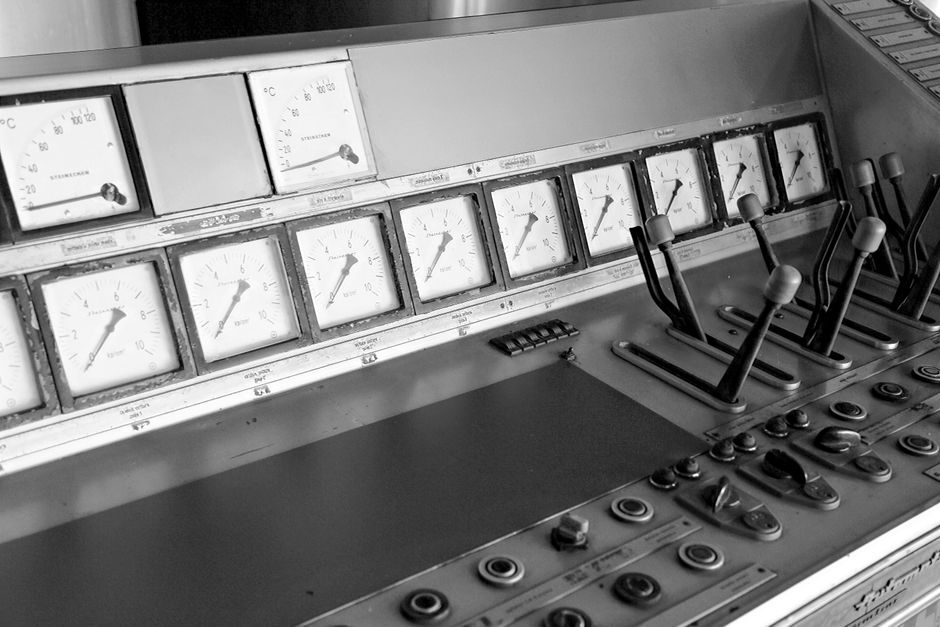
Power meters are used for real-time load monitoring, demand control, harmonic analysis up to the 63rd harmonic in IEEE 519 audits, and as inputs to building automation via BACnet or Modbus TCP [S2][S8]. Energy meters are used for utility billing, sub-billing, demand-charge verification, and ESG reporting over monthly to annual horizons [S4][S7]. Surface-finish instruments — contact stylus, confocal chromatic, focus variation, and interference microscopy — are used for in-process and final QA of bearings, seals, and medical implants, and require a vibration-isolated stand, calibrated reference (e.g. ISO 5436-1), and a defined sampling strategy [S1][S9][S10].
The limits are equally distinct: a power meter with only a 4-20 mA output cannot replace an energy meter for billing; an energy meter cannot trigger a load-shed contactor; and a surface-finish profiler cannot measure electrical power. The common procurement search error is treating "power meter vs energy meter" as a surface-finish question — it is not, and the spec must be re-scoped before RFQ [S2][S3][S10].
Standards, sourcing, and what to verify on the datasheet
For power and energy meters, key compliance documents are IEC 62053-21/22 (AC active energy accuracy), IEC 62053-24 (reactive), IEC 61000-4-30 (power-quality measurement methods), and IEEE 519 (harmonic limits); for surface finish, ISO 25178 (areal), ISO 4287 (profile), ISO 3274 (cutoff filter), ISO 16610 (filter software), ISO 5436-1 (calibration specimens), and ASME Y14.36M (drawing symbology) [S1][S2][S10]. A datasheet that does not list the relevant IEC 62053 class or ISO 25178 parameter is not procurement-ready and should be sent back to the vendor with that question on the cover sheet [S2][S10].
Trackable next signals to watch: IEC 62053-22 edition updates for class 0.1S meters now entering data-center DC sub-metering, ISO 25178-71 update on areal measurement uncertainty, and the spread of focus-variation optical profilers into shop-floor surface-finish cells [S1][S2][S10].
Related: flow meter.