
Industrial power mixers routinely handle 1–500 mPa·s fluids up to pastes above 50,000 mPa·s, with motor frames from 0.55 kW to 75 kW per stage, yet the same gearbox that delivers that torque window is the dominant wear part over a 7–10 year service life.
Selection is governed by three binding axes: rheology of the medium (viscosity, specific gravity, solids fraction), explosion-risk zoning (ATEX 2014/34/EU categories 2/3, IECEx equivalents), and mechanical interface to the vessel (top-entry flange, bottom-entry magnetic coupling, or side-entry). The two right-hand articles referenced later explain the motor-class and gearbox logic that sits behind those axes [S1].
Rheology envelope and motor-class selection
Power mixers are commonly specified in three motor-class bands: light-duty (0.55–4 kW) for water-like fluids under 1,000 mPa·s, mid-duty (5.5–22 kW) for slurries and resin systems in the 1,000–10,000 mPa·s band, and heavy-duty (30–75 kW) for high-solids pastes and concrete-like media above 50,000 mPa·s [S1]. A useful rule of thumb is that required shaft power scales roughly with dynamic viscosity × tip speed², so doubling tip speed quadruples absorbed power at constant geometry.
Tip speed itself is the first spec gate, not motor nameplate. Low-viscosity blending typically runs 3–8 m/s, high-shear dispersion 15–25 m/s, and high-viscosity pastes sit at 1–3 m/s because the flow regime would otherwise flip laminar-to-turbulent and stall the impeller. Where the process fluid is a sand-heavy slurry, engineers often cross-check against sand-mixer duty cycles to avoid confusing an impeller problem with a gearbox problem.
Mechanical architecture: gear, seal, coupling
The dominant failure mode on a power mixer is not the motor — it is the output-shaft seal and the gearbox. Mechanical seal faces typically rate for 6,000–8,000 operating hours in abrasive service before planned rebuild, and helical-bevel gearboxes need oil changes at 4,000–6,000 h or 12 months, whichever lands first [S1]. Magnetic-drive bottom-entry mixers eliminate the dynamic seal entirely but cap out around 15–22 kW because of torque-transmission limits through the containment shell.
For top-entry mixers on a concrete-agitator or a concrete-mixer-truck charging hopper, the gearbox is sized at a service factor of 1.5–2.0 to absorb the shock loads that come from aggregate bridging. Under-speccing that factor is the most common cause of premature bearing failure, because the electric motor can deliver 200–300% starting torque for the first 5–10 seconds while the gearbox can only carry 150% continuously.
Explosion-proofing, ingress protection and electrical supply
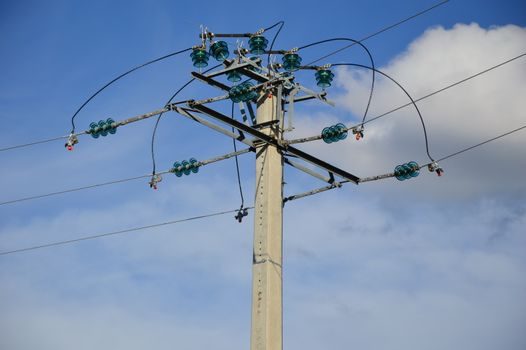
Where solvent vapours, grain dust or resin powders are present, ATEX category 2 (zone 1/21) or category 3 (zone 2/22) certification is mandatory for the motor terminal box, and IEC 60079-0 / IEC 60079-1 govern the flameproof enclosures on Ex d motors. Ingress protection pairs with that rating: IP55 is the common floor for indoor washdown, IP65 for outdoor chemical, and IP66/IP67 for submerged or hose-down zones [S1].
Power supply is the spec most often misread. A 75 kW mixer drawing 130 A at 400 V looks benign on a nameplate, but its locked-rotor current can spike to 6–7× full-load current, which forces the upstream power-transformer and the power-cable cross-section to be sized for that inrush, not for the running current. Soft-starters or VFDs smooth that inrush but introduce their own harmonics that the site power-meter will register as a poor power factor if no line reactor is fitted.
Process-side advantages and operating benefits
Advantages stack up clearly when the unit is correctly sized: rapid homogenisation of immiscible liquids, stable suspension of 20–40 wt% solids without settling, and repeatable batch times that fall 20–40% versus a mis-specified agitator. In concrete-admixture and pigment-dispersion lines, a properly chosen high-shear power mixer collapses what would be a 90-minute batch into a 25–35 minute cycle [S1].
Maintenance is also lower than the alternatives on a like-for-like basis: a single mechanical seal, a single gearbox oil circuit and one motor terminal box. Spare-parts holding can be held to a small set of SKUs — seal faces, bearings, gearbox oil — which is a real advantage for plants running 20–30 mixers on a single site.
Limitations, failure modes and operating costs
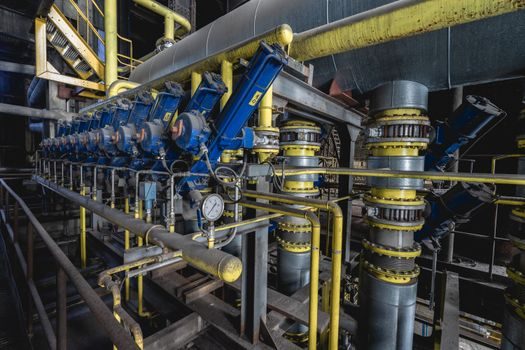
The disadvantages are just as concrete. Power mixers are single-point-of-failure assets: a seal leak on a reactor vessel can mean 24–72 hours of lost production while the agitator is lifted and the seal is rebuilt. Abrasive media (sand, fly-ash, alumina) accelerate mechanical-seal wear and force operators into a 6–9 month replacement cycle, with each seal change typically costing 8–15% of a new unit in parts and labour. [S1]
Energy cost is the second penalty. Noise on helical-bevel gearboxes at 75 kW reaches 82–88 dB(A) at 1 m, which forces a hearing-protection zone and may trigger a workplace-noise remediation spend.
Comparison: power mixer vs alternative mixing routes
Against three common alternatives on a 1–10 m³ working-volume duty, power mixers score as follows. (1) vs static mixers: power mixers handle viscosity above 5,000 mPa·s and high-solids fractions where static mixers plug; static mixers win on energy and maintenance cost below 1,000 mPa·s. (2) vs pneumatic agitators: power mixers deliver 3–5× higher tip speed and therefore faster batch times; pneumatic units win where intrinsic safety rules out all electrics. (3) vs hand-staged batch mixing: power mixers are the only option at industrial throughput above 5 m³/h, but they need trained operators, not just floor staff. [S2]
That comparison is the practical answer to the implicit question: a power mixer is the right tool when viscosity, solids content or batch time rule out static and pneumatic routes, and wrong when the duty is genuinely low-viscosity, low-volume, or intrinsically safe only.
Sourcing signals and standards to enforce on the PO

Engineers should pin four items on the purchase order: ATEX/IECEx category appropriate to the zone drawing, gearbox service factor ≥1.5 for abrasive service, mechanical-seal make/model with a stated MTBF figure, and a nameplate that lists full-load current, locked-rotor current and power factor. The relevant framework is ATEX 2014/34/EU for the European zone classification and IEC 60079-0 for the general Ex motor requirements, with manufacturer test certificates back to IECEx scheme rules where the unit is going into a hazardous area [S1].
Trackable signals through 2026-07-15 include the move to IE4/IE5 motor efficiency classes on EU-built units driven by the EU motor regulation, and the growing use of IIoT vibration sensors on the gearbox housing to predict seal and bearing failure 30–60 days in advance. For related reading on the motor-class detail that sits behind this article, the power-mixer selection specs piece breaks down the same envelope in finer granularity.