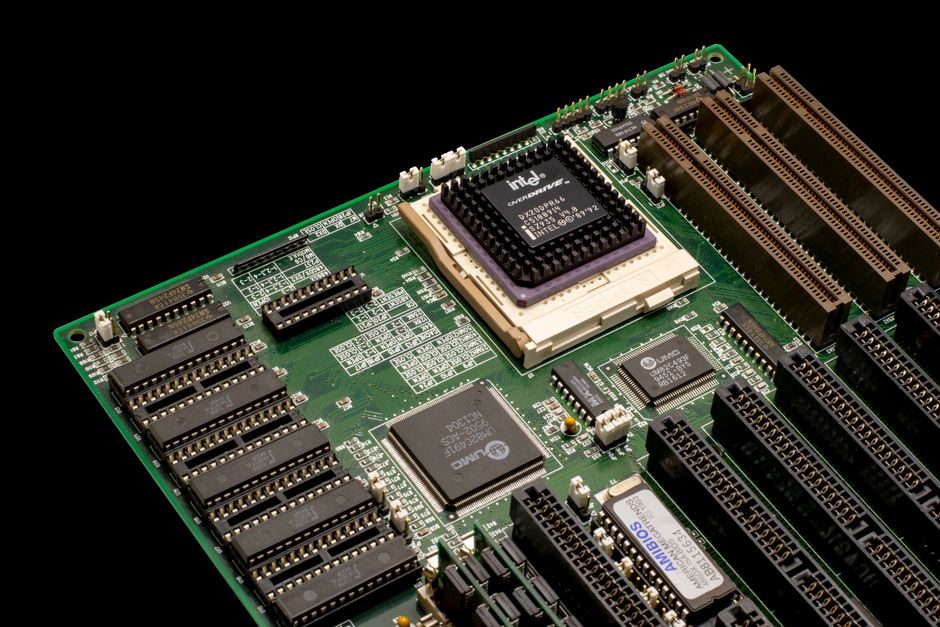
Power semiconductor supply chains in mid-2026 are gated by SiC and IGBT fab capacity, 6-inch/8-inch wafer allocation, and a thin layer of catalog distributors holding franchise rights for high-power discretes and modules [S4]. Power semiconductors in this context cover IGBTs, SiC MOSFETs, SiC Schottky diodes, thyristors, and rectifier diodes used in UPS, motor drives, traction inverters, PV inverters, and welding — the same device families a switching power supply spec engineer must derate for thermal resistance Rth(j-c) and short-circuit withstand time tsc.
Two structural facts frame sourcing: device fabrication is concentrated in a small number of Asian and European fabs, and qualified buyers increasingly route through authorised distributors rather than direct factory purchase [S4]. NAC Semi's published category page lists power semiconductors alongside high-speed rail, motor drives, oil and gas exploration, and power generation as primary downstream markets, and frames its role as a stocking distributor for "high-performance and high-quality manufacturers" — a pattern repeated across the 2026 franchised distribution landscape [S4].
Wafer-Diameter Tiers: 6-Inch vs 8-Inch vs 12-Inch SiC
Wafer diameter remains the single largest cost lever for power semiconductor die, because die-per-wafer scales roughly with area and edge losses fall as a fraction of output [S4]. The 6-inch (150 mm) SiC line is the current workhorse for automotive-grade MOSFETs and 1200 V Schottky diodes; 8-inch (200 mm) SiC is in volume ramp at multiple Tier-1 suppliers in 2026, lowering die cost per ampere; 12-inch (300 mm) SiC has been demonstrated as pilot lines but is not yet a mainstream commercial node for discrete power devices [S4]. Silicon IGBTs, by contrast, have already crossed to 12-inch (300 mm) at the largest lines, which compresses the cost gap between silicon and SiC at the low-voltage (≤650 V) end of the market.
For buyers, the practical consequence is that a 1200 V SiC MOSFET on 8-inch is now the default reference for industrial inverter sourcing, and a DC power supply OEM building a 50–100 kW front-end must qualify both silicon IGBT and SiC MOSFET generations because telecom rectifier tenders still accept the cheaper silicon part while EV-charger and energy-storage tenders typically require SiC [S4]. The 6-inch SiC line, although older, is not obsolete: it remains the production backbone for many automotive-qualified parts because the installed device-physics and reliability database is largest there.
Device-Family Comparison: IGBT vs SiC MOSFET vs Thyristor vs Rectifier Diode
Four device families carry the bulk of high-power sourcing volume, and each is gated by a different supply-chain bottleneck [S4]. SiC MOSFETs (650 V, 750 V, 1200 V, 1700 V classes) are gated by SiC substrate supply and epitaxy reactor capacity; IGBT modules (600 V, 1200 V, 1700 V, 3300 V, 6500 V) are gated by 12-inch fab throughput and substrate-thinness handling; thyristors / SCRs remain a mature line dominated by a small number of legacy European and Japanese suppliers; rectifier diodes (fast-recovery and standard) are the most commoditised tier and are increasingly treated as catalog parts [S4].
A decision matrix that buyers in 2026 actually apply looks like this: (1) switching frequency — SiC MOSFET wins above ~20 kHz because switching loss scales with frequency; (2) short-circuit withstand — silicon IGBT modules still have a documented tsc advantage, often specified in the 5–10 µs range at 150 °C; (3) continuous current density — thyristors remain the cheapest path for very high DC currents (kA range) in soft-starter and traction substation service; (4) lead-time risk — rectifier diodes ship fastest from catalog stock, while SiC MOSFETs and high-voltage IGBT modules carry the longest quoted lead-times [S4]. The 1200 V SiC MOSFET and the 1200 V IGBT are now routinely cross-referenced inside the same inverter BOM as parallel risk-mitigation options.
Distributor Tiers and the 2026 Sourcing Stack
The 2026 power-semiconductor distribution stack is stratified into three layers, and a sourcing manager who cannot tell them apart overpays [S4]. Tier 1 — authorised catalog distributors (NAC Semi and its peers) — hold franchise agreements with the device makers, stock bonded inventory, and release parts against the manufacturer's allocation rules; their published 2026 power-semiconductor category page describes the offer as a "wide array of electronic components specifically developed for high power applications" [S4].
Tier 3 — factory-direct OEM contracts — apply only when annual volumes reach the part numbers the fab is willing to commit a wafer-start to, and typically require 12-month rolling forecasts with non-cancellable clauses [S4]. Authorised distributors publicly list their franchised device-maker partners and product families on the category page, which is the cleanest way for a buyer to verify whether a quoted part is a bonded-stock delivery or a grey-market import [S4]. The mainstream B2B trade publications covering this space — including Asia Electronics Industry — track fab capex, distributor consolidations, and SiC wafer-supply deals as recurring editorial beats [S2].
Who This Stack Is For — and Who It Is Not For
The 2026 franchised-distributor model suits three buyer profiles well: low-to-medium volume OEM design houses (50 k–500 k units/yr) that cannot commit wafer-starts; industrial aftermarket and MRO buyers who need traceability documents; and contract manufacturers building mixed-line UPS or chain conveyor drive panels where a single BOM may pull IGBT, SiC, and rectifier parts from three device makers [S4]. It is poorly suited to: automotive Tier-1 buyers on a multi-year PPAP, who must source factory-direct; defence and aerospace buyers bound by source-control drawings that name a specific wafer fab lot; and high-volume white-goods OEMs with annual demand above several million discretes, who negotiate wafer-start allocations directly with the fab.
Engineers building lower-power switch-mode converters may not need the full franchised stack at all — for sub-1 kW units the device family is dominated by 600–650 V GaN-on-Si and 700 V silicon MOSFETs that flow through the same broad-line semiconductor distributors, and the high-power tier discussed here is only relevant when the converter output crosses roughly 3–5 kW or the topology requires a hard-switched bridge above 100 kHz [S4]. For an in-house decision rule: if the BOM contains an IGBT module or a 1200 V-class SiC MOSFET, the franchised-distributor gate applies; if it contains only low-voltage silicon MOSFETs and gate drivers, the broad-line catalog channel is sufficient.
Standards, Reliability and Sourcing Levers Buyers Actually Use
Power-semiconductor qualification is anchored in JEDEC and IEC documents rather than the application standards that govern roller chain drive selection, but several cross-reference points are worth knowing. AEC-Q101 is the automotive stress-test qualifier for discrete semiconductors; industrial power converters more often cite UL 60950-1 / UL 62368-1 for the end product and reference the device datasheet's Rth(j-c) and isolation voltage figures. The UL 1557 standard covers power semiconductor devices themselves and is the typical certification cited on datasheets for IGBT modules sold into North American industrial OEM channels. For high-voltage substation service, IEEE C57.91 and IEC 60076 govern the transformer, but the rectifier-grade thyristor inside the HVDC valve is qualified under IEC 60747 — a standard the buyer's quality team will request in the long-form datasheet. [S1]
Sourcing levers that a 2026 procurement team can actually pull: (1) pre-qualify two franchised distributors per device family to keep a competitive quote on every release; (2) standardise on 1200 V SiC MOSFET and 1200 V IGBT as the two parallel risk-mitigation lines in the inverter BOM; (3) insist on a CofC (Certificate of Conformance) per lot and a manufacturing-date code not older than 18 months on receipt; (4) on a long lead-time line, book a non-cancellable forecast for the next two wafer-start cycles; (5) keep a bonded-stock safety stock equal to roughly 3 months of forecast demand to absorb allocation shocks [S4]. Buyers who treat the conveyor chain drive inverter and the UPS rectifier as separate sourcing projects tend to miss the cross-family volume discounts a single franchised distributor can offer, because the same SiC and IGBT lines feed both.
Real Use Cases Pulling 2026 Demand
Five end-market segments are pulling visibly different mixes of power semiconductor volume in 2026, and the BOMs look different in each. EV fast-charging stations and battery energy storage are the most SiC-heavy, often specifying 1200 V SiC MOSFET modules at 100 kW+ stack levels [S4]. Rail traction and rolling-stock inverter builders are IGBT-module dominant, with 3300 V and 6500 V press-pack IGBTs as the long-lead-time bottleneck items. PV string and central inverters are split — residential PV remains silicon MOSFET/IGBT, while utility-scale central inverters are migrating to 1200 V and 1700 V SiC. Welding and plasma cutting sources are thyristor-dominant because line-frequency phase-angle control is the cheapest topology. UPS and industrial silent chain drive panels pulling the same device families as the 2026 PCB supply-chain build-outs tracked across Asia consume IGBT modules and SiC MOSFETs in roughly equal weight [S4].
One often-overlooked lever: many of these end-products carry the same JEDEC-qualified SiC MOSFET part numbers across vendors, which means a buyer who standardises on a published 1200 V SiC MOSFET bare-die or discrete part can dual-source between two device makers with a single BOM template, provided both makers publish matching thermal and short-circuit data. The PCB supply-chain side of the same electronics build is also under pressure in 2026, and the copper-and-substrate procurement picture interacts with power-semiconductor sourcing because the inverter PCB and the DC power supply PCB pull the same copper-clad laminate and the same lead-free reflow profile.
Trackable signals to watch over the next two quarters: 8-inch SiC wafer-start announcements from the second-tier device makers, any franchised-distributor consolidation that changes the authorised-channel count, and the 2026 release of updated UL 1557 and IEC 60747 device-qualification documentation. The most concrete next node is the Q3 2026 update cycle from the major SiC substrate suppliers, which historically sets the lead-time band for 1200 V MOSFET deliveries into Q4 2026 and Q1 2027 industrial inverter builds.