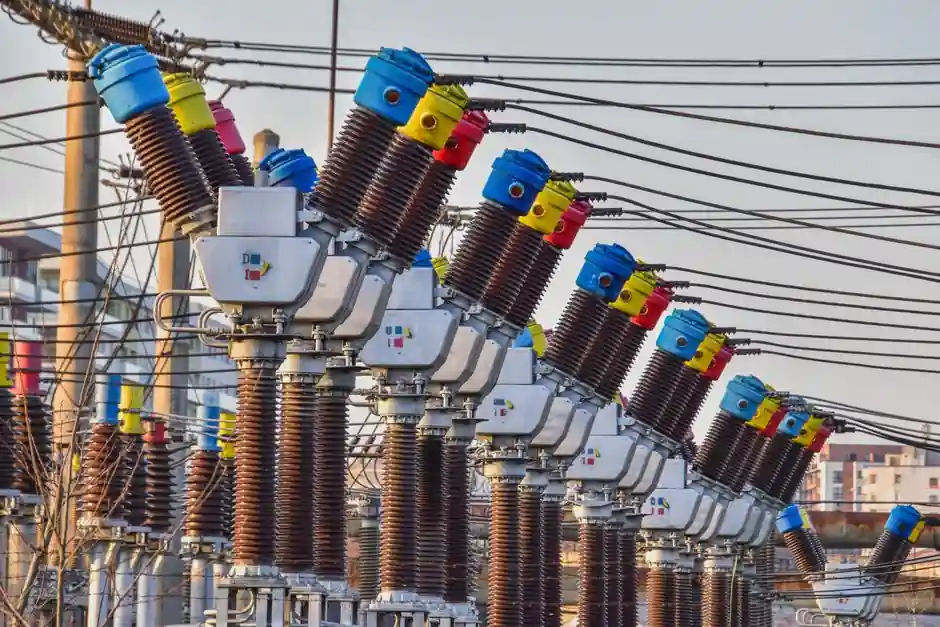
Power transformers are divided by voltage function into step-up, step-down, and isolation types [S1][S2].
Selection also depends on phase count, core material, cooling medium, insulation system, impedance, and installation conditions, rather than voltage function alone [S1][S4].
Voltage Function Defines the Main Classification
Step-up transformers use a secondary winding with more turns than the primary, raising AC voltage for generator output and transmission lines [S1][S4]. Step-down transformers reduce voltage for substations, distribution networks, industrial loads, and auxiliary systems in generating stations [S2][S4].
Isolation transformers provide galvanic separation between primary and secondary circuits because the windings have no direct electrical connection, making them suitable for laboratories, medical equipment, and electrically sensitive loads [S1][S4]. A transformer changes voltage through electromagnetic induction without changing the AC frequency [S1].
These functional labels do not identify construction. A power transformer can also be single-phase or three-phase, have an iron, ferrite, or air core, and use a toroidal or solenoidal core arrangement [S1]. In procurement, the equipment nameplate, vector group, rated power, voltage ratio, and cooling designation remain more useful than the broad label “power transformer.”
Voltage Class and Capacity Define Scale
These figures describe voltage class rather than output in VA or MVA, so they do not establish a complete rating by themselves. Mechanical and thermal capability still depend on rated kVA or MVA, winding connection, insulation level, cooling arrangement, and service conditions [S1][S4].
Autotransformers occupy a separate but overlapping category.
Phase Count and Core Construction Set Electrical Behavior
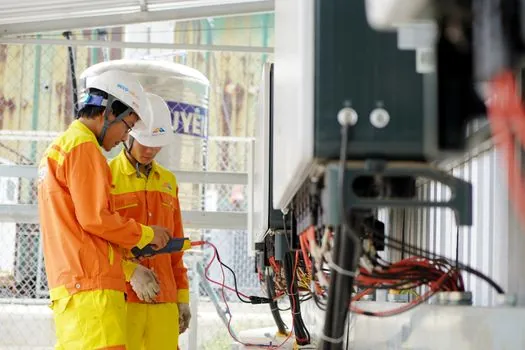
Single-phase transformers use one primary-secondary phase set, while three-phase transformers are built for three-phase systems [S1]. Three-phase construction generally supports balanced three-phase loads directly, whereas a bank of single-phase units can also form a three-phase system when appropriate winding connections and phase sequence are coordinated [S1].
Transformers may use iron, ferrite, or air cores [S1]. A laminated iron core reduces eddy-current losses, and laminated cores are used from milliwatt to megawatt ratings [S3]. Toroidal cores can reduce external magnetic fields and occupy less space for a given power rating than rectangular E-I cores, but winding is slower, more complex, and generally more expensive [S3].
Dry-Type and Oil-Type Units Serve Different Sites
Dry-type transformers use air or another gas for cooling, while oil-immersed transformers use oil as both a heat-transfer medium and an insulating component [S1][S4]. Dry-type transformers use air or another gas for cooling rather than an oil-filled tank [S2].
Oil-immersed transformers can use oil for cooling and electrical insulation [S3]. An arc-furnace transformer shows a specialized high-current version of this construction: heavy copper bus conductors rated in the tens of thousands of amperes are immersed in oil for cooling and insulation, and the winding is designed to withstand frequent short circuits [S3].
For indoor process buildings, the comparison is more specific than “oil versus dry.” A dry-type transformer emphasizes no liquid fire load and an air-cooled enclosure, while a power transformer covers the broader utility-scale category, including liquid-immersed designs. Ambient temperature, enclosure protection, fault duties, and the installed ventilation arrangement determine which construction is practical.
Autotransformers and Isolation Transformers Serve Opposite Needs
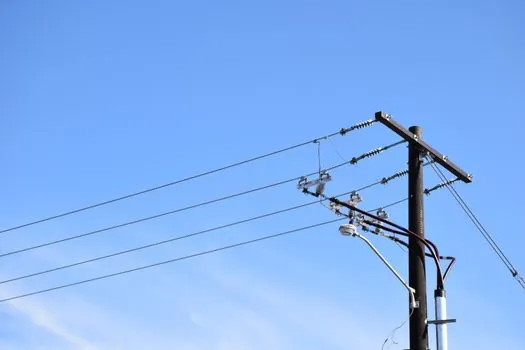
An autotransformer uses a single continuous winding and can operate in either step-up or step-down mode [S2][S3].
That efficiency advantage does not make an autotransformer an isolation device. Its primary and secondary circuits share a conductive winding, so the galvanic separation required by a true isolation transformer is absent [S1][S3]. For sensitive equipment, laboratories, and medical applications, that functional difference takes priority over footprint and efficiency [S4].
Selection Criteria: Function, Voltage, Load, and Environment
Four criteria distinguish the main options. Step-up units suit generator outputs entering transmission circuits; step-down units suit substation and distribution duties; isolation units suit loads requiring galvanic separation; and autotransformers suit network interties where shared windings are acceptable [S1][S2][S4].
The next criterion is voltage. Class I covers high-voltage windings of 69 kV and below, whereas class II covers 115–765 kV [S2]. The third is phasing, with single-phase and three-phase configurations selected according to the network and load [S1]. The fourth is construction and environment, including dry-type versus oil-immersed cooling, core geometry, indoor or outdoor installation, and short-circuit withstand duty [S1][S3][S4].
Autotransformers should not be selected where galvanic isolation is mandatory. Isolation transformers should not be selected merely for very high efficiency when voltage conversion alone would suffice. Oil-immersed units are not automatically preferable to dry-type equipment, because site fire controls, ventilation, maintenance access, and ambient conditions can outweigh capacity and cost [S1][S4].
Protection coordination also belongs in the specification. Transformer selection is performed alongside power-distribution equipment, including fault-current ratings, grounding arrangements, and isolation boundaries. The candidate article on circuit breaker types and selection criteria provides the complementary comparison for the interrupting devices used to protect transformer circuits.
Limits, Failure Modes, and Sourcing Checks
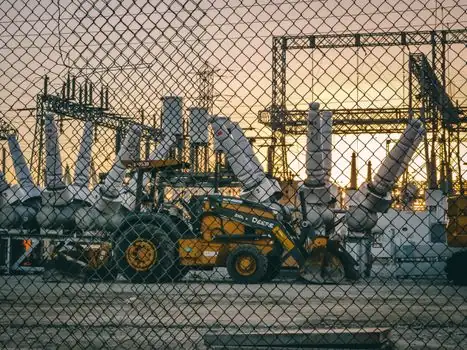
Low impedance raises fault-current concerns in an autotransformer, while the shared winding removes galvanic isolation [S2][S3]. Ferrite and air-core designs have different loss, saturation, and power-handling characteristics from conventional iron-core power transformers, so nameplate comparisons must use matching voltage, frequency, and loading conditions [S1].
Thermal performance is a first-order constraint. Oil-immersed transformers depend on oil movement and heat transfer, whereas dry-type transformers depend on air or gas circulation and enclosure ventilation [S1][S4]. A laminated core limits eddy-current losses, while a toroidal core lowers the external magnetic field but increases winding complexity and cost [S3].
For arc-furnace duty, the design must address low-voltage winding currents in the tens of thousands of amperes, external delta closure through interleaved winding connections, oil cooling and insulation, and frequent short-circuit withstand [S3]. For general procurement, verify rated kVA or MVA, primary and secondary voltages, frequency, phase count, vector group, tap range, impedance, cooling class, insulation level, and applicable utility or site standards before issuing an order.
A traceable specification should reconcile the vendor nameplate with the requested class, voltage, phase, cooling, and application classifications, then check whether the required internal clearances and short-circuit duties suit the installation [S1][S2][S3]. Track three signals during evaluation: the approved single-line diagram, the completed nameplate data sheet, and the final test report.