
Distribution cabinets are classified by three functional levels and multiple structural designs, spanning primary power centers, secondary control assemblies, final lighting boxes, and automated enclosures.
The primary distinction is not cabinet size but electrical duty: distribution level, load concentration, circuit count, withdrawal needs, environmental protection, and monitoring requirements determine the suitable configuration.
Three-Level Distribution Classification
Primary distribution equipment consists of power distribution centers installed at an enterprise substation. These assemblies receive power after a step-down transformer and send it toward lower-level equipment at multiple locations, requiring comparatively high electrical ratings and large output-circuit capacity [S4].
Secondary distribution covers general distribution cabinets and motor control centers. A distribution cabinet serves dispersed loads with fewer circuits, while a motor control center serves concentrated loads with numerous circuits and provides protection, monitoring, and control for connected equipment [S4].
Distribution cabinets are classified as power distribution cabinets, lighting distribution cabinets, and metering cabinets, and they are the final equipment of the distribution system [S4].
Fixed, Protective, and Drawer Structures
Fixed cabinets still dominate many industrial plants, commercial buildings, and public facilities because their dimensions are comparatively stable and they suit standardized equipment-room installations [S3]. Drawer systems are more appropriate where rapid module replacement and production continuity outweigh the added mechanical complexity [S3].
Functional Types by Load and Circuit
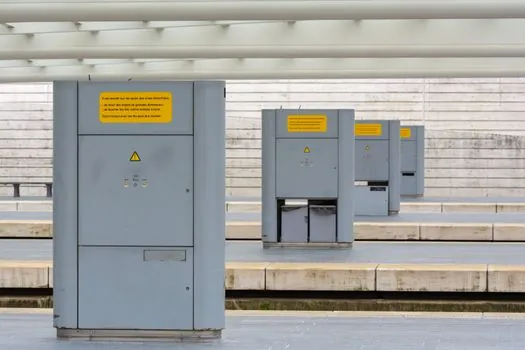
Primary distribution equipment is collectively referred to as power distribution centers, is centrally installed in an enterprise substation, and distributes electrical energy to lower-level distribution equipment at different locations using relatively high electrical parameters and large output-circuit capacity [S4].
Metering cabinets are one of three classifications of distribution cabinets, alongside power distribution cabinets and lighting distribution cabinets, and distribution cabinets are the final equipment of the distribution system [S4].
Selection Criteria by Application
Primary power distribution centers are centrally installed in an enterprise substation, depend on a step-down transformer, and distribute electrical energy to lower-level equipment at different locations with relatively high electrical parameters and large output-circuit capacity [S4].
Select secondary distribution equipment when upstream circuits feed nearby loads. Use a distribution cabinet for dispersed loads and relatively few circuits, or a motor control center for concentrated loads, high circuit counts, and repeatable control functions [S4].
Select a drawer cabinet where operators must remove and replace circuit units without dismantling the whole assembly. Its suitability rests on independent functional units, interchangeability, serviceability, and fault isolation rather than on drawer quantity alone [S2][S3].
For the broader enclosure family, compare distribution cabinets, cable distribution cabinets, and MCC cabinets by voltage and current duty, circuit count, withdrawal access, cable-management requirement, and enclosure protection.
Automated and Condition-Controlled Options
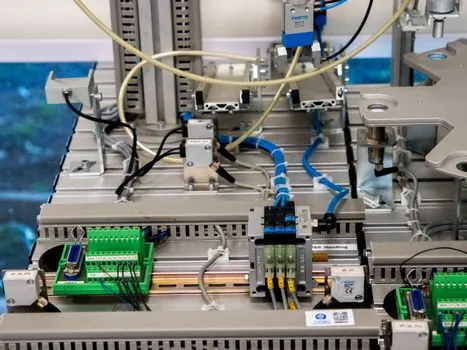
Condition-controlled cabinets address the effects of cabinet temperature rise. Some fixed installations integrate cabinet air-conditioning equipment to maintain a more stable internal environment and support component service life, which matters in equipment rooms with sustained heat loads [S3].
Traffic-control cabinets provide power for road signal systems and monitoring equipment, while data-center and communication-room systems may combine power distribution with climate-controlled network cabinets to manage equipment temperature and humidity [S3].
Automated architecture is suitable where continuous supervision or rapid fault detection justifies communications hardware, control modules, and a maintained data interface. It is not a substitute for selecting the correct primary, secondary, or final distribution level [S3][S4].
Construction Materials and Safety Boundaries
Distribution cabinet bodies are generally made from steel, including hot-rolled and cold-rolled steel plate. Cold-rolled plate is described as softer and more suitable for cabinet production because it supports accurate forming, panel fabrication, and mounting of internal electrical equipment [S2].
Typical internal components include busbars, circuit breakers, conventional relays, comprehensive protection relays, measuring instruments, isolation switches, indicator lights, and grounding switches. Their selected ratings and arrangement depend on the assigned distribution duty rather than on cabinet classification alone [S2].
Cabinet functions cover distribution and control of electrical equipment, plus protection against overload, short circuit, and leakage. These protective functions must be coordinated with the installation, while the mechanical enclosure addresses access, segregation, and environmental protection [S2].
Comparison Table for Core Cabinet Types

What Each Classification Does Not Replace
Electrical cabinets protect the normal operation of components, and their internal components can include isolation switches, grounding switches, and other electrical devices [S2].
For a controlled comparison of downstream assemblies, the distribution cabinet and power distribution box entries clarify how final distribution differs from larger plant-level equipment.
Trace the next project decision through the incoming load, downstream circuit count, required withdrawal access, installation environment, and protection philosophy, then verify the selected assembly against the approved schematic and equipment ratings.