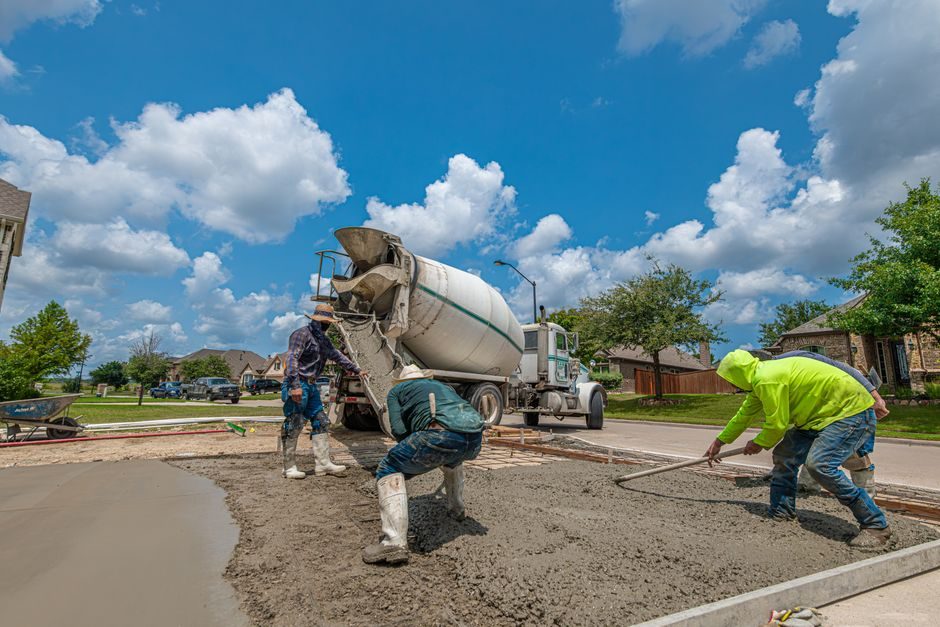
A power trowel — also called a helicopter or power float — is a motorized rotary finisher used to smooth and densify freshly placed concrete slabs, with machine class driven by rotor diameter, engine power, and operator configuration.
Selection on a commercial pour reduces to three nested decisions: walk-behind or ride-on, engine fuel type, and blade/pan set, with rotor diameters typically spanning 600 mm (24 in) for edge work up to 1200 mm (48 in) for industrial floor slabs power trowel types.
Walk-Behind vs Ride-On: Operator Configuration Drives Class
Walk-behind power trowels, with rotor diameters commonly between 600 and 900 mm, are the default on slabs under ~200 m² and around column lines where a ride-on cannot reach; the operator controls pitch and direction via a handle assembly. Ride-on models carry twin rotors of 900–1200 mm and an operator seat, covering 300–1000 m² per pass in production slab work and reducing operator fatigue on pours above ~500 m². [S3]
For pours under 100 m² or slabs broken by penetrations, a walk-behind is the correct tool; for warehouse or distribution-center slabs above 1000 m², a ride-on with overlap steering is standard. Crew size tracks the same axis — one operator per ride-on versus two to three walk-behinds delivering equivalent square-meter output on tight pour days concrete vibrator TCO: power, shaft wear, and downtime drive the real bill.
Power Source: Gasoline, Diesel, Electric, and Battery
Gasoline engines (typically 4–9 kW / 5.5–12 hp Honda GX-series clones) dominate walk-behind units because of power density and field refuelability, while diesel (7–15 kW) is preferred on ride-on units where continuous high-torque operation under load is the duty cycle. Electric and battery-powered trowels remain a small but growing segment, primarily specified on interior slabs where engine exhaust is prohibited, indoor air quality is regulated, or noise ordinances cap sound at 70–75 dB(A) at 7 m.
Battery run-time on a 36 V or 48 V lithium platform is typically 30–60 minutes under finishing load, which restricts battery trowels to small pours and edging work; corded electric 230 V / 50 Hz units solve the run-time limit but impose cable management that conflicts with rebar and screed rails. For most outdoor pours above 200 m², internal-combustion remains the engineering default.
Blade and Pan Geometry: Float, Finish, Combination
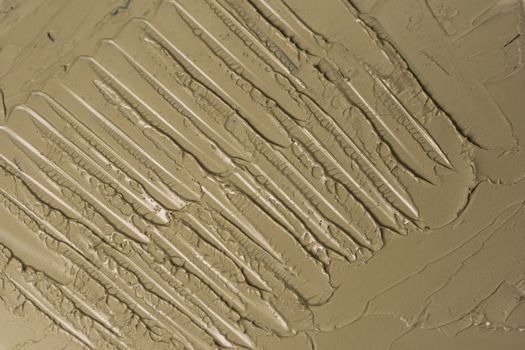
Three blade geometries cover the full finishing sequence. Float pans (diameter-matched to the rotor) are bolted on first to flatten the slab and embed aggregate just below the surface; finish blades, narrower and angled at 0–30° pitch, follow for the final burnished surface; combination blades are a hybrid profile used by crews running a single blade change instead of a two-step pass. Pan-then-blade sequencing remains the dominant practice on slabs specified to a high FF/FL floor flatness profile.
Blade pitch is the operator's primary control: increasing pitch raises compaction pressure but also raises the risk of "chatter" — harmonic vibration between blade and slab — and can burn the surface if applied too early in the set. Most OEM service notes specify initial floating with blades near flat (0–5°) and finish passes at 20–30° pitch once the slab supports foot pressure with under 3 mm impression holding furnace types and classifications for foundry engineers covers an adjacent metals-side classification problem that maps onto the same "match machine class to duty" logic.
Engine Power, Rotor Speed, and Slab-Size Fit
Engine power must be matched to rotor diameter: a 600 mm walk-behind typically uses a 4 kW (5.5 hp) engine, 900 mm units 6–9 kW (8–12 hp), and 1200 mm ride-on rotors 15–25 kW (20–33 hp) split across two engines. Rotor speed spans roughly 60–180 rpm, with lower speeds used for floating and higher speeds for finishing — exceeding 200 rpm on a non-set slab tears the surface rather than smoothing it.
Under-sized engines bog down on high-pitch passes and stall the clutch, which burns the centrifugal clutch friction plate within a few hours; over-sized engines add weight and slab-impression risk early in the set. The match check is straightforward: engine torque at the working rpm band must exceed the combined blade drag torque at maximum pitch, with a 20–30% margin for slump variation and ambient temperature.
Clutch, Drive, and Mechanical Subsystems
Three driveline architectures cover nearly all production trowels. Direct-drive (engine shaft coupled to the rotor through a single right-angle gear box) is the simplest and lightest, common on 600–750 mm walk-behinds. Belt-drive uses a centrifugal clutch and V-belt to engage the rotor, allowing the engine to idle without turning the pan — this is the dominant pattern on 900 mm walk-behinds and most ride-ons. Hydraulic drive, the premium option on larger ride-ons, uses a hydraulic motor at each rotor for independent speed and direction control, which is what enables the overlap steering pattern on a 2400 mm-class double rider.
Spider assemblies (the yoke that carries the blade arms) are the highest-wear mechanical subassembly, with three-arm spiders on walk-behinds and four-arm on ride-ons; arm pitch length and arm cross-section determine the maximum blade size the spider can carry without flex-induced chatter. Thrust bearings beneath the rotor take the vertical load and must be greased per OEM interval — typically every 50 operating hours — to prevent the bearing failure that ends a trowel's service life hydraulic power unit vs hydraulic pump: spec, selection, and use-case map explains the equivalent bearing and seal discipline on the hydraulic side of a pour-day equipment fleet.
Selection Criteria and Field Failure Modes
Four criteria rank the candidate classes. Slab size sets the rotor diameter band and operator configuration; fuel policy sets the engine type; floor flatness target (FF/FL numbers) sets whether a two-step pan-then-blade sequence is required; and slab access (door openings, column spacing, rebar congestion) sets the maximum practical machine width. Against those four, a 900 mm walk-behind with a 6 kW gasoline engine and a pan-then-blade sequence is the most flexible single machine for mixed pours under 500 m².
The recurring failure modes on a mis-specified fleet are predictable. Engine stall from under-power on a high-pitch pass burns the centrifugal clutch; over-sized ride-ons on early-set slabs leave deep foot impressions that no amount of re-floating will close; battery trowels specified for a 400 m² pour die mid-finish and force a hand-float rescue. Logging the engine power, rotor diameter, blade pitch, and slab set condition for every pass is the cheapest way to keep the same failure from recurring on the next pour.
Trackable signals for the next sourcing cycle: OEM-published noise and emission data for battery trowel platforms (run-time at continuous finishing load is the open question), and the floor-flatness tolerance bands that contractors are writing into slab specifications on logistics-center builds, which directly sets the rotor diameter and blade-sequence class required.
Spec-level background on the components involved: power cable, and power meter.