
A process-plant digital twin and a discrete-manufacturing digital twin are not the same product pitched to different buyers; they are different engineering artefacts built on different data substrates, with different payback curves [S5][S9].
Process twins (refineries, chemical plants, cement kilns, water treatment) anchor on steady-state and dynamic first-principles models and exchange data through DEXPI, OPC UA, and FMI standards; discrete twins (automotive stamping, CNC machining, packaging lines) anchor on event-driven PLC/SCADA streams and BOM-level logic [S3][S5].
Data Substrate and Model Fidelity
Process plants run tens of thousands of analogue measurements (flow, temperature, pressure, composition) at 1-10 second scan rates; the twin's job is to reconcile those against mass/energy balance models and infer non-measured variables such as tray efficiency, fouling factor, or catalyst activity [S5][S9]. Discrete plants generate millions of discrete events per shift (part-present, torque-OK, vision-pass) at millisecond cadence, and the twin's job is to model station-level state machines and queue dynamics, not mass balances [S3][S4].
That difference drives a 10-100x gap in historian storage between the two architectures: a mid-size ethylene cracker twin typically retains 5-10 years of time-series at PI or Aspen IP21, while an automotive body shop twin keeps 90-180 days of high-frequency event logs before aggregating [S4][S9].
Standards Stack: DEXPI/OPC UA/FMI vs PLC/MES Event Buses
Process-plant twins lean on the DEXPI information specification (data exchange for process-industry piping, ISO 15926-aligned), OPC UA for server-push telemetry, and FMI 2.0 for co-simulation of unit-operation models exported from Aspen Plus, UniSim, or gPROMS [S5]. A practical implementation reads the DEXPI P&ID from AutoCAD Plant 3D, instantiates a Model Broker that auto-generates the underlying dynamic model, then couples it to the live plant through OPC UA nodes on a SIMATIC PCS 7 or DeltaV backbone [S5].
Discrete twins skip that standards layer and connect directly to the PLC scan (Siemens S7, Allen-Bradley ControlLogix), the MES (Wonderware, Ignition), and the line-level OPC UA server only at the supervisory tier [S3][S4]. The result: process twins take 12-24 months to commission on a greenfield EPC project because the data model must be built before the first tag streams; discrete twins can stand up a station-level product twin in 6-12 weeks by reusing existing PLC tag libraries [S4][S9].
ROI and Defect Reduction: Numbers From 2025-2026 Pilots
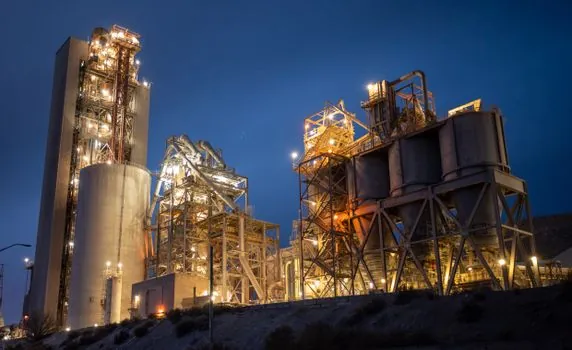
McKinsey's widely cited estimate puts maintenance cost reduction at 10-40% and equipment uptime gains at 10-20% across manufacturing digital twins; the higher end of that range is reported on process twins where unplanned shutdowns cost $1-5M per day, while the lower end is typical of discrete twins where single-station downtime is recoverable through buffer inventory [S4].
Deloitte's 2025 Smart Factory report, as cited in June 2026 industry guidance, shows a discrete manufacturing plant running a process-level digital twin achieves 20-35% fewer quality defects within 12 months; Siemens reported 15-25% cycle-time reduction in 2025 automotive assembly pilots using process twins for body-shop sequencing [S4]. Capgemini's three-year study found system-level twins (combining product and process models) generated 2.5x the return of asset-level twins, but require clean data across every line [S4].
Decision Matrix: Which Twin For Which Plant
Four criteria separate the two architectures for a working engineer: data rate (process: seconds; discrete: milliseconds), model type (process: first-principles dynamic; discrete: discrete-event simulation), primary KPI (process: yield, energy per ton, emissions; discrete: OEE, first-pass yield, takt adherence), and payback horizon (process: 18-36 months; discrete: 6-18 months) [S3][S4][S9].
For hybrid sites (a batch chemical plant with packaging lines, a food plant with retort and palletising), the working pattern is to deploy a process twin on the continuous/batch core and a discrete twin on the packaging cells, then bridge them through an MES-level system twin; this is also the architecture most vendor-neutral integrators recommend to avoid double-licensing simulation engines [S4][S5].
Limits, Failure Modes, and Sensor Density
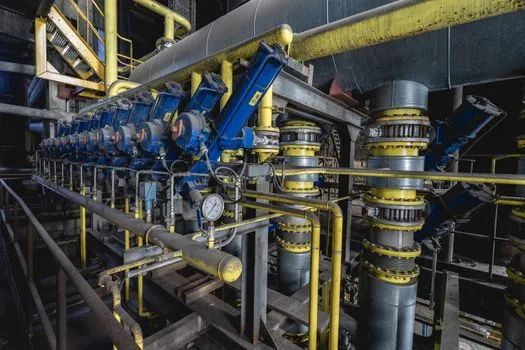
Vendor decks skip the failure modes. IoT sensor density, SCADA connectivity, and PLC compatibility determine roughly 60% of implementation success, not the software itself; if the existing OEE tracking is already noisy, a digital twin will simply visualise bad data with higher resolution [S4]. Process twins fail most often on thermophysical property assumptions (an outdated activity-coefficient model returns a 3-5% composition error that propagates through the whole mass balance); discrete twins fail most often on event-storm handling (a single missed timestamp from a vision system collapses a queue model) [S3][S9].
Sensor calibration is the shared bottleneck: process plants need annual recalibration of flow meters against ISO 5167 orifice plates, and discrete plants need quarterly checks of torque transducers and vision-system lighting; both feed the twin directly, and drift in either will quietly degrade the model's predictive accuracy long before any alarm fires [S4][S9].
Selection Rules: Who Should and Should Not Build
Build a process twin if the plant is a continuous or batch process with >1,000 analogue tags, regulatory reporting on mass balance, and energy/CO2 KPIs tied to ISO 50001; do not build one for a small job shop with <200 tags where the effort of building the DEXPI model exceeds the maintenance savings [S5][S9]. Build a discrete twin if the line has a documented bottleneck, OEE below 70%, and a stable PLC/MES stack already in place; do not build one on a line being re-engineered within the next 12 months, because the model will be obsolete before it pays back [S3][S4].
For injection-moulding cells that sit between the two categories, the 2026 practical pattern is a process-window twin on the machine plus a discrete twin on the upstream mould-change and downstream inspection; the process-window engineering pattern for injection moulding is the closest documented reference for that hybrid deployment.
Track in 2026: ISA-95/IEC 62264 batch-to-MES harmonisation efforts that may let process twins consume discrete event data natively, and the next round of NAMUR NA 163 work on open architectures for modular process plants; both will reshape vendor lock-in assumptions before 2027.
Component reference pages worth checking: digital multimeter, digital panel meter, and process calibration.