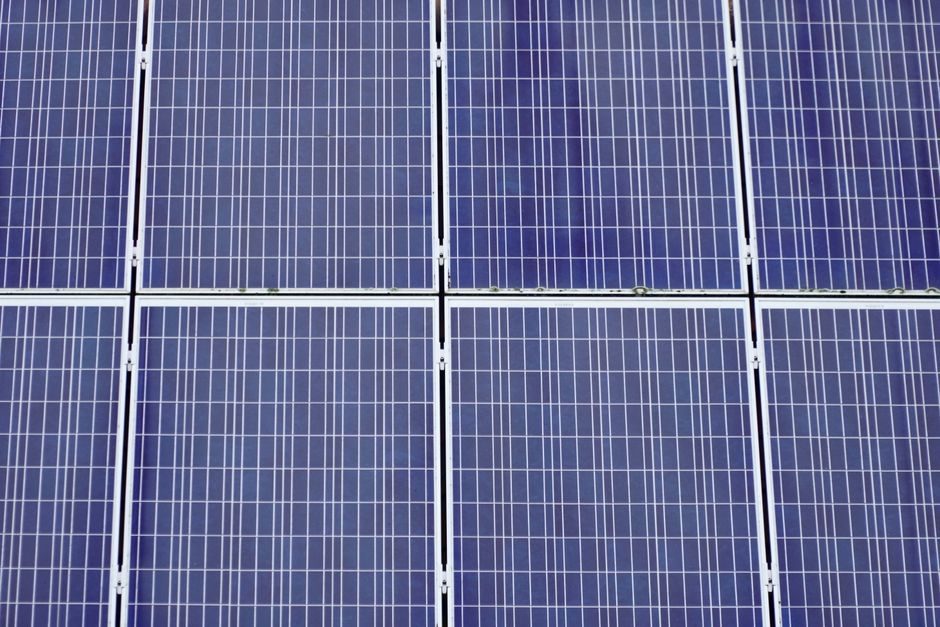
Silicon wafer production remains the single largest contributor to crystalline-silicon PV module manufacturing cost, driven by high-temperature crystallization and energy-intensive sawing/lapping steps [S2].
The cell-to-module sequence — diffusion furnace, anti-reflective coating (ARC), metallization fast-firing, and aluminium-frame encapsulation — adds a second cost block on top of the wafer, with ARC deposition and firing-zone temperature control the most electricity-sensitive steps [S1].
Stage 1 — Ingot and Wafer: The Dominant Cost Block
Multicrystalline silicon ingots are produced by directional solidification in large crucibles, then sawn into bricks and sliced into ~180 µm wafers with ID saws; lapping removes the saw-damaged surface layer before cell processing [S1]. One of the largest contributions to overall module manufacturing cost still comes from silicon wafer production, involving complex processing and intensive energy consumption due to the high temperature requirement for silicon crystallization [S2].
An electrodeposition route demonstrated in Nature Communications produced high-purity solar-grade silicon films directly from SiO2 in molten salt in a single step, achieving 3.1% power conversion efficiency and 40-50% of commercial silicon wafer photocurrent density at materially lower capital and energy cost [S2]. Polysilicon upstream of this stack remains the binding feedstock constraint, as tracked in the Polysilicon 2026 supply calendar.
Stage 2 — Diffusion Furnace and Fast-Firing Furnace: Heat-Control as a Hidden Cost Driver
Thermal processing furnaces — diffusion furnaces for doping/oxidation/CVD at sub-micron line widths, and fast-firing furnaces for sintering screen-printed metal contacts — are the second-largest electricity sink in a c-Si line; both rely on solid-state relays for closed-loop heating control and phase-angle or burst-mode power modulation [S1]. Short-wave infrared elements in the firing zone reach peak temperatures above 800 °C, and a regeneration step is applied after first light exposure to undo light-induced degradation (LID) on mono-crystalline cells [S1].
Phase-angle controllers (SG4 type) trim power finely during ramp-up, while burst-mode SSRs (SO3 type) hold the soak profile — the choice between them is a real OPEX decision because firing-zone mis-control scrapes cells at the watt-class level [S1]. Furnace-zone power electronics sit downstream of facility-level monitoring, where PLCs typically sequence diffusion recipes, a control layer compared in the PLC selection reference.
Stage 3 — Anti-Reflective Coating and Metallization

Bare polished silicon reflects more than 30% of incident light; surface texturing plus an anti-reflective coating (typically SiNx deposited by PECVD) reduces this loss and is a non-negotiable cost item in any c-Si line [S1]. SSRs regulate ARC-deposition heater zones, and single-phase okpac / three-phase sightpac units are the standard pick for these PECVD and curing stations [S1].
Screen-printed silver paste front contacts and aluminium back-surface field are then co-fired in the fast-firing furnace; silver consumption per wafer is itself a material-cost driver tracked separately from furnace energy. Cells that pass EL test are sorted by power class before lamination, with binning tolerance — typically ±2-3% — set by module-tier contracts rather than cell-maker preference. The choice between in-house metallization and toll-coating is part of the OEM vs ODM spec-and-IP trade-off most new entrants face.
Stage 4 — Encapsulation, Framing, and Module Finishing
After cell sort, modules are laminated with EVA/POE encapsulant between a tempered glass front sheet and a backsheet, then framed in anodized aluminium and fitted with a junction box; finishing adds 8-12% to total module cost depending on frame size and glass thickness [S1].
BIPV variants — building-integrated modules where the PV laminate replaces the curtain-wall or skylight — push framing and encapsulation cost higher but can undercut high-end conventional facades on a whole-envelope basis, as realized in the Fairfield, CA thin-film plant, the first large-scale thin-film PV factory and first US BIPV commercial project [S3]. Architects specified PV as the building skin itself, not a rooftop add-on, which is why thin-film glass-on-glass laminates dominate this niche versus c-Si framed modules [S3].
Cost-Driver Comparison Across the Four Stages
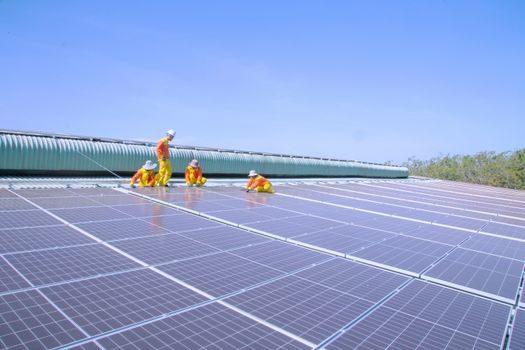
The four manufacturing stages compare sharply on the cost dimensions buyers actually negotiate: silicon-material share, electricity intensity, equipment capex, and consumable drag. [S1]
Ingot/wafer leads on silicon-material share and is the dominant capex block, but its electricity intensity is concentrated in one furnace; diffusion + fast-firing spread electricity across multiple zones and is sensitive to control-loop SSR quality [S1][S2]. ARC/metallization is consumable-heavy (SiNx target wear, silver paste, aluminium paste) and is the smallest single capex block but a steady OPEX line; encapsulation/framing is labour-and-glass-driven, with BIPV variants shifting the balance further toward specialty glass [S3].
Because furnace control quality sets cell-yield — not just cell-efficiency — a line that under-specs SSRs and phase-angle controllers pays for it in higher rework and LID-related bin-downgrades, a hidden TCO item rarely surfaced in CAPEX quotes. Process gases and silver-paste pricing are tracked on a separate, more volatile index, so buyers should negotiate furnace-zone electronics on functional spec, not on nameplate price alone.
Total Cost of Ownership Beyond the Module
Module cost is the visible line, but the plant-level TCO includes the solid-state relay fleet (furnace zones, ARC heaters, fast-firing), the gas-handling subsystem, and the production-yield curve. Furnace-zone SSR failure stops a diffusion or firing line within hours and is the single most expensive unplanned downtime in a c-Si fab, which is why diagnostic-output SSRs (SOD range) are specified on new European and US lines rather than basic zero-cross types [S1].
Energy and consumables together exceed equipment depreciation across a 10-year module line, so electrification and silver-recovery retrofits usually beat greenfield expansion on $/W added. Tracking this against the Polysilicon 2026 pull is the right next step for any procurement team sizing 2026-2028 capacity.
For the relevant spec sheets and selection criteria, see additive manufacturing material, and pressure transmitter.