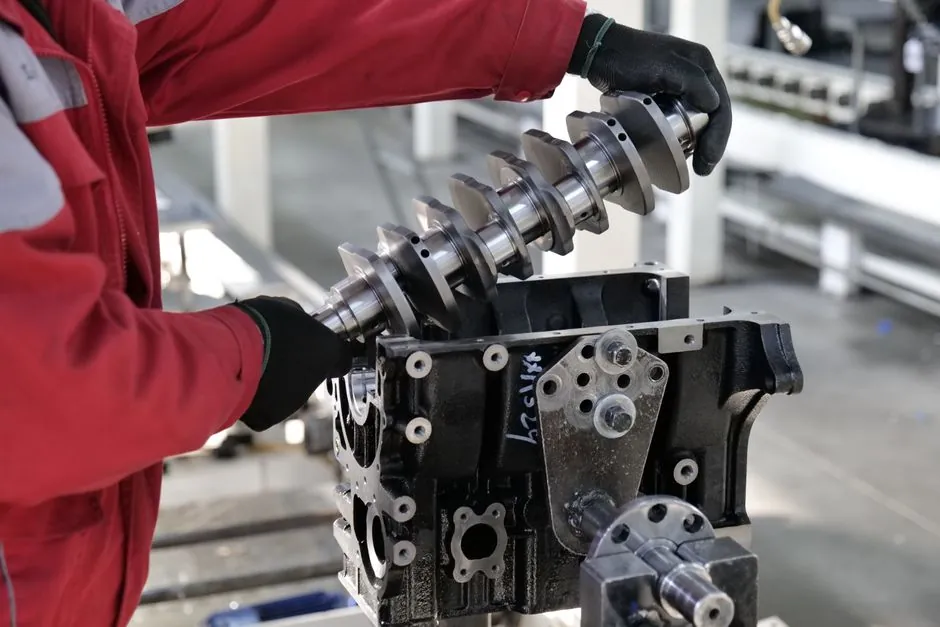
For rail axle, wheel hub, bogie frame, and spring cleaning, the hanger-type (overhead monorail) shot blasting machine is the dominant equipment class, with chamber rotation diameters of 1,000–4,000 mm, hook heights of 1,200–5,000 mm, blast wheel counts of 2–15, and per-hook load capacity up to 50,000 kg [S2].
Cycle times on these machines typically run 5–7 minutes per load, and the abrasive media window is 0.1–1.5 mm diameter, which covers steel cut wire, cast shot, and conditioned steel grit used in rail descaling and peening [S2].
Why Hanger-Type Fits Rail Workpieces
Rail components are awkward: axles are long, springs are slender, bogie frames are welded fabrications, and wheel hubs have bearing seats that cannot tolerate impact damage. Hanger machines with rotating hooks expose every face of these parts to the blast stream without fixturing, which is why foundries, forging shops, and rail-wagon builders converge on this category [S2].
For smaller mining-style components (cast steel and cast iron parts under 10,000 kg), the Q38 series overhead rail pattern is the common reference, with a 5.07–18.6 r/min hook rotation speed, blast-wheel tip velocity of 78 m/s, and a combined abrasive projection rate of 660 kg/min from three wheels [S1]. The same source documents 100% shot coverage at the rated throughput, which is the figure to demand in writing from any supplier [S1].
For typical rail axle and bogie-frame duty, expect 2–4 blast wheels per chamber, elevator capacity of 24–75 t/h matched to the blast wheel feed, and ventilation volume scaled from 5,000 m³/h on a 500 kg hook up to 16,000 m³/h on a 10,000 kg hook [S1].
Selection Criteria: What to Put in the RFQ
Chamber opening is the number buyers compare first, and it is also the number that hides every other problem. A 3,000 mm chamber opening means nothing if the separator, dust collector, and blast wheel count are undersized for the surface grade and hourly throughput you actually need [S4]. A practical rail RFQ should pin down at least 12 items in writing, including initial rust grade (A, B, C, or D per ISO 8501-1), target finish (Sa 2.5 vs Sa 3), hourly throughput in kg/h or pieces/h, abrasive type and mesh size, and the PLC fault-code remote-diagnostics capability [S4][S6].
The non-negotiable technical envelope for any rail-class hanger machine, drawn from manufacturer documentation: blast-wheel tip velocity 70–80 m/s, separator separation efficiency ≥99%, dust collector filtration efficiency ≥99.5%, and stack emission ≤10 mg/m³ to meet national environmental standards [S1][S2]. For peening-grade work (leaf springs, coil springs, axle journals), the same machine type can be reconfigured, but media hardness, coverage, and Almen intensity must be specified separately from cleaning work [S2].
Operator dependence is the most common quality risk on manual rooms; if a rail shop is running more than two shifts, automated hook rotation, programmable blast time, and interlocked chamber doors are the cheapest insurance available [S6].
Machine Categories Compared for Rail Duty
For rail-component procurement, the three categories that actually compete are hanger-type, tumblast, and roller-conveyor. Each fits a different part geometry, and the wrong one creates bottlenecks that no amount of blast-wheel power will fix [S3][S4].
Hanger-type (overhead monorail): best for long, slender, fragile, or irregular parts (axles, springs, bogie frames, welded fabrications). Cycle 5–7 min, load up to 50,000 kg, 2–15 wheels, rotation 1,000–4,000 mm diameter [S2]. Tumblast: best for small batch castings and forgings that can tumble together, not for long axles. Roller-conveyor: best for steel plate, pipe, and structural sections, not for individual rail components [S3][S4]. For rail shops that also do wheel-hub and brake-disc cleaning, a swing-table or rotary-indexing cell is often added as a second station rather than forcing a single machine to do everything.
For wagon bodies and large fabrications, dedicated blast rooms with manual or robotic nozzles are still common; these trade higher labor input for flexibility on one-off shapes, and are operator-consistency dependent unless automated [S6].
Real Use Cases on Rail Parts
Hanger machines are the workhorse for descaling forged and cast rail parts: axles, wheel hubs, brake discs, brake drums, coil and leaf springs, and bogie frames all pass through a rotating-hook blast cycle, typically 5–7 minutes per load, with multiple wheels covering all surfaces [S2]. The same setup, run with cut-wire shot and controlled Almen intensity, is used for shot peening of coil springs and leaf springs to extend fatigue life [S2].
For railway wagon bodies and large structural weldments, blast rooms remain the standard: wagons are moved in, nozzles are aimed at the structure, and coverage is verified by visual comparison against reference panels. The trade-off is throughput and operator dependence, so shops running multi-shift production typically migrate to hanger or rotary-table cells as volume grows [S6].
A related process cell in many rail foundries is the core machine line, which feeds the cleaned castings that the shot blaster then finishes; pairing the two spec gates at the RFQ stage avoids a mismatch between casting output and cleaning capacity. For shops that already run agricultural-machinery cleaning, the same hanger-pattern selection logic applies, as documented in this shot blasting machine selection guide for agricultural machinery parts.
Limits, Failure Modes, and What to Reject
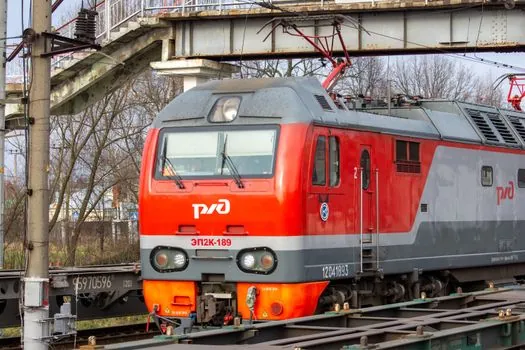
The fastest-wearing parts on any rail-class shot blaster are the blast wheel components (blades, control cage, impeller, liner), so the supplier's spare-parts lead time and the blade material grade (typically high-chrome cast iron, Cr content ≥26%) belong on the RFQ, not on a follow-up call [S1][S4].
Specifying only chamber opening, and not the separator, dust collector, blast-wheel count, or initial-rust-grade compatibility, is the most common cause of a "right dimensions, wrong throughput" purchase, the failure pattern a senior Chinese foundry-equipment OEM describes in its engineering-floor guide [S4]. Cheaper quotes win on opening size, then underperform on Sa grade, throughput, and dust emissions, leading to warranty disputes six to twelve months after delivery [S4].
Compliance with ISO 8501-1 surface-grade language and with national or regional environmental standards on stack emission (≤10 mg/m³ is the documented reference) must be in writing; verbal assurance from a sales engineer is not a contractual finish grade [S1][S6].
Sourcing Signals Worth Tracking
Two signals are worth watching through the rest of 2026: first, the publication status of GB/T 43325-2023 and the JB/T 9984 series, which govern shot blasting machine design and verification in China and are commonly referenced in OEM documentation [S4]. Second, the rollout of PLC-level remote diagnostics on new builds, which has been available from at least one Qingdao-based manufacturer since 2019 and is now a baseline expectation for multi-site rail buyers [S4].
For procurement teams comparing a shot blasting machine quote against a sand blasting machine quote for the same rail-cleaning cell, the rule is simple: specify the surface grade and the production rate first, then pick the equipment family; reversing that order is how 3,000 mm chamber openings end up delivering Sa 2 instead of the contracted Sa 2.5 [S4].