Energy-equipment fabricators cleaning fabricated weldments such as wind-turbine towers, H-beam boiler frames, transformer housings and boiler headers are most often matched to through-type or roller-conveyor shot blasting machines rated at roughly 10-15 tons/hour of shot peening capacity, with wheel tip velocity of 80-100 m/s, the operating window that strips mill scale and weld oxide ahead of painting without distorting thin-wall sections [S1].
Wheel power on the multi-wheel roller-conveyor lines used in this segment typically sits at 15-30 kW per wheel with 2-8 wheels per chamber, and abrasive flow per wheel commonly lands between 100 and 250 kg/min, so the spec is set by part envelope and cleanliness target, not by the headline chamber width [S6][S8].
Matching Machine Architecture to Energy-Equipment Workpiece Geometry
Roller-conveyor through-type machines with high-speed turbines (2,900-3,200 RPM) and direct-drive motors sized 15-30 kW per wheel are the default for long, flat welded members such as boiler casings, wind-tower cans and transformer tank panels, because the conveyor sets a fixed residence time and the abrasive gets recycled via horizontal screw conveyors under the chamber [S8].
For heavy sub-assemblies that cannot be tumbled or conveyed, such as large weldments, gearbox housings and stator frames, hook (hanger) shot blasting machines are specified; the part rotates in the air so the blast reaches blind spots, and the chamber is sized to the largest rotating envelope rather than to floor area [S4]. For small bulk parts in the auxiliary chain (fasteners, springs, small forgings used inside turbines and switchgear), a tumblast machine is the lower-cost route because the rubber or steel slat belt carries the batch and the abrasive gets the same face multiple times in a single cycle [S2][S9]. Readers comparing broader process options can cross-check the wider taxonomy on the shot blasting machine reference page.
Selection Criteria: Capacity, Velocity, Media, Dust
For a tumblast machine, the rated load (defined by both volume and weight) and the cleaning time per cycle together set throughput, so the sizing equation must be worked back from part weight and daily output rather than from the abrasive throughput figure alone [S2]. On multi-wheel roller-conveyor lines, the binding constraints are wheel count (2-8), per-wheel power (7.5-22 kW) and abrasive flow (100-250 kg/min per wheel), and the cycle time converts abrasive throughput into parts per hour that must hit the cleanliness target [S6][S7].
Wheel tip velocity is a tuned compromise: 60-90 m/s is the common band, and pushing toward 100 m/s cleans faster but accelerates wheel and media wear, so high-velocity settings are reserved for heavy mill-scale removal on thick sections, not for thin-wall boiler tubing [S1][S7]. Media hardness is matched to substrate: cast steel shot at HRC 40-50 is the default for structural carbon steel used in energy equipment, and projection angle is adjustable from roughly 30 to 90 degrees to maintain coverage on complex weldments [S1].
Comparative Map: Tumblast vs Hook vs Roller-Conveyor vs Turntable
Four architectures cover essentially all energy-equipment pre-paint surface prep, and the decision pivots on workpiece geometry, batch vs flow, and tolerance for part-on-part impact. A tumblast machine suits loose small parts in the 5-40 kg per piece range, with high throughput and the lowest cost per piece, but it cannot run long welded assemblies [S2][S9].
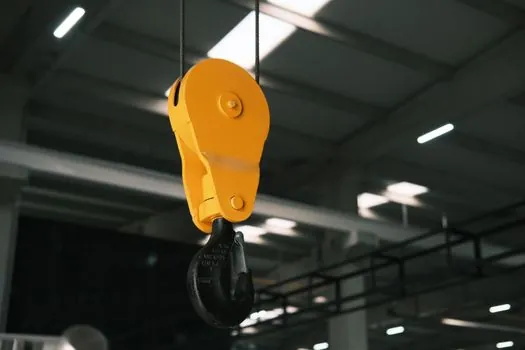
A hook (hanger) machine handles heavy, fragile or complex parts up to several tons that must not touch each other, at the price of lower parts-per-hour; a roller-conveyor through-type line runs long flat work continuously at 10-30 pieces per minute, with the highest capital cost but the lowest unit cost at scale [S1][S8]. A turntable machine is the niche choice for short, flat, heavy plates that need stable coverage on one face, and it is rarely the right tool for full perimeter weldments [S5]. Sand-blasting cabinets remain the alternative for very small batch or on-site NDT prep, and the wider process contrast is laid out on the sand blasting machine reference.
Common Selection Mistakes in Energy-Equipment Procurement
The most expensive error is matching only the chamber opening and missing the rest of the spec: a 3,000 mm opening that promises a 3 m wide workpiece but undersized blast wheels, separator and dust collector will deliver Sa 2 against a contracted Sa 2.5, with throughput at half the rated figure [S3]. A close second is buying on sticker price: industry experience documents cases where a low-bid cabin perforated within 6 months, and lifecycle cost ran roughly 40% higher than a higher-bid machine with manganese steel liners [S4].
Underrated running costs compound the problem: abrasive recovery efficiency and dust collector sizing directly drive ongoing spend, and emission compliance in many energy-equipment plants is now constrained enough that the dust collector, not the blast wheel, is the gating item [S2]. Buyers who skip the 12-question RFQ checklist end up with mismatched initial rust grade assumptions, wrong separator efficiency, and undersized fans [S3].
Standards, Documentation and Supplier Credibility Signals
For Chinese-supplied machines, the governing product standards include JB/T 9984-2021 for shot blasting equipment and GB/T 43325-2023, both of which the major engineering-led manufacturers contributed to and can reference by number in the technical file [S3]. Energy-equipment end users in oil and gas, wind and grid also demand traceability of weld prep, and pre-paint surface cleanliness is normally specified to ISO 8501-1 visual grades (Sa 2, Sa 2.5, Sa 3) tied to subsequent coating systems, which is the reason a 100 m/s-class wheel and a properly sized dust collector are non-negotiable rather than optional [S1][S3].
Four credibility signals separate an engineering-led manufacturer from a trading company: verifiable standards contribution, a remote diagnostics platform that pushes proactive maintenance and reads PLC fault codes in real time, published project references of similar workpiece geometry, and an in-house abrasive recovery and dust-collector package sized to the wheel array [S3]. For a complementary view on a related high-spec segment, the aerospace shot blasting machine selection guide walks the same checklist against tighter surface and metallurgical limits, and the agricultural-machinery parts selection guide covers the small-batch tumblast end of the same family.
What an Energy-Equipment Buyer Should Lock In Before RFQ
Before sending the RFQ, the buyer should lock five numbers: the largest single-piece envelope (length, width, height, weight), the target surface cleanliness grade against ISO 8501-1, the required pieces per shift, the abrasive type and hardness, and the maximum allowable emission point at the dust collector outlet, because every other line on the supplier quote cascades from these [S1][S3][S6].
The supplier response should then be compared on the same footing: wheel count, per-wheel kW, abrasive flow per wheel, tip velocity, separator efficiency, manganese liner spec, dust collector airflow, and PLC telemetry scope, not on chamber width alone [S3][S4]. For adjacent selection problems in the same industrial buying cycle, the fire alarm control panel spec map for chemical plants and the electric actuator types and classifications spec map follow the same first-principles RFQ discipline.
Detailed specification references: energy management.