
Telecom-enclosure castings (junction boxes, distribution frames, antenna radome bosses, 19-inch rack mount housings) fall into the small-to-mid thin-wall category, where a hook-type or small crawler shot blasting machine with 7.5-30 kW blast wheels, 60-90 m/s wheel velocity, and 380V/415V three-phase supply is the working answer for 2026 procurement [S1][S5].
These enclosures typically weigh 5-50 kg per piece, have wall sections of 3-8 mm, and demand a controlled surface profile before powder coating or wet-paint lines, so the wrong machine class (a heavy roller conveyor or a large tumble-belt) either damages the thin walls or simply cannot index them through a clean cycle [S1][S9]. The detailed shot blasting machine selection guide frames the five common machine types against the surface-prep standards (ISO 8501-1, ISO 8503, SSPC/AMPP) that govern the coating-adhesion target for outdoor telecom hardware [S5].
Why a Hook or Small Crawler Beats a Roller Conveyor for Enclosure Work
Hook-type and small crawler machines keep thin-wall enclosures fixed or gently tumbled during blasting, which avoids the impact damage that a high-throughput roller conveyor would inflict on 3-8 mm wall castings, per the Puhua selection reference [S1].
A roller conveyor shot blasting machine typically runs 2,900-3,200 RPM blast turbines at 15-30 kW per wheel and is sized for plate, H-beam, I-beam, channel, and pipe work, not 5-50 kg thin-wall castings with paint-ready surface targets [S8]. For telecom-enclosure work, a hook machine with one 11-15 kW blast wheel, 0.6-1.2 m hook rotation, and an abrasive flow of 80-200 kg/min covers the typical 200-500 pieces-per-shift envelope without the conveyor-line capex [S1][S5]. The shot blasting machine for electronics housings spec map uses the same hook/crawler call for adjacent thin-wall castings in the 5-50 kg band, which is the closest peer application to telecom enclosures.
Blast Wheel Power, Velocity and Abrasive Flow for Enclosure Surface Targets
For telecom-enclosure surface prep, 11-15 kW blast wheels running at 60-80 m/s wheel velocity with 80-200 kg/min abrasive flow hit the Sa 2.5 to Sa 3 cleanliness band and the 50-100 micrometer anchor profile range that powder-coat and wet-paint lines expect, per the SourceBySpec spec encyclopedia [S5].
Wheel velocity is the tuned compromise, not a maximised number: 60-90 m/s is the realistic operating band, where the lower end suits thin-wall aluminum or zinc-coated enclosures and the upper end strips heavier steel or ductile-iron parts without inducing distortion [S5]. For an enclosure line running 19-inch rack housings at 200-500 pieces per shift, a single 11 kW direct-drive wheel paired with a 200 kg/min shot flow (the Quanzhou Yueli ST650 Pro Max crawler spec) is a representative floor, while a 15 kW wheel is the ceiling before the abrasive fracture rate starts to dominate media cost [S3]. The 7.5 kW Quanzhou Yueli crawler machine at 1800x1850x2850 mm with Mn13 or wear-resistant cast iron guard plates shows where the small-machine envelope starts: 260 kg workpiece capacity, 30 t/h elevator, 13 kW total power, and a 5-8 kg/cm² air supply for the separator [S3].
Standards, Surface Targets and Abrasive Media Choices
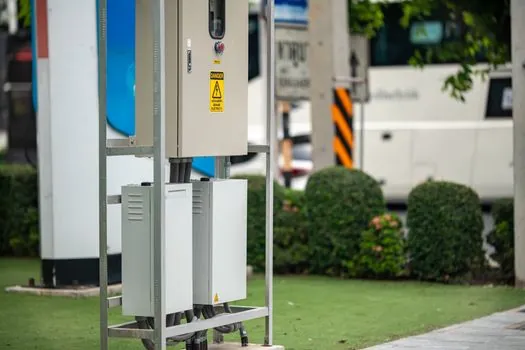
Telecom-enclosure surface prep is governed by ISO 8501-1 for visual cleanliness (typically Sa 2.5 to Sa 3 for outdoor powder-coated cabinets) and ISO 8503 for the anchor profile grade, with SAE J444 and SAE J827 setting the cast steel shot and cut wire size envelopes used to reach those targets [S5].
For enclosure work the common abrasive choice is S230/S280 cast steel shot at 0.4-0.6 mm nominal diameter, which lands inside the 60-80 m/s wheel velocity band and produces a dimpled, peened profile rather than the sharp anchor pattern that angular grit would cut, matching the coating-adhesion spec for the Sa 2.5/Sa 3 visual band [S5]. Stainless or zinc-aluminum enclosures sometimes shift to glass bead or aluminum oxide for non-contaminating cleaning, but the wheel power and flow-rate envelope stays the same [S4][S5]. The general sand blasting machine reference covers the air-blast variant that some enclosure lines still use for small-batch or rework cells, typically at 6-8 bar nozzle pressure.
Power, Dust Collection and Footprint Constraints on Telecom Lines
A 2026 enclosure-spec shot blasting cell draws 13-30 kW total on 380V/415V three-phase four-wire, sits inside a 1.8-3.5 m length by 1.8-2.5 m width footprint, and ships with a pulse-jet filter dust collector sized at 2,000-4,000 m³/h, per the Quanzhou Yueli small-machine datasheet and Indian OEM equivalents [S3][S7].
Noise levels stay below 85 dB(A) on the Indian reference machines, the operating envelope is ambient to 45 °C, and the PLC-with-HMI control is the default on 2026 builds, with a touch panel as the budget option [S7]. For a foundry that already runs a shell core shooter for the same enclosure castings, a 700x500 mm to 900x700 mm platen-class core machine at 12-20 kg per shot pairs naturally with a 7.5-15 kW blast wheel on the cleaning side, keeping the electrical infrastructure on a 20-30 kW platen-plus-blast circuit [S2]. The shot blasting machine selection for pump and valve castings article covers the heavier 30-100 kg peer class with the same wheel-power math scaled up one notch.
Who This Spec Is For, and Who It Is Not For
Hook-type and small crawler machines at 7.5-15 kW per blast wheel are built for telecom-enclosure foundries running 200-1,000 pieces per shift on parts under 50 kg with thin walls under 8 mm and powder-coat or wet-paint downstream lines [S1][S5].
They are not the right tool for steel structure shops running 6-12 m H-beams at 1,200+ kg/min, not the right tool for high-mix small-engine foundries where a tumble-belt crawler handles 500 kg batches of loose castings, and not the right tool for shot peening of leaf springs or gears where controlled Almen intensity replaces raw cleaning throughput [S1][S5]. Plants in that outside envelope should look at the 15-30 kW-per-wheel roller conveyor or the dedicated shot peening machines described in the same selection guide [S1]. For adjacent thin-wall work, the choosing a shot blasting machine for agricultural machinery parts reference shows the same hook/crawler call for parts in a similar weight and wall-thickness band.
Selection Decision Matrix for the 2026 Enclosure Cell
Four decision criteria pick the machine in one pass: part weight under 50 kg points to a hook or small crawler; wall thickness under 8 mm points to 60-80 m/s wheel velocity rather than the 80-90 m/s aggressive-cleaning band; Sa 2.5 to Sa 3 cleanliness with 50-100 micrometer profile points to S230/S280 cast steel shot; and a 200-500 pieces-per-shift throughput target points to 11-15 kW blast wheels at 80-200 kg/min flow [S1][S3][S5].
Compared against the four main options on these criteria: a small crawler at 7.5 kW (260 kg batch, 200 kg/min flow, 30 t/h elevator) suits the lowest-volume 100-200 piece-per-shift cells; a hook machine at 11-15 kW covers the 200-500 piece-per-shift mid-band with better single-piece handling; a roller conveyor at 15-30 kW per wheel over-specs both the wall-thickness and the throughput; and air-blast cabinets handle the small-batch or rework cell but trade energy efficiency per kilogram of throughput for flexibility [S1][S3][S5][S8]. The shot blasting machine selection guide reference lays the same criteria against the full five-machine taxonomy for cross-checking [S5].
Sourcing Signals and Standards Discipline
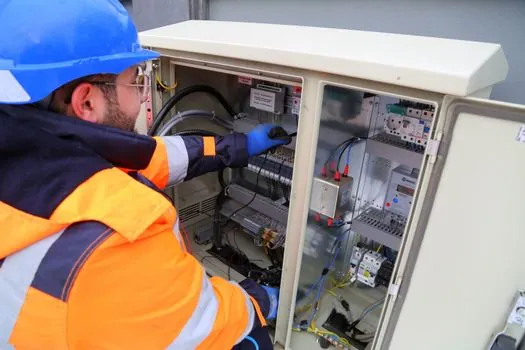
For a 2026 enclosure cell, request ISO 8501-1 cleanliness certification on a sample batch, SAE J444/J827 shot size traceability, a dust-collector air-volume figure, and a measured noise figure at the operator station [S5][S7].
Track the next 6-12 months for: any revision to the SSPC/AMPP surface-preparation grades referenced through ISO 8501-1, the rollout of variable-frequency drive (VFD) blast-wheel control as standard on mid-range 11-15 kW Chinese OEM units, and the wider adoption of pulse-jet filter cartridges sized at 320x900 mm or larger on small-crawler machines, per the Quanzhou Yueli ST650 Pro Max datasheet [S3].
For the relevant spec sheets and selection criteria, see shot sleeve.