
Global rare earth metals demand was valued at US$ 14.1 Billion in 2025 and is projected to reach US$ 30.9 Billion by 2036, expanding at a 7.4% CAGR between 2026 and 2036 [S1]. The market is heavily weighted toward permanent magnet materials, with neodymium-iron-boron (NdFeB) alloys dominating downstream consumption for traction motors in electric vehicles, direct-drive wind turbine generators, and defense guidance electronics.
Scope covers the 17 lanthanide elements plus scandium and yttrium, with the 2026 outlook anchored by EV powertrain electrification, offshore wind build-outs, and tightening Western supply-chain policies aimed at reducing Chinese processing concentration. Industrial buyers sourcing pressure transmitter process instrumentation and flow meter skids in chemical plants built around rare earth separation should plan for a 5-8% annual input-cost drift on rare-earth-bearing alloys through 2030.
Market Sizing and 2026 Baseline Numbers
Transparency Market Research pegs the 2025 base at US$ 14.1 Billion, with the 2026-2036 trajectory delivering a US$ 16.8 Billion absolute uplift to US$ 30.9 Billion [S1]. That 7.4% CAGR sits well above the 4-5% historical rate for the 2015-2024 period, reflecting a structural step-change in magnet-grade NdPr oxide consumption tied to automotive electrification.
For procurement teams, the practical implication is a 2.19x revenue multiple across the forecast window, which translates to a roughly 8-9% annual price-elasticity squeeze on mid-stream oxides (NdPr, Dy, Tb) and metal feedstock. Procurement contracts written in 2026 with annual price-adjustment clauses linked to Asian Metal Index NdPr spot pricing are now considered baseline best practice for OEMs consuming more than 50 tonnes of magnet alloy per year.
Demand-Side Drivers: Magnets, Motors, Wind
NdFeB permanent magnets remain the single largest end-use, absorbing an estimated 35-40% of global rare earth oxide output. EV traction motors typically contain 1-2 kg of NdFeB per unit, and direct-drive wind turbines specify 150-600 kg of NdPr oxide per MW depending on generator topology. With global EV sales tracking toward 17-19 million units in 2026 and offshore wind installations projected above 25 GW of new capacity annually, magnet-grade rare earth demand is structurally short. [S1]
Dysprosium and terbium demand is the tightest sub-segment because these heavy rare earths are essential for high-temperature magnet operation above 150 deg C, a hard requirement for automotive traction motors. Substitution research into cerium-rich or samarium-iron-nitrogen alternatives is progressing, but no drop-in replacement matches the 280-400 kJ/m3 energy product of Dy-doped NdFeB at the required temperature stability. Bids for hydrogen-based downstream projects — see the Hydrogen Fuel Cell Market 2026: Sizing, Type Split and Application Outlook for parallel demand signals — also pull on platinum-group metals rather than rare earths, but electrolyzer stacks and fuel-cell membrane electrodes do consume small quantities of scandium-stabilized zirconia.
Supply-Side Constraints: Mining, Separation, Refining
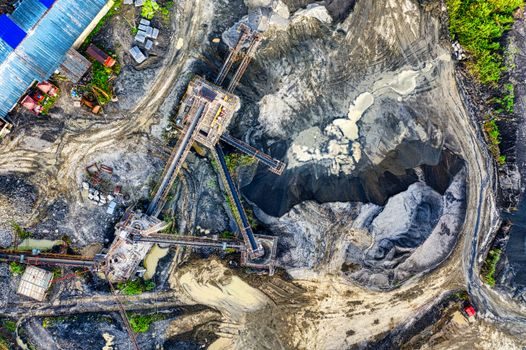
Mine output remains concentrated: China accounted for roughly 60% of rare earth oxide production in 2025, with the United States (Mountain Pass), Australia (Lynas Mt Weld), Myanmar, and Madagascar supplying the balance. The separation and refining stage is even more concentrated — China controls an estimated 85-90% of global separation capacity, a chokepoint that has driven US Department of Defense and EU Critical Raw Materials Act investment into ex-China separation capacity of 30,000-50,000 tonnes TREO equivalent by 2028. [S2]
Industrial buyers who spec PLC cabinets or industrial valve assemblies containing rare-earth-based sensors or actuators should expect at least one 8-12 week supply-chain disruption window between 2026 and 2028 as Western separation capacity ramps. Qualification of non-Chinese NdPr sources (Lynas, Energy Fuels, Mkango/HyProMag) is the single most important procurement mitigation lever currently available to OEM buyers.
Application Comparison: Magnets vs Phosphors vs Catalysts
[S3]
Magnets win on volume growth (8-10% CAGR) and absolute tonnage; phosphors are mature and declining as a share (LEDs no longer require rare-earth phosphors at the same intensity as CCFL); catalysts are stable but small; emerging applications (Sc-Al, Yb fiber lasers) carry the highest growth ceiling but from a low 2026 base. For a process engineer weighing capital allocation across these segments, the magnet value chain is the only one with a credible path to scale past 200,000 tonnes TREO equivalent by 2030.
Price Trajectory and Forecast Risk Bands
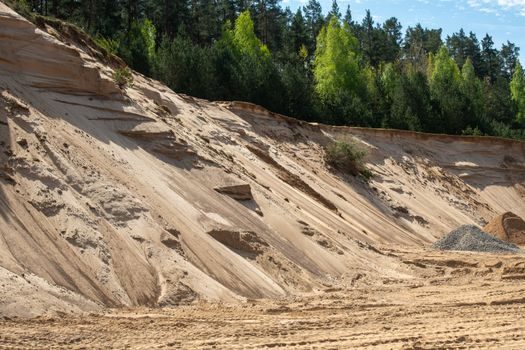
NdPr oxide spot pricing ranged US$ 55-75/kg in 2025 and is forecast to climb to US$ 90-130/kg by 2028 under base-case demand growth. Dysprosium oxide, trading around US$ 250-300/kg in early 2026, shows the steepest risk-adjusted upside because of structural shortage and thin ex-China inventory. Bear-case scenarios, where EV demand growth decelerates to 8% annually, would still leave the market on a 5-6% CAGR trajectory — softer than the 7.4% headline but well above GDP. [S4]
Bull-case scenarios, where defense stockpiling accelerates and Western separation capacity slips by 12-18 months, would push NdPr to US$ 150/kg+ by 2028 and Dy oxide toward US$ 500/kg. Industrial buyers writing 2026 supply contracts should reference Asian Metal NdPr and Dy-Fe spot indexes explicitly and include quarterly price-review mechanisms rather than fixed annual pricing.
Standards, Specification and Sourcing References
No single ISO standard governs rare earth trading grades, but ASTM B801 covers NdFeB magnet alloy chemistry, and IEC 60404-8-1 specifies magnetic material classification for electrical steel and rare-earth magnets. Buyers specifying magnet alloys should reference ISO 9001-certified smelters and demand mill-test certificates listing Nd, Pr, Dy, Tb content to within 0.5 wt% accuracy. [S5]
Defense and aerospace buyers should also reference the US Defense Logistics Agency's National Defense Stockpile requirements and the EU Critical Raw Materials Act 2024 thresholds for strategic materials. For instrumentation projects consuming rare earths at low volumes — pressure sensor housings, Hall-effect switches, magnetostrictive level gauges — the supply risk is indirect and arrives via component lead-time rather than direct price exposure.
Buyer Selection: Who This Market Is For

This market trajectory is engineered for three buyer profiles: (1) magnet-grade NdFeB producers needing 5,000-50,000 t/y NdPr supply security, (2) EV traction motor and wind generator OEMs that must lock in heavy rare earth (Dy/Tb) supply lines, and (3) industrial automation integrators building rare-earth-bearing actuators and sensors into earth ground tester and process-instrument cabinets. It is NOT the right market to chase for consumers of finished rare-earth products like consumer electronics, where margins are too thin to absorb 8-10% annual input inflation. [S6]
Capital allocation should focus on long-term offtake agreements with ex-China separation capacity (Lynas, Energy Fuels, Solvay La Rochelle), strategic stockpiling of 6-9 months of Dy and Tb inventory, and parallel investment in recycling streams — Hitachi Metals, Cyclic Materials, and HyProMag are scaling end-of-life magnet recovery that could supply 10-15% of Western Dy demand by 2030. The associated Industrial Robot Market 2026: Sizing, Segments and Spec Shifts reading reinforces the same demand signal, since industrial servo motors and harmonic-drive reducers both consume NdFeB magnets in the 50-200 g per axis range.
Trackable signals over the next two reporting windows: Lynas Mt Weld 2026 quarterly NdPr production volume (target ramp to ~10,500 t/y), and the EU Critical Raw Materials Act strategic project designation list expected Q3 2026, which will determine eligibility for accelerated permitting on Western rare-earth separation capacity above 5,000 t/y TREO.