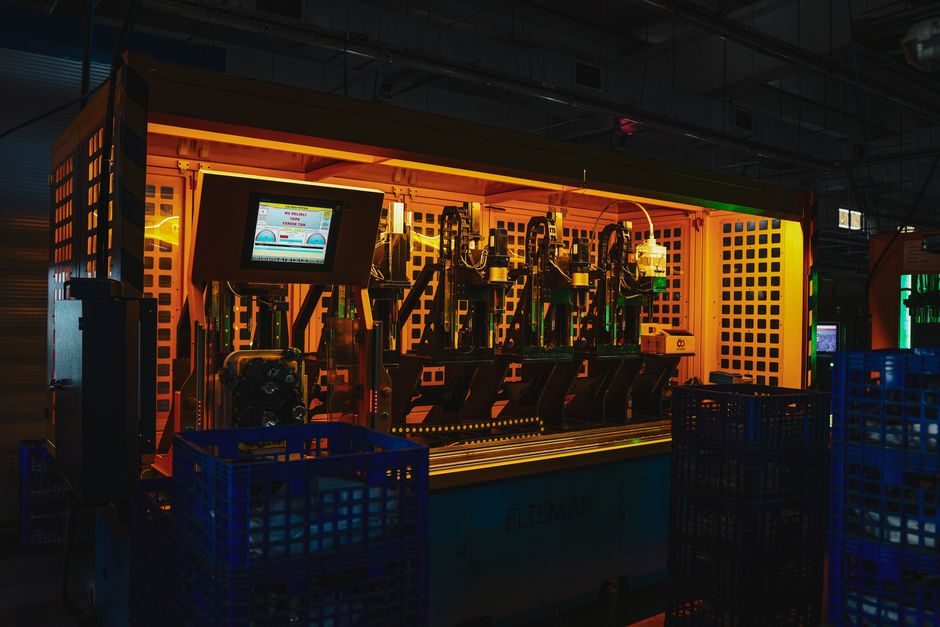
A rare-earth production line in 2026 is built around three linked unit operations — concentrate digestion, solvent-extraction separation, and oxide/carbonate finishing — with green-chemistry single-pass column flowsheets now displacing classical multi-stage mixer-settler cascades [S3].
Process engineers sizing a new line must balance target purity (commercial NdPr oxide typically 99.5% min; separation-grade oxides commonly 99.9–99.999%), feedstock grade (mixed-concentrate feed usually 40–60% REO), reagent handling, and waste-water treatment capacity before locking equipment lists [S3][S6].
Where the Line Begins: Feedstock and Digestion
Bastnaesite and monazite concentrates remain the dominant feedstocks, with Chinese customs reporting 3,570.9 t of rare-earth product exports in September 2019 — a baseline that the current decade's separation capacity is being scaled to match [S6].
Digestion is typically acid bake (for monazite) or caustic crack (for bastnaesite), producing a mixed-REE chloride or nitrate solution at 50–150 g/L REO before the feed enters the separation train. RETi's published process, formed in 2021 to commercialize a non-HPLC separation route, dissolves mixed REEs into a mineral-acid-and-water-only solvent and feeds that liquor directly into proprietary extraction columns — explicitly avoiding the organic-phase toxicity burden of historic flowsheets [S3].
Separation Train: Single-Pass Column vs Mixer-Settler
RETi claims up to 99.999% REE separation in a single column pass using its proprietary column chemistry, with three-year-plus maintenance cycles and no toxic waste — a sharp contrast to the 50–80-stage mixer-setteller cascades typical of older Chinese separation bays [S3].
For a spec-driven comparison, the main separation routes line up as follows on four decision criteria: mixer-settler offers proven scale and low capex per cubic-meter throughput but generates large organic-phase inventories and wastewater; HPLC-based lab routes deliver high purity but are not economically scalable beyond kilogram batches; single-pass column extraction targets commercial-grade 99.9–99.999% purity with mineral-acid-only solvents and 3+ year maintenance intervals, with equipment sourced through partners such as YMC America [S3].
Engineers evaluating a greenfield line should also weigh column count, stage-equivalent height (HETS), and aqueous-to-organic ratio (typically 1:1 to 1:3 in modern designs) against the concentrate grade available from the upstream mine or recycling node. RETi explicitly states it is not currently licensing its process, which pushes most new commercial builds toward either licensed mixer-settler retrofits or in-house column development [S3].
Finishing, Purity Targets, and Oxide/Carbonate Output
Separated REE streams finish as either oxides (calcined from oxalate or carbonate precipitates) or carbonates (direct precipitation for downstream metallurgy), with downstream buyers — including NdFeB magnet makers and phosphor producers — typically requiring 99.5% min NdPr oxide or 99.9% min for separation-grade oxides.
RETi positions its line at up to 99.999% REE purity output, a level that supports optical, electronic, and battery-grade applications where dysprosium and terbium trace impurities must sit below 10 ppm [S3]. Equipment-side guidance for finishing includes plate-and-frame filter presses for precipitate dewatering, rotary or spray calciners operating at 800–1000 °C for oxide conversion, and jet-mill or air-classifier circuits for sub-10 µm particle cuts required by sintered-magnet feed.
Reagent, Effluent, and Environmental Footprint
Legacy solvent-extraction lines carry multi-thousand-cubic-meter organic inventories (D2EHPA, PC88A, Cyanex 272) with associated fire-load and wastewater stripping costs; modern flowsheets are pushing toward mineral-acid-and-water-only systems to eliminate that inventory [S3].
For a 2026 build, effluent treatment typically includes staged precipitation (REE recovery), neutralization, and reverse osmosis polishing to meet local discharge limits on ammonia-nitrogen, total dissolved solids, and residual acid. The "no toxic waste" claim from RETi ties directly to this reagent choice — mineral acid and water are recoverable in closed loop, whereas organics require dedicated destruction [S3].
Equipment, Capex Bands, and Sourcing
Separation-column hardware is the single largest capex line, with RETi noting "highly competitive equipment and installation costs from YMC America" as a deliberate supply-chain signal for column and skid packages [S3]. Beyond the columns, the line pulls in agitated leach reactors (rubber- or glass-lined steel), filter presses, precipitation tanks, calciner kilns, and a dedicated water-treatment skid — a bill of materials that maps onto broader rare earth manufacturing equipment plant-level spec bands.
Upstream alloy and metal supply for plant construction is also worth flagging; the Loudi, Hunan-based alloy manufacturing node represents one of the established Chinese metallurgy clusters feeding both REE and adjacent non-ferrous lines [S5].
Who This Line Is For — and Who It Is Not
A new rare-earth production line is built FOR: (a) mid-tier miners and recyclers with mixed-concentrate feed seeking 99.5–99.999% separation-grade output, (b) magnet or phosphor manufacturers pursuing backward integration, and (c) national-security-funded projects requiring non-Chinese-dominant process IP [S3][S6].
It is NOT for: buyers needing only kilograms of research-grade REE (HPLC lab routes remain more cost-effective at that scale), operators without secure acid-recovery or wastewater-treatment infrastructure, and traders seeking off-the-shelf mixed-REE oxides without separation requirements. Procurement teams should also confirm the feedstock path — the phosphate rock supply chain 2026 grade bands overlap with monazite sourcing, and a copper cathode sourcing map can help benchmark metallurgical-grade water and reagent logistics.
Standards, Safety, and Trackable Signals
No single ISO or IEC standard governs REE separation lines; instead, builds reference generic pressure-vessel codes (ASME BPVC Section VIII for reactors and columns), ATEX/IEC 60079-series zone classification for solvent-handling areas, and local environmental discharge rules for acid and ammonia-bearing effluent. [S3]
Trackable signals for the next 12 months include any licensing announcements from RETi (currently not licensing), Chinese export-quota revisions following the 3,570.9 t September-2019 baseline [S6], and any new column-chemistry partnerships analogous to the YMC America equipment relationship RETi has disclosed [S3]. Procurement teams building a 2026 spec package should also benchmark alloy supply from established Chinese metallurgy nodes [S5] and confirm reagent-recovery skids before locking the bill of materials.
Spec-level background on the components involved: earth ground tester, molding line, and automatic molding line.