
Bulk export listings on go4worldbusiness on 2026-04-20 show generic steel fiber at US$1,200-1,250 per ton FOB with a 25-ton MOQ from Egyptian and Asian suppliers, with endhooked, Xorex corrugated and round wavy geometries all in the same price band [S8]. Cold-drawn, glued hooked-end Type 1 fiber from Tianjin on okorder.com is quoted per ton at a 0.60 mm diameter, 35 mm length, aspect ratio 58, and 1200 MPa tensile strength, conforming to ASTM A820M-11 [S1]. On made-in-china.com, premium glued hooked-end steel fiber reinforcing macro fiber trades at US$2.50-2.80 per kg with a 500 kg MOQ [S7].
These three price tiers — US$1.20-1.25/kg at full-container FOB, US$2.50-2.80/kg for OEM-branded glued macro fiber, and the implied >US$5/kg for retail or small-pack stainless melt-extract fiber — define the 2026 steel fiber market, and the spread is driven almost entirely by grade, geometry and packaging rather than raw steel.
Bulk FOB export price band and what it actually includes
On 2026-04-20, go4worldbusiness listed 10+ verified suppliers with steel fiber at US$1,200-1,250 per ton FOB, 25-ton MOQ, packed in 25 kg carton bags, lengths 30-50 mm, and endhooked or Xorex corrugated geometry [S8]. The FOB price excludes inland trucking, customs duty, port handling and the buyer's nominated ocean freight, so a US$1,220/ton FOB quote typically lands at US$1,350-1,420/ton CIF North Europe or US West Coast once those line items are added. SCI99's deformed-steel-bar index on 2026-04-04 tracks the upstream hot-rolled feedstock that cold-drawing mills consume, and provides the spot reference for negotiating mill-direct vs. trading-house offers [S2]. A buyer locking 100+ tons should request a mill test certificate to ASTM A820M-11 and verify diameter tolerance (±0.02 mm per the okorder datasheet) before signing [S1].
Premium glued hooked-end macro fiber: the $2.50-2.80/kg tier
Made-in-china.com's "Steel Fiber Reinforcing Price" category on 2026-06-05 lists SAPEN International's glued hooked-end macro polypropylene-steel fiber at US$2.50-2.80 per kg, 500 kg MOQ, while FRP rebar pultrusion lines from Hengshui Jiubo Composites are advertised at US$18,000 per set — useful only as a benchmark that fiber-reinforced product pricing scales with capital equipment cost, not with the fiber itself [S7]. The 2x premium over FOB bulk reflects three cost layers: glue bundling that prevents balling in the mixer, tighter tensile-strength tolerance (typically 1200-1500 MPa), and batch traceability for tunnel / metro / industrial-floor projects. Buyers should request the manufacturer's EN 14889-1 or ASTM A820 conformity dossier at this tier; sub-tier resellers rarely hold it. For an in-depth definition of fiber shape, aspect ratio and dosage window, the steel fiber encyclopedia entry covers the engineering baseline that the spec sheets all reference.
Steel fiber vs steel section reinforcement: cost-per-metric-ton of capacity
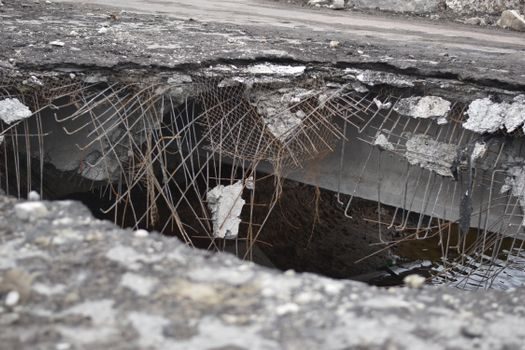
On the same 2026-04-20 go4worldbusiness listing, all endhooked, Xorex corrugated and round wavy geometries are quoted within US$50/ton of each other — geometry is a near-zero cost driver at mill output, despite the marketing emphasis on hook shape [S8]. A steel fiber vs steel section: reinforcement role and load-path function comparison makes the trade-off concrete: at US$1,220/ton, a 30 kg/m³ steel fiber dose in a 150 mm slab adds roughly US$37/m² of material, while a single 12 mm rebar at 200 mm c/c in a 150 mm slab adds about US$8-10/m² of bar plus US$5-7/m² of placement labor. Steel fiber wins on crack-control width, impact and shotcrete pumpability; rebar wins on absolute tensile capacity and code familiarity for suspended slabs. The decision is rarely price-only — it is whether the spec is crack-width-driven (fiber) or moment-capacity-driven (rebar).
Adjacent fiber categories and substitution economics
Carbon-steel fiber cross-searches on 2026-05-30 return laser-welding-machine housings and stainless steel fiber accessories at US$3,000-4,500 per set, which is equipment pricing, not fiber pricing, and should be discarded from any per-kg benchmark [S3]. Wholesale directories on alibaba.com on 2026-05-17 and go4worldbusiness on 2026-04-20 both cluster real steel-fiber offers in the US$1,200-1,250/ton band, with stainless and melt-extract variants running 1.8-2.5x higher due to alloy surcharges [S4][S8]. The Xorex entry on made-in-china.com defines the low-carbon cold-drawn fiber as a "leading" general-purpose product for flexural, shear and fatigue enhancement, which matches the 1200 MPa Type 1 datasheet from okorder.com [S1][S9]. For projects that do not justify steel fiber's premium over rebar, concrete fiber covers the synthetic macro and micro alternatives (PP, PVA, basalt) that trade at US$2-6/kg and replace steel fiber in slab-on-grade where corrosion is the binding constraint.
Standards, spec sheets and what to demand at the quote stage
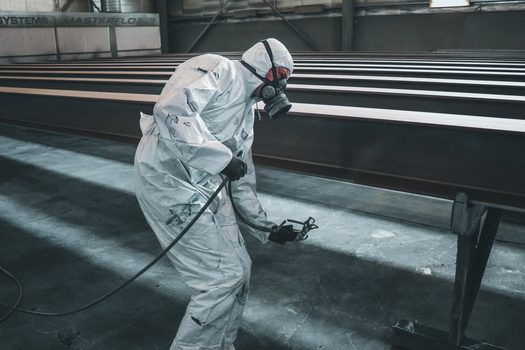
ASTM A820M-11 governs Type 1 (cold-drawn wire) steel fiber and is the spec quoted on the okorder.com datasheet, with >1200 MPa tensile, 45° bend angle (min 30°), 0.60 mm × 35 mm geometry and 58-60 aspect ratio [S1]. EN 14889-1 is the European equivalent referenced implicitly by every EU-bound glued macro-fiber offer. A serious 2026 quote package should include: (1) mill test certificate with actual tensile, diameter tolerance and aspect ratio, not nominal; (2) ASTM A820M-11 or EN 14889-1 declaration of conformity; (3) glue-bundle disintegration time in mixer (typically 30-60 s for 35 mm hooked-end); (4) dosage chart for the target application — industrial floor, shotcrete, precast, tunnel segments. For more on sourcing levers across steel-mill products, the Steel Strand 2026 Price & Cost Guide covers the upstream prestressed-wire pricing dynamics that cold-drawing mills respond to.
Total cost model: from FOB quote to placed-in-the-mix dollar
A worked landed cost for a 200-ton order at US$1,220/ton FOB Tianjin, delivered CIF Houston, breaks down roughly as: FOB US$244,000 + ocean freight US$28,000 (US$140/ton 2026 Pacific rate band) + marine insurance US$500 + US 25% steel-fiber HTS duty US$61,000 + drayage US$4,000 = ~US$337,500, or US$1,690/ton all-in, which is 38% above the FOB headline. At a 30 kg/m³ dose, that is US$50.7/m³ of concrete in fiber alone. For tunneling or precast where 40-50 kg/m³ is specified, fiber reaches US$68-85/m³ and starts to compete seriously with rebar + labor. Track two signals into the second half of 2026: SCI99's deformed-bar weekly index for raw-steel direction [S2] and the OKorder / made-in-china listing spread for fiber mill margin compression when more Tier-1 Chinese mills add cold-drawing capacity.
For component-level specifications, see linear guide.