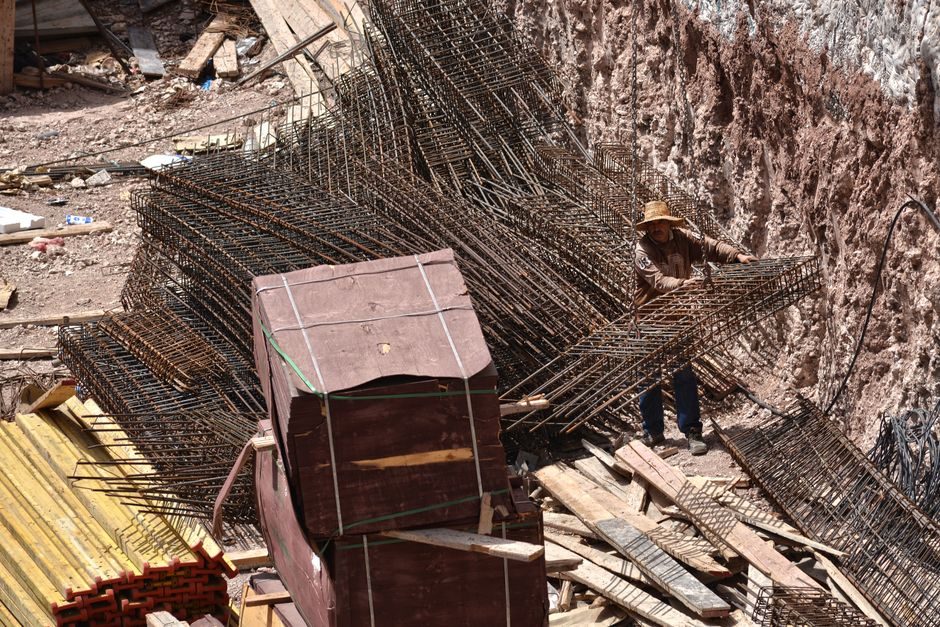
A rebar cutter is specified by its maximum cutting diameter, the rebar grade it can shear at that diameter, the power source (electric, hydraulic, or manual), the duty cycle the site demands, and the way blades are replaced — not by brand or price. Get any one of those five gates wrong and the tool will either refuse to bite into the bar, stall under continuous production, or kill half a day every time a blade needs to be swapped [S1][S2].
The failure pattern on the wrong machine is consistent: undersized hydraulic pressure crushes instead of shears, oversized electric cutters without thermal overload trip every 40 cuts in tropical ambient, and cutter blocks without a quick-change pocket force a four-bolt teardown per edge. Choosing a rebar cutter is therefore a five-gate problem, not a catalog problem, and this piece walks each gate with the values that actually have to be locked before a purchase order is cut. The same logic that drives POM selection — define the operating envelope before you choose a grade — applies directly to choosing a cutting machine.
Gate 1 — Maximum Rebar Diameter and Bar Profile
Rebar cutters are sold by their single number: the largest bar diameter the machine will shear at the rated rebar grade. The standard ladder runs from 12 mm handheld manual cutters used on column ties, through 16 mm, 20 mm, 25 mm, 32 mm, 42 mm and 50 mm electric/hydraulic production cutters, with portable hydraulic jaws often rated 16–32 mm for site ring work and stationary hydraulic bench units rated up to 50 mm for rebar processing yards [S1][S2].
Two things the single diameter number hides. First, the rating is almost always stated for mild steel or Grade 280 rebar; cutting a Grade 60 (420 MPa) bar of the same diameter needs roughly 50% more cutting force, and Grade 75 (520 MPa) needs close to double, so a 32 mm machine rated for mild bar will stall at 25 mm on Grade 60. Second, the rating assumes a round deformed bar profile; square or flat bar stock needs a wider blade pocket and most portable hydraulic jaws will not accept it. The encyclopedia page on the rebar cutter covers the geometry of the shear pocket, and the related rebar bender selection piece is the closest sibling decision because the two machines are usually bought together on a rebar processing line.
Gate 2 — Rebar Grade and the Cutting Force Behind It
Cutting force scales linearly with bar cross-section and with the rebar's ultimate tensile strength, not its yield strength. A 25 mm Grade 60 bar can require 25–30 tonnes of shear force at the blade tip, which is why most electric production cutters in this class use a hydraulic intensifier rather than a direct mechanical linkage [S1][S2].
The practical rule of thumb engineers use in the field: derate the manufacturer's stated maximum diameter by one bar size for every step up from Grade 40 to Grade 60, and by another size for Grade 75. A machine published as "50 mm max" is therefore a 50 mm / 40 mm / 32 mm machine depending on whether the incoming bar is Grade 40, Grade 60, or Grade 75. Sites that mix grades from two suppliers should spec to the harder grade and ignore the optimistic headline number. Material background on the bar itself is consolidated on the rebar encyclopedia entry, and the cross-grade framing against plate stock is covered in deformed rebar vs steel plate selection.
Gate 3 — Power Source: Electric, Hydraulic, Pneumatic, or Manual
Four power architectures are in production, and the choice is driven by the site conditions more than by the bar size. Single-phase 220 V electric cutters cover up to about 25 mm and are the standard on residential and small commercial sites. Three-phase 380–415 V electric hydraulic cutters run from 16 mm to 50 mm and dominate fabrication yards. Pneumatic-hydraulic cutters need a 6–8 bar compressor and a hose of 10 m or more, which keeps them on heavy civil and shipyard work where compressed air is already on tap. Manual ratchet and manual hydraulic cutters top out at 16 mm and are the right answer for column tie work and for emergency cuts on a slab where no power is available [S1][S2].
The decision between single-phase electric and three-phase hydraulic is often the wrong question. The right question is what the site already runs and what duty cycle is needed (next gate). A single-phase 220 V machine on a 16-hour rebar yard shift will trip thermal overload long before the cutting edge dulls, while a three-phase hydraulic unit on a 2-hour tie column job is overspec. For a direct side-by-side framing of the form-factor choice between the cutter and its bender twin, see the rebar bender vs rebar cutter 2026 selection frame, which covers capacity, power and form factor across both machine classes.
Gate 4 — Duty Cycle, Thermal Budget and Cut-Per-Hour Spec
Duty cycle is the gate that gets cut most often in the spec, and it is the gate that determines whether the machine lives or dies in the first year. A handheld electric cutter is usually rated for intermittent duty: roughly 30–60 cuts per hour with cool-down gaps, and around 5,000 cuts per blade edge before the edge has to be re-sharpened or replaced. A three-phase hydraulic bench cutter is rated for continuous production: 100–150 cuts per hour, with 20,000–30,000 cuts per blade edge under normal Grade 60 duty [S1][S2].
Three numbers must be locked before RFQ: cuts per hour at the worst-case bar grade the site will run, the ambient temperature (a 40 °C tropical site halves the thermal headroom of a motor rated for 25 °C), and the blade-edge life stated in cuts per edge, not in millimetres of material. The blade life number is the only one that drives the operating cost calculation; the diameter number is the one that drives the purchase decision. Suppliers of cutter blocks and shear knives such as the aftermarket channel at RebarBlades stock spare edges for both portable hydraulic jaws and stationary bench cutters, which is the practical way to extend machine life past the first edge [S1].
Gate 5 — Blade Geometry, Replaceability and Cutter-Block Serviceability
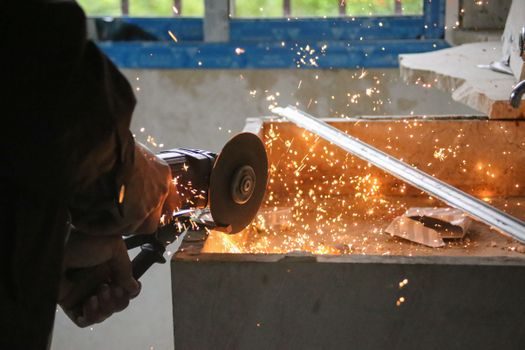
The cutting edge is the consumable, and the way it is replaced decides whether the machine earns its place on a tight rebar schedule. Four edge geometries are in production: single-bevel shear, four-sided indexable insert, four-sided reversible cassette, and fixed-blade bolt-on block. Single-bevel is the cheapest to buy and the most expensive to own because each re-sharpening costs a service day. Four-sided indexable insert is the production-yard standard: rotate a quarter turn, four fresh edges per insert, no re-sharpening, and the operator can do it with one spanner. Reversible cassette sits between the two and is the most common on mid-class portable hydraulic jaws [S1].
The spec check at the RFQ stage is mechanical, not commercial: how many fasteners hold the blade in place, what tool is required to release them, and whether the moving jaw can be opened far enough to clear a 32 mm bar stub without removing the edge. A four-bolt fixed block that needs the jaw pin drifted out is a 60–90 minute blade change; a single-pin indexable cassette is a 5 minute change. On a high-volume rebar yard the difference is one full operator per shift, which is why this gate gets the same weight as the diameter spec in the final vendor comparison. For a broader sourcing view on the pneumatic and hydraulic tooling category that these cutters sit inside, the air pick 2026 buying guide walks the piston-class, stroke-energy and air-budget logic that also applies to the pneumatic-hydraulic rebar cutter branch.
Comparison Frame — Four Machine Classes Against Five Gates
The four machine classes line up against the five gates as follows. Handheld manual ratchet/hydraulic: 12–16 mm diameter, Grade 40 only, manual power, 10–20 cuts per hour, no replaceable edge (re-grind). Single-phase 220 V electric hydraulic: 12–25 mm, Grade 60 with a one-size derate, 220 V mains, 30–60 cuts per hour with cool-down, fixed-blade or reversible cassette. Three-phase 380 V hydraulic bench: 16–50 mm, Grade 60 at rated size, three-phase mains, 100–150 cuts per hour continuous, four-sided indexable insert. Pneumatic-hydraulic portable: 16–32 mm, Grade 60 with a one-size derate, 6–8 bar compressed air, 60–100 cuts per hour, four-sided indexable insert. The class is therefore chosen by two columns — diameter/grade on the left, power/duty on the right — and the blade column is a within-class decision once the class is fixed [S1][S2].
Who a Heavy-Duty Cutter Is For, and Who It Is Not For
A three-phase 50 mm hydraulic bench cutter is the right tool for a rebar processing yard that runs two shifts on Grade 60 stock and pushes 4,000–6,000 cuts per day. It is the wrong tool for a residential foundation crew that cuts 200 ties in a week. Conversely, a handheld manual cutter is exactly the right tool for the 200-tie job and a liability on a production yard. The economic crossover point — where buying a three-phase hydraulic bench machine pays back the difference over a single-phase electric — sits around 800–1,000 cuts per shift at Grade 60; below that line, the single-phase machine is the lower-total-cost choice, above that line, the three-phase machine wins on blade-edge life alone [S1][S2].
The two failure modes that show up when a class is misapplied are both well known. The first is thermal overload tripping: a single-phase 220 V machine cycled past its cool-down budget on a 32 mm Grade 60 bar in 35 °C ambient will trip the motor every 20–30 cuts by mid-shift, and the operator response is to hold the trigger longer, which burns the motor windings within a week. The second is blade-seat deformation: a portable hydraulic jaw used to cut Grade 75 stock at its published maximum diameter will egg-shape the moving blade seat within a few hundred cuts, and the symptom is a bar that cuts cleanly for the first 5 mm and then stalls. Both failure modes are spec problems, not maintenance problems.
Standards, Sourcing and What to Verify Before PO
There is no single international standard that governs a "rebar cutter" as a complete machine; instead, the machine inherits compliance from its subsystems — the electric motor to regional electrical codes, the hydraulic cylinder to the relevant pressure-vessel rule, and the blade to the rebar grade spec it is rated to shear. The supplier documentation that actually matters at PO is the cut-per-hour figure at a stated bar grade and ambient temperature, the blade-edge life in cuts per edge, and a clear parts diagram that shows how the edge is replaced [S1][S2].
Two signals are worth tracking through 2026. First, four-sided indexable insert systems have moved down-class into portable 16–25 mm hydraulic jaws, which means the total-cost-of-ownership gap between handheld and bench machines is narrowing on mid-size bar — sites that specced a 16 mm fixed-blade unit last year should re-quote the indexable insert class before re-ordering [S1]. Second, the Philippine and Southeast Asian rebar processing market is in the middle of a capacity expansion driven by infrastructure spend, which is keeping three-phase 32 mm and 42 mm bench cutter lead times under 60 days from regional OEM channels such as the CNB Machinery line card, while equivalent units from European OEMs are running 120–180 days [S2]. Both signals are worth checking against the buyer's own site duty before the next RFQ is released. The geometry of the cut itself and the encyclopedia framing of the machine sit on the rebar cutter reference page.
For component-level specifications, see marble cutter.