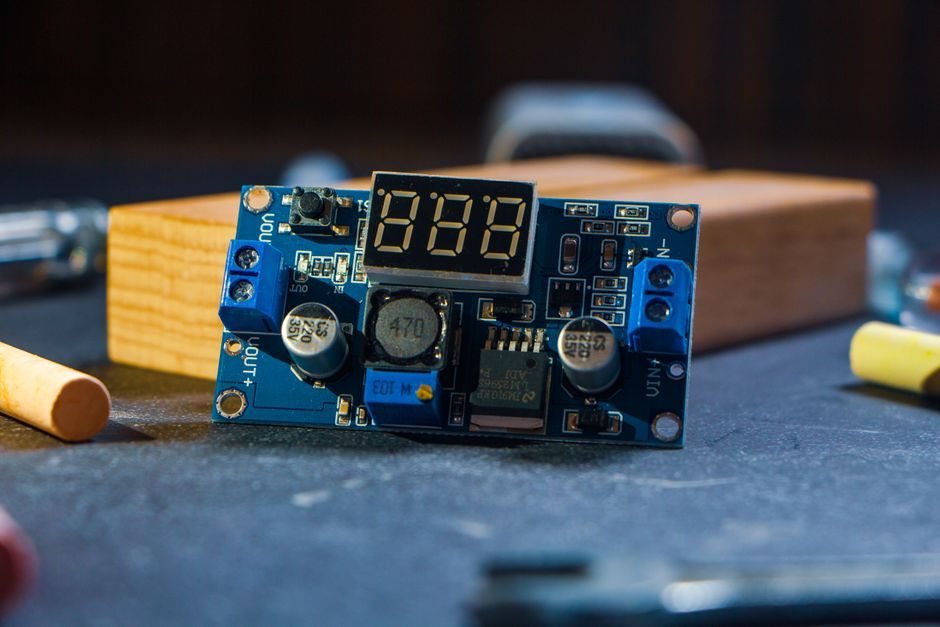
Arduino-class 5V relay modules with optocoupler isolation on DHgate shipped at $0.45-$1.20 per channel in June 2026, with 1-channel high-level-trigger boards listing around £13.97-14.33 per piece and 1-channel low-level-trigger boards at £19.17-19.67 per piece [S6].
Pepperl+Fuchs KFD2-RSH-1.2E.L2-Y1 and KFD0-RSH-1-Y2 signal conditioners carry 24 V DC supply, relay contact outputs, and SIL 3 rating per IEC/EN 61508, with logic inputs spanning 20-26.5 V DC depending on variant [S2][S3]. The 2026 relay-module market splits cleanly into two procurement lanes: low-voltage PCB-mount boards for hobby and IoT, and loop-powered/24 V safety conditioners for process instrumentation, with price gaps of two orders of magnitude between them.
Two Product Tiers: Logic-Level Boards vs Safety Signal Conditioners
Arduino-class relay modules are 1- to 16-channel PCB assemblies with a 5 V DC coil, an optocoupler (or direct-transistor) driver, and screw terminals for the load side; the high-level-trigger variant activates the coil when the input pin goes HIGH, while the low-level-trigger variant activates on LOW [S6]. The KFD0-RSH-1.1D.F1 and KFD2-RSH-1.2D.FL2-Y1 sit in a completely different product class: 1-channel 24 V DC signal conditioners with relay contact outputs, line fault transparency (LFT) and diagnostic functions, qualified to SIL 3 per IEC/EN 61508 and PL e per EN/ISO 13849 [S5].
Selection between the two comes down to three signals: coil/loop voltage, contact arrangement, and whether the application requires functional-safety certification. A 5V 8-channel board with 10 A contacts handles a hobby greenhouse or home-automation relay, while a loop-powered 24 V DC conditioner with de-energize-to-safe output belongs on a SIS (safety instrumented system) trip path [S3][S5]. Cross-reference the industrial relay encyclopedia entry for the electromechanical contact basics shared by both tiers.
Key Electrical Specs: Coil Voltage, Contact Rating, Switching Speed
The Pepperl+Fuchs KFD2-RSH-1.2E.L2-Y1 specifies a 24 V DC supply, logic input 20.5-26.4 V DC, and recommended connectable voltage 8-60 V DC across the output side, with an energized-to-safe contact function and LFT diagnostics [S2]. Its loop-powered sibling KFD0-RSH-1-Y2 drops the auxiliary 24 V supply and instead draws operating power from the field loop, accepting a 20-30 V DC non-polarized logic input [S3].
For the consumer/IoT tier, DHgate Arduino boards typically specify 5 V DC coils, 10 A / 250 V AC or 10 A / 30 V DC contact ratings, and switching times of 5-10 ms operate and release; optocoupler isolation is standard on the £13-20 boards [S6]. The Freetronics RelayModule4 reference design drives 5 V to 24 V DC relays from a microcontroller, demonstrating that the same firmware-side GPIO can address both hobby and light-industrial coils if the driver board is sized correctly. Engineers moving from a 5 V hobby board to a 24 V industrial rail should expect coil current drops of 4-5x and contact life rated in mechanical cycles (typically 10^7) versus electrical cycles (10^5 at full load) - the relay module encyclopedia entry covers the trade-offs.
Functional Safety Tier: SIL 3 / PL e and Why It Matters
Selected Pepperl+Fuchs RSH relay modules (e.g., KFD0-RSH-1-Y2, KFD0-RSH-1.1D.F1, and KFD2-RSH-1.2D.FL2-Y1) are rated up to SIL 3 acc. to IEC/EN 61508, with certain variants additionally rated up to PL e acc. to EN/ISO 13849 [S3][S5][S8]. KFD2-RSH-1.2D.FL2-Y1 adds de-energize-to-safe (the relay drops out on power loss to put the process in a safe state) plus LFT, which detects broken wire or short on the field side and forces the output to the safe state.
Arduino-class optocoupler boards carry no SIL or PL rating and no third-party functional-safety certificate; they are acceptable for non-SIS loads but cannot be placed in a safety path. Buyers specifying a 24 V DC SIL 3 conditioner for a burner-management, ESD, or HIPPS application should confirm the certificate scope covers the exact variant (energized-to-safe vs de-energized-to-safe) and that the operating temperature range matches the cabinet rating. For an overview of the dedicated safety category, see the safety relay encyclopedia page.
Form Factor, Mounting and Wiring Practice
Arduino relay boards are 40 mm x 20 mm to 70 mm x 50 mm PCBs with through-hole or pin-header GPIO, screw-terminal load blocks, and 2.54 mm or 3.5 mm pitch connectors; multi-channel boards stack channel-to-channel at 22-25 mm pitch, a footprint incompatible with DIN-rail cabinets [S6]. Industrial safety conditioners are 12-18 mm wide DIN-rail modules with pluggable screw terminals, the same form factor as the rest of the Pepperl+Fuchs K-System, which is what allows KFD0-RSH and KFD2-RSH to share power rails and error-LED space with isolators in a marshalling cabinet [S2][S3].
Wiring practice differs: optocoupler boards expect flyback diode protection built into the board (most 2026 production runs include it), while industrial safety modules use the LFT function to detect wiring faults rather than suppress transients - a design choice that improves diagnostics but does not replace an external suppressor on highly inductive loads. Buyers upgrading a panel from a 5 V optocoupler board to a 24 V conditioner should budget for DIN-rail space, separate 24 V DC power supply (or loop-power budgeting), and re-termination of the field wiring to a different pitch.
Application Fit: Hobby/IoT, Building Automation, Process Safety
Use a 5 V Arduino-class board for: home-automation relays under 10 A, low-voltage IoT switching (< 30 V DC), and prototype development on Raspberry Pi or ESP8266; the Freetronics RelayModule4 and the open-source ESP8266_Relay_3 GitHub repos are reference designs for exactly this class [S4]. A 2025-11-30 DHgate UK listing shows 450 active SKUs of 5V Arduino relay modules, with the 1-channel high-level-trigger optocoupler board at £13.97-14.33 and the low-level-trigger variant at £19.17-19.67, both with free-shipping and MOQ of 1 piece [S6].
Use a 24 V DC SIL 3 signal conditioner for: SIS trip amplifiers, fire-and-gas detector interfaces, ESD pushbutton interfaces, and burner-management permissives. KFD2-RSH-1.2E.L2-Y1 is the energized-to-safe choice (relay closes on healthy state) for high-demand safety functions, while KFD2-RSH-1.2D.FL2-Y1 is the de-energize-to-safe choice for low-demand or shutdown functions [S2]. For PLC-output-to-field-relay switching on a non-safety path, the lower-cost industrial relay and linear module categories handle the typical 24-channel I/O card without the SIL overhead.
Selection Criteria Comparison: 5 V Board vs 24 V Conditioner vs DIN Relay
Across the three common options, the decision axes are: coil voltage, contact current, safety certification, and cabinet form factor. A 5V 1-channel optocoupler board scores: coil 5 V DC, contact 10 A / 250 V AC, no SIL rating, no DIN-rail, ~$0.45-$1.20 per piece on DHgate Q2 2026 [S6]. A 24 V DC SIL 3 conditioner scores: coil/loop 24 V DC, contact switching 8-60 V DC, SIL 3 per IEC/EN 61508 and PL e per EN/ISO 13849, DIN-rail 12-18 mm wide, $300-$500 list price range typical for the Pepperl+Fuchs KFD2-RSH family [S2][S5].
A general-purpose DIN-rail industrial relay (interposing relay) sits in between: coil 24 V DC, contact 6-10 A, no SIL, DIN-rail mount, $10-$30 list. For applications that switch a 24 V DC solenoid from a PLC output card, a DIN-rail interposing relay is the lowest-cost path. For a 4-20 mA loop-powered safety trip, the loop-powered KFD0-RSH-1-Y2 is the only option that operates without a separate 24 V rail [S3]. Buyers building out a new cabinet in 2026 should pick the form factor first (DIN-rail vs PCB), the coil voltage second (5 V vs 24 V), the contact rating third (A and V), and SIL/PL last - that order keeps non-safety projects from over-paying for safety overhead.
Failure Modes, Lead Time and Sourcing Constraints

SIL 3 conditioner failure modes are dominated by LFT false trips from marginally-long field cables, and by contact welding on the output relay when switching highly inductive DC loads above 30 V - both documented in the Pepperl+Fuchs diagnostic-function literature [S2].
Lead time in 2026: open-market 5 V boards on DHgate ship in 7-15 days from China-based sellers, with 450 active SKUs as of November 2025 [S6]. Pepperl+Fuchs KFD2-RSH and KFD0-RSH modules are marked 停售 (discontinued) on the China-region catalog page as of 2024-06-13, with current production transferred to Pepperl+Fuchs European company documentation - meaning China-market buyers in July 2026 must source from the global catalog or authorized distributors rather than the regional page [S2][S3][S5].
Standards, Compliance and What to Verify Before Purchase
Three standards govern the safety-class modules: IEC/EN 61508 (functional safety of electrical/electronic/programmable electronic safety-related systems, source of the SIL 1-3 ratings claimed on the KFD2-RSH family), EN/ISO 13849 (safety of machinery, source of the PL e rating on the KFD0-RSH-1.1D.F1 and KFD2-RSH-1.2D.FL2-Y1), and the CE/UKCA marking required for installation in EU and UK cabinets [S5]. Hobby/IoT boards typically carry only CE/FCC/RoHS and do not need SIL/PL certification for non-safety loads.
Before purchase, verify: (1) the exact variant suffix (energized-to-safe vs de-energize-to-safe) matches the safety-function definition, (2) the certificate scope on the manufacturer's EU declaration covers the specific catalog number, not just the family, and (3) the operating temperature rating (-20 to +60 °C typical for the KFD2/KFD0-RSH family) suits the cabinet location. For non-safety projects, a CE-marked optocoupler board with published CTR and flyback-diode specs is sufficient.
For a current 2026 spec-band reference on adjacent control-panel components, see the Pushbutton & Pilot Light 2026 price-band map covering 22 mm vs 30 mm panel cutouts. Two trackable signals for the next buying window: (a) Pepperl+Fuchs RSH family regional-catalog status - watch the China-region page for re-listing under the European company documentation, and (b) DHgate Q3 2026 SKU count for optocoupler 5V boards, with 450 active listings as of 2025-11-30 [S6] as the baseline.